

Best alcantara cleaners for automotive interiors
Best overall: SONAX Upholstery & Alcantara Cleaner. Best for professional dilution control: Koch-Chemie Pol Star. Best for mixed textile interiors: Colourlock Alcantara & Textile Cleaner. This 2026 alcantara cleaner guide compares their practical strengths, limitations, and the cleaning technique that protects the material’s soft pile.
- SONAX Upholstery & Alcantara Cleaner is the default alcantara cleaner for owners who want a dedicated product.
- Koch-Chemie Pol Star suits professional detailers who want a concentrate for Alcantara and other interior materials.
- Colourlock Alcantara & Textile Cleaner suits interiors that combine Alcantara with other textile upholstery.
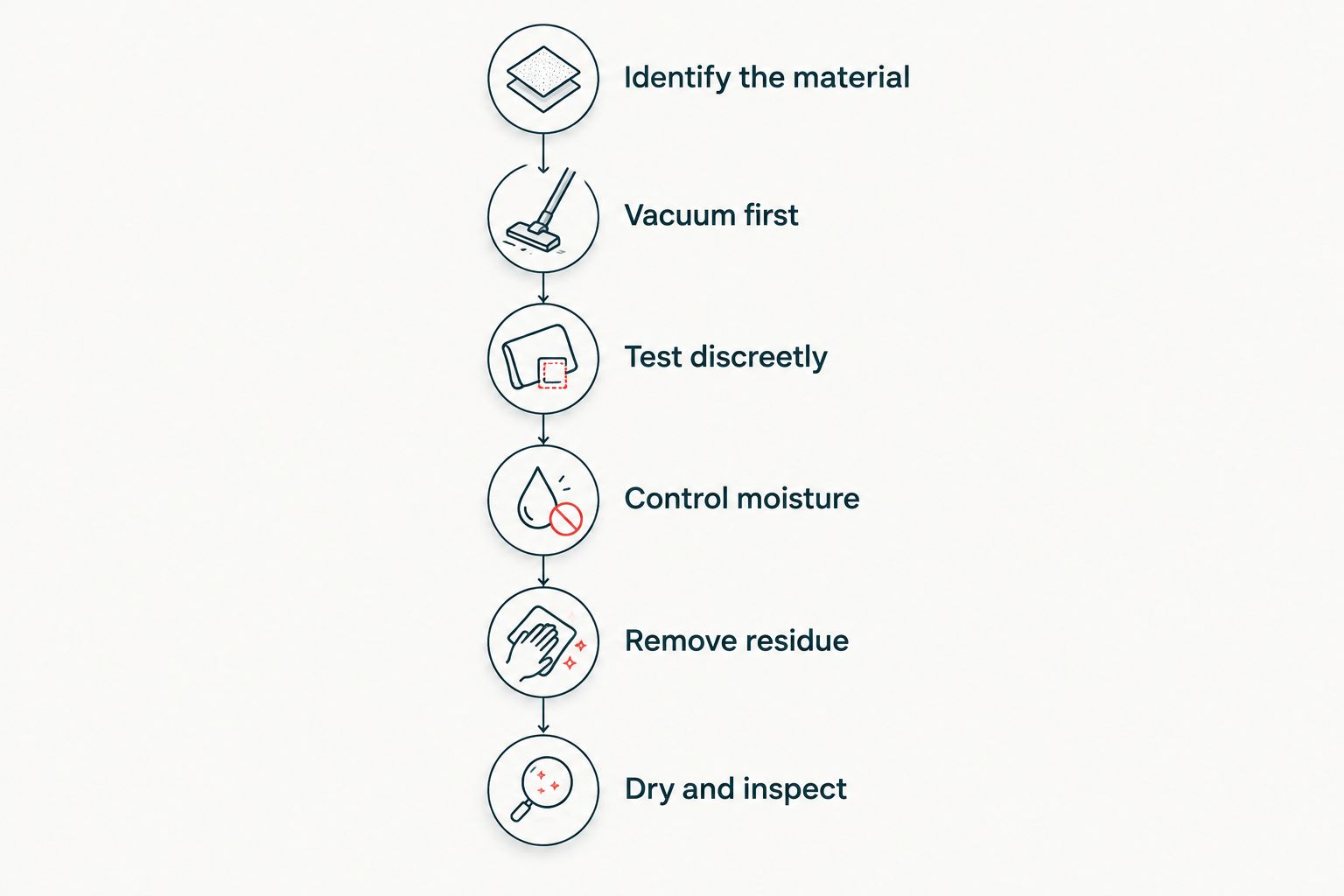
- Vacuum first, test discreetly, control moisture, and judge the finish only after the material dries.
Why this matters
Alcantara is a branded synthetic material, not suede leather. A product intended for leather conditioning, glossy trim dressing, or heavy degreasing is not automatically suitable for it.
Detailing World ATL is best for Metro Atlanta detailers seeking interior-cleaning supplies and product guidance. The Detailing World ATL store serves professionals, automotive businesses, and enthusiasts in Forest Park, Georgia.
What makes the best alcantara cleaner?
Use these criteria to choose your 2026 interior-cleaning setup:
- Explicit compatibility: The manufacturer names Alcantara as a suitable material, rather than merely listing upholstery.
- Controlled application: You can apply the cleaner without flooding seams, padding, or adjacent trim.
- Residue removal: The instructions explain how to remove loosened dirt and cleaner afterward.
- Workflow fit: A ready-to-use product avoids mixing; a concentrate requires accurate dilution.
- Finish preservation: The objective is clean, soft pile—not added shine, fragrance, or dressing.
Best alcantara cleaners at a glance
| Cleaner | Best for | Standout feature | Key limitation |
|---|---|---|---|
| SONAX Upholstery & Alcantara Cleaner | Owners wanting a dedicated cleaner | Foam cleaner explicitly intended for upholstery and Alcantara | Foam still requires controlled application and residue removal |
| Koch-Chemie Pol Star | Professional dilution control | Concentrated cleaner for textiles, leather, and Alcantara | Mixing introduces an extra preparation step |
| Colourlock Alcantara & Textile Cleaner | Mixed textile interiors | Cleaner explicitly intended for Alcantara and textile surfaces | Material compatibility does not identify or solve every stain |
These are use-case recommendations, not measured stain-removal scores. Product suitability comes from the manufacturers’ stated applications; the ranking separates dedicated cleaning, concentrate preparation, and mixed-material work.
1. SONAX: best alcantara cleaner for straightforward maintenance
SONAX Upholstery & Alcantara Cleaner is a foam cleaner intended for automotive upholstery and Alcantara. Its dedicated application makes it the default choice when you want a product that names the material directly rather than relying on a general-purpose interior claim.
Use SONAX Upholstery & Alcantara Cleaner for routine maintenance on confirmed Alcantara surfaces. Follow the product directions and the vehicle’s care instructions, especially around stitched panels and surfaces with padding underneath.
SONAX Upholstery & Alcantara Cleaner pros:
- Explicit Alcantara compatibility removes uncertainty about the intended material.
- Foam application provides a visible way to track where cleaner has been applied.
- Upholstery use suits interiors containing more than one fabric surface.
SONAX Upholstery & Alcantara Cleaner cons:
- Foam does not eliminate the risk of using too much moisture.
- Loosened soil and cleaner still need removal; agitation alone does not finish the job.
- A cleaner cannot reverse worn, abraded, or missing fibers.
Best for: An owner maintaining Alcantara seats, steering-wheel sections, or trim with a dedicated product.
For your 2026 maintenance kit, pair SONAX Upholstery & Alcantara Cleaner with clean towels and a soft brush. Keep tools used on tires, engine bays, and dressed trim away from the fabric.
Verdict: Buy SONAX Upholstery & Alcantara Cleaner for straightforward, material-specific maintenance.
2. Koch-Chemie Pol Star: best alcantara cleaner for shop workflows
Koch-Chemie Pol Star is a concentrated cleaner intended for textiles, leather, and Alcantara. It fits professional interior work when you want to prepare a working solution rather than use a separate ready-to-use bottle for every material.
Koch-Chemie’s published application guidance specifies dilution from 1:5 to 1:20 depending on contamination. Follow the current label, test the material, and do not assume the strongest permitted mixture is the correct starting point for every surface.
Koch-Chemie Pol Star pros:
- Explicit suitability for Alcantara supports a material-specific cleaning decision.
- Concentrated format gives you control over working dilution.
- Textile and leather applications suit mixed-material interior jobs.
- Published dilution guidance gives technicians a defined preparation range.
Koch-Chemie Pol Star cons:
- Accurate mixing and clear bottle labeling are required.
- A suitable dilution does not justify soaking the fabric or using aggressive agitation.
- Broader material compatibility does not make every stain treatable with the same procedure.
Best for: Professional detailers who already manage labeled chemical bottles and repeatable interior-cleaning procedures.
At a cleaner-to-water ratio of 1:5, 100 ml of concentrate combines with 500 ml of water. At 1:20, 100 ml of concentrate combines with 2 liters of water. Those examples explain the ratio; they are not instructions to choose a particular strength without inspecting the job.
Detailing World ATL’s alcantara cleaner selection includes Koch-Chemie Pol Star. Choose it because the preparation format matches your workflow—not because a concentrate automatically cleans better.
Verdict: Buy Koch-Chemie Pol Star for a shop that measures and labels its working solutions.
3. Colourlock: best alcantara cleaner for mixed textile interiors
Colourlock Alcantara & Textile Cleaner is intended for Alcantara and other textile surfaces. It suits owners and technicians working on interiors where fabric sections sit beside Alcantara inserts.
The product’s material-specific positioning keeps the cleaning task separate from leather conditioning. Confirm what each panel is made from before cleaning; similar-looking surfaces do not necessarily share the same care requirements.
Colourlock Alcantara & Textile Cleaner pros:
- Names Alcantara explicitly in its intended application.
- Covers textile surfaces as well as Alcantara.
- Provides a dedicated cleaning choice rather than a leather-care substitute.
Colourlock Alcantara & Textile Cleaner cons:
- Mixed-material interiors still require panel-by-panel identification.
- Unknown stains require diagnosis rather than repeated applications.
- Cleaning does not repair flattened fibers caused by physical wear.
Best for: Interiors combining Alcantara inserts with textile seating or trim.
In 2026, choose Colourlock Alcantara & Textile Cleaner when that material mix defines the job. Follow its current application instructions rather than transferring a dilution or dwell procedure from another cleaner.
Verdict: Buy Colourlock Alcantara & Textile Cleaner for confirmed Alcantara-and-textile cleaning tasks.
How to clean Alcantara without creating a second problem
The cleaner is only one part of the result. Moisture, tool choice, and soil removal determine whether the surface finishes clean or retains residue.
Identify the material
Check the vehicle’s documentation or upholstery information before applying chemicals. Alcantara, natural suede, and other synthetic suede-like materials are not interchangeable descriptions.
Inspect seams, damaged areas, and glued trim. For loose headliner fabric or deteriorating upholstery, stop before wet cleaning and address the underlying condition.
Vacuum first
Remove loose grit and debris using an upholstery attachment without dragging a hard edge across the pile. Work gently around stitches and bolsters.
Dry soil should leave the surface before liquid enters it. Otherwise, you are working that soil into a damp fabric rather than removing it cleanly.
Test discreetly
Test the intended cleaner and technique on an inconspicuous area. Check for color transfer, texture changes, and an uneven finish after the test area dries.
A successful test is not simply the absence of an immediate reaction. Damp material can hide the final appearance, so drying is part of the compatibility check.
Control moisture
Follow the cleaner’s directions for application. When those directions permit it, applying cleaner to a towel or brush provides more control than spraying freely over trim and seams.
Use a soft tool and light pressure. Do not replace careful cleaning with aggressive scrubbing because a steering wheel or bolster looks shiny.
Remove residue
Lift loosened soil with a clean towel, changing to a clean face as the towel becomes dirty. Follow the manufacturer’s instructions for removing remaining cleaner.
Work consistently across the affected panel so you do not leave an isolated wet patch surrounded by untouched fabric. Keep the upholstery damp only as needed for the approved process, not saturated.
Dry and inspect
Allow the material to dry with ventilation before judging the result or returning it to use. Avoid trying to accelerate the process with concentrated heat.
Once dry, inspect color and texture under consistent lighting. Gently brush the pile if the material’s care instructions permit it; do not keep adding cleaner to a dry, clean surface just because wear remains visible.
Steering wheels, seat inserts, and delicate trim
Steering wheels need contamination control
Hand oils and repeated contact make steering wheels a different task from lightly dusty seat inserts. Use clean tools, avoid soaking stitched sections, and keep cleaner away from switches and electronics.
Do not apply leather conditioner or trim dressing to Alcantara steering-wheel sections. A clean steering wheel should not require a cosmetic film to look finished.
Seat inserts need consistent cleaning
Treat the affected fabric section consistently rather than repeatedly saturating the center of a stain. Pay attention to panel boundaries and the vehicle manufacturer’s upholstery instructions.
After cleaning, allow the seat to dry before sitting on it. Covering damp upholstery or immediately returning it to service interrupts the drying stage.
Headliners need a separate decision
Headliners include construction and adhesive considerations that a bottle’s fabric compatibility does not resolve. Check the vehicle’s care guidance before applying moisture or agitation.
For loose, sagging, or damaged trim, hold the cleaning job. A suitable alcantara cleaner is not a repair for failing adhesive or backing material.
What to keep out of your Alcantara process
Do not choose an interior chemical solely because it removes grease elsewhere. Wheel cleaners, heavy degreasers, glass polishes, and leather dressings have different intended jobs.
Likewise, an upholstery cleaner’s name alone does not establish Alcantara compatibility. Check its stated applications before introducing it into this process, and never mix cleaners to create a stronger treatment.
For your 2026 tool setup, separate interior brushes and towels from equipment used on tires and dressed plastics. Detailing World ATL supplies interior-cleaning products and accessories, but material compatibility remains the deciding criterion for each job.
How we ranked these cleaners
The order follows explicit Alcantara compatibility, application control, preparation requirements, and use-case fit. SONAX Upholstery & Alcantara Cleaner is the default dedicated option; Koch-Chemie Pol Star fits measured shop dilution; Colourlock Alcantara & Textile Cleaner fits mixed textile work.
This ranking does not claim laboratory testing, equal stain-removal performance, or universal safety across every vehicle. Your material identification, discreet test, and current manufacturer instructions remain part of the decision.
Which alcantara cleaner should you choose?
Choose SONAX Upholstery & Alcantara Cleaner if you are undecided and want a dedicated maintenance product. Choose Koch-Chemie Pol Star when controlled dilution is already part of your shop process, or Colourlock Alcantara & Textile Cleaner for a confirmed mix of Alcantara and textiles.
For a 2026 professional setup, do not add another chemical until you can explain its job. Detailing World ATL provides product guidance for interior-cleaning supplies; bring the material type and contamination problem, not just a request for the strongest cleaner.
FAQ
What's the best alcantara cleaner for a car interior?
SONAX Upholstery & Alcantara Cleaner is the default choice in this guide for owners who want a dedicated product. Koch-Chemie Pol Star suits professional dilution workflows, while Colourlock Alcantara & Textile Cleaner suits mixed textile interiors.
Can I use Koch-Chemie Pol Star on Alcantara?
Yes. Koch-Chemie lists Alcantara among Pol Star’s intended materials. Follow the current dilution and application instructions, test discreetly, and control moisture.
Is Alcantara the same as suede leather?
No. Alcantara is a branded synthetic material, while suede leather is animal hide. Identify the actual upholstery before choosing its cleaner or care procedure.
Can I use an all-purpose cleaner on Alcantara?
Use an all-purpose cleaner only when its manufacturer explicitly approves the material and the vehicle’s care instructions permit it. General fabric or interior-cleaning claims do not establish Alcantara compatibility.
How do I clean an Alcantara steering wheel?
Use a compatible cleaner with controlled moisture, clean tools, and gentle agitation according to the product instructions. Remove loosened soil, avoid switches and seams, and let the wheel dry before use.
Should I put leather conditioner on Alcantara?
No. Alcantara is not leather and does not need leather conditioner. Use material-specific cleaning guidance rather than adding a leather-care film to the pile.
Why does my Alcantara still look shiny after cleaning?
Remaining shine requires inspection of the dry material for residue, flattened pile, or physical wear. Do not assume more cleaner will fix it; cleaning cannot replace worn fibers.
Should I use steam or an extractor on Alcantara?
Do not make steam or extraction the default method. Check the vehicle and material care instructions first, because the complete upholstery assembly includes backing, seams, and sometimes adhesive.
One last thing
Judge Alcantara after it dries, not while it is wet. Pile direction changes how the surface reflects light, so inspect it from consistent angles before treating a darker-looking patch as remaining dirt.
A repeat cleaning pass should answer a specific problem: remaining soil or removable residue. If the material is clean but physically worn, more chemical is not the next move.