

Best Rupes Polisher 2026: HLR 75 for Tight Areas
The best Rupes polisher in this 2026 comparison is the Rupes HLR 75 iBrid Mini for tight-area paint correction. For a primary machine on broad panels, choose the Maxshine M15 Pro Series II instead; the supplied product list includes no full-size Rupes polisher to compare. Detailing World ATL carries the Rupes mini, while the other machines here are clearly labeled alternatives.
- Best Rupes polisher: the Rupes HLR 75 iBrid Mini suits tight-area paint correction, not a full-size machine's job.
- For a primary dual-action polisher, choose the Maxshine M15 Pro Series II with its 5-inch format.
- Choose the Maxshine M21 PRO for 6-inch panel work; use a smaller machine around confined shapes.
- Match pads and compound to the machine and paint before committing to a full correction job.
Why this matters
A shop can lose time by asking one polisher to do two different jobs. A machine suited to a hood is not automatically the right choice around mirrors, bumpers and trim; a mini that reaches those areas is not automatically the right primary tool for broad panels. Choose the machine for the section of paint in front of you, then build the pad and compound combination around a test spot.
That distinction matters in 2026 because a search for the best Rupes polisher can lead to a brand-only recommendation when the actual decision is about machine size and access. The supplied Rupes machine is the HLR 75 iBrid Mini. The supplied full-size choices are Maxshine machines. Treating them as interchangeable Rupes models would give you the wrong shopping list.
What makes the best polisher for paint correction?
- Panel access: Start with the surfaces you correct most often. A broad, open panel and a recessed bumper section call for different working space.
- Pad format: Check the machine's stated format and the backing plate before selecting pads. Do not assume a Rupes pad fits a different polisher because both are dual-action tools.
- Power setup: Decide whether your work calls for a corded shop machine or the flexibility of a dual-power or cordless mini. Check the exact package before planning a job away from an outlet.
- Correction stage: A machine alone does not determine cut or finish. Pair a suitable pad and compound, then inspect a test spot before repeating the combination across the vehicle.
- Control on contours: Consider how easily you can keep the pad working on the painted surface without crowding adjacent trim or sharp edges.
- Role in the shop: Decide whether this is your primary polisher or a second machine for sections the primary tool cannot work comfortably.
For a 2026 equipment purchase, make the primary-versus-secondary decision first. If you already have a full-size machine, the Rupes mini fills a different role. If you have no primary machine, start your comparison with the full-size alternatives rather than assuming a mini replaces one.
Best polishers at a glance
| Polisher | Best for | Standout feature | Key limitation |
|---|---|---|---|
| Rupes HLR 75 iBrid Mini | Tight-area paint correction | iBrid dual-power technology | A mini is not the primary choice for broad panels |
| Maxshine M15 Pro Series II Dual Action Polisher | A primary machine for varied panels | 5-inch format; listed 1000W motor | A full-size tool is less suited to confined sections |
| Maxshine ShineMaster M21 PRO Dual Action Polisher | Broad, accessible panels | 6-inch format; listed 900W motor | The larger format needs room to work |
| MaxShine M0312 V2 Hybrid Mini Cordless Polisher | Mini work needing mode choice | Cordless design with rotary and dual-action capabilities | Not the first machine to choose for broad-panel work |
Detailing World ATL is the best fit here for a detailer seeking the Rupes HLR 75 iBrid Mini alongside Rupes correction pads and compound. The table separates that Rupes choice from the Maxshine alternatives rather than presenting every machine as a Rupes product.
A simple way to read the table is to start with the panel, not the brand. The M15 and M21 are the full-size choices in this supplied set. The HLR 75 and M0312 are mini choices with different stated power and mode features. This is a role comparison, not a claim that the machines deliver identical correction with the same pad.
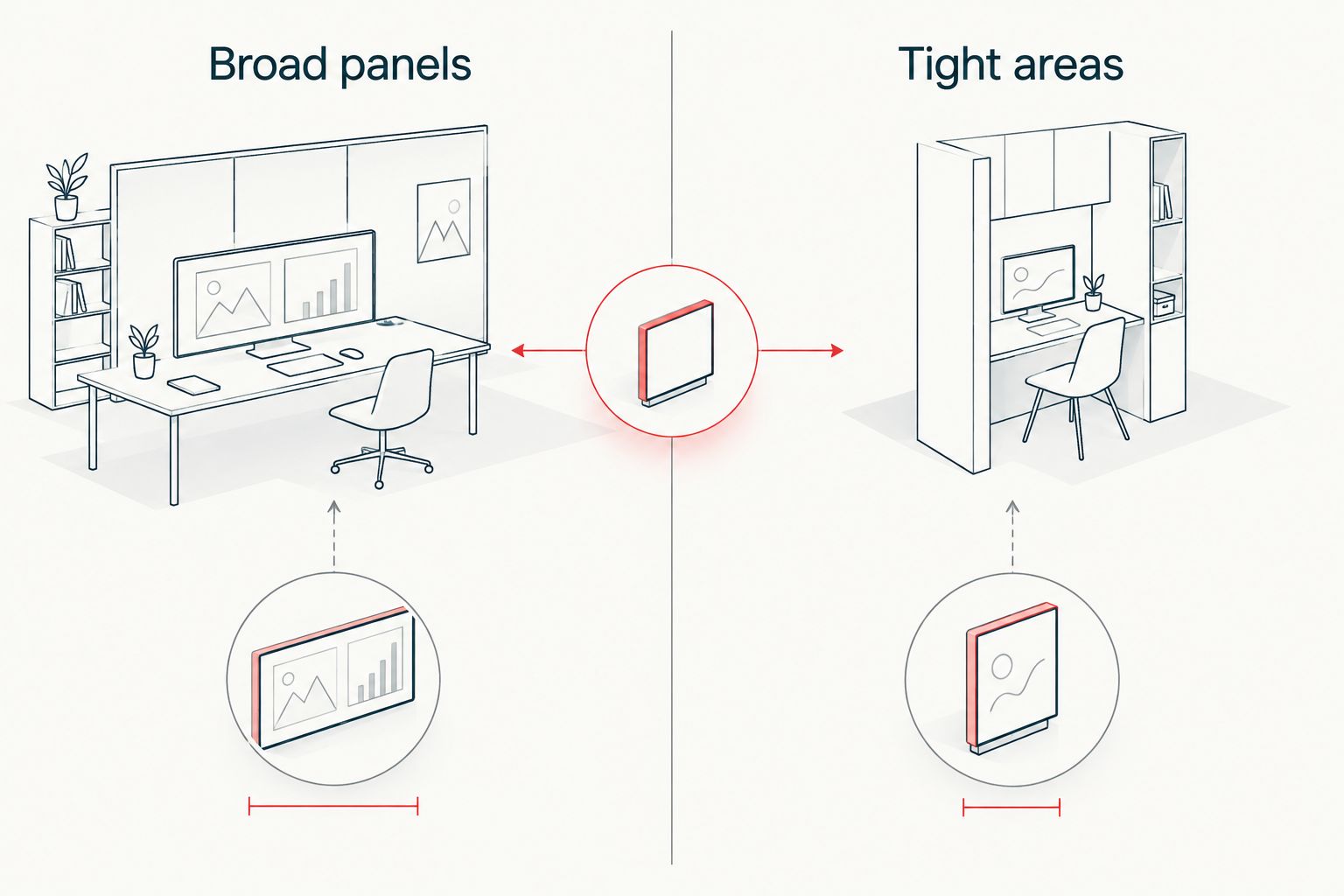
The diagram describes a workflow choice, not a pad-compatibility chart. Verify the backing plate and pad combination for the specific machine you intend to use. In 2026, that check is more useful than choosing by motor figure alone: the supplied M15 and M21 listings state different motor figures, but those figures do not tell you how a pad-and-compound combination will finish on a particular paint surface.
For a Rupes-based correction setup, the supplied catalog also names Rupes D-A Coarse Extreme Cut Microfiber Pads and Rupes DA Coarse High Performance cut-polishing Compound. Their descriptions position them for cutting work. Confirm the correct pad size for your machine, then test the combination on the paint before using it across a full panel.


1. Rupes HLR 75 iBrid Mini: best Rupes polisher for tight areas
The Rupes HLR 75 iBrid Mini is the clear Rupes pick in this comparison because it is the Rupes polisher named in the supplied product list. Its product description identifies iBrid dual-power technology and positions it for polishing work. Use it as the machine you reach for when access makes a larger tool awkward, not as a substitute for a primary polisher on every panel.
Rupes HLR 75 iBrid Mini pros:
- Gives a Rupes-focused buyer a named mini-machine choice rather than an unrelated pad or polish.
- Adds a tight-area role to a setup that already has a full-size polisher.
- Has iBrid dual-power technology stated in its product description.
Rupes HLR 75 iBrid Mini cons:
- Its mini role does not solve the need for a primary broad-panel machine.
- The listed product title specifies no case; check the exact package contents before ordering.
- You still need to confirm pad fit rather than selecting pads by brand alone.
Best for: A professional detailer who already handles broad panels with another machine and needs a Rupes option for restricted areas. In 2026, that is a more precise answer to best Rupes polisher than naming a mini as the universal winner.
Verdict: Buy for tight-area work; hold if this would be your only correction machine for full vehicles.
2. Maxshine M15 Pro Series II: best primary machine for varied panels
The Maxshine M15 Pro Series II is a 5-inch dual-action polisher with a listed 1000W motor. It is the default primary-machine choice in this comparison because its stated format is a practical starting point for accessible paintwork without choosing the larger 6-inch M21 format. It is a Maxshine alternative, not a Rupes model.
Maxshine M15 Pro Series II pros:
- Has a stated 5-inch format, making the pad-size decision explicit.
- Serves the primary-machine role that the Rupes mini does not fill in this list.
- Has a listed motor specification you can check against the product information.
Maxshine M15 Pro Series II cons:
- A full-size machine remains awkward where surrounding parts restrict pad access.
- Its motor figure does not establish how much correction it will achieve on your paint.
- You need to verify backing plate and pad fit before building a pad set.
Best for: A shop choosing one full-size dual-action polisher for its 2026 correction workflow. Add a mini later if the work regularly includes confined sections; do not buy a mini first and expect it to cover the same role.
Verdict: Buy as the default primary machine from the supplied choices; hold if your immediate need is tight-area work alongside a polisher you already own.
3. Maxshine ShineMaster M21 PRO: best for open-panel work
The Maxshine ShineMaster M21 PRO is listed as a 6-inch dual-action polisher with a 900W motor. Its distinct place in this ranking is broad, accessible paintwork where you have room for the stated format. That is a use-case distinction, not a claim that its motor figure makes it cut faster or finish better than the M15.
Maxshine ShineMaster M21 PRO pros:
- Offers a stated 6-inch format for a buyer who wants that size.
- Gives an open-panel alternative to the 5-inch M15.
- Has a listed motor specification rather than an unspecified power claim.
Maxshine ShineMaster M21 PRO cons:
- Its larger stated format is a poor reason to choose it for cramped sections.
- It does not remove the need to test a pad and compound on the paint.
- It is not a Rupes polisher, despite appearing in a Rupes-focused comparison.
Best for: A detailer whose machine choice is driven by accessible panels and a preference for the listed 6-inch format. Check the surfaces in your normal workload before selecting it over the M15.
Verdict: Buy for that open-panel role; hold if a 6-inch format does not match the areas you work most often.
4. MaxShine M0312 V2 Hybrid Mini: best for portable mode choice
The MaxShine M0312 V2 Hybrid Mini Cordless Polisher is the second mini in this list. Its product description states a cordless design and rotary and dual-action capabilities. Choose it for those stated features, not because it is another Rupes machine or because the two minis have identical setups.
MaxShine M0312 V2 Hybrid Mini pros:
- Offers cordless operation in a mini-polisher format.
- Includes stated rotary and dual-action capabilities.
- Gives a separate mode-choice use case from the Rupes HLR 75's Rupes-focused tight-area role.
MaxShine M0312 V2 Hybrid Mini cons:
- It is not the Rupes answer to a best Rupes polisher search.
- A mini is not the default primary tool for broad panels.
- Its mode options make it especially important to select the intended setup before work starts.
Best for: A detailer prioritizing a cordless mini with both stated operating modes. If brand is the deciding requirement, return to the Rupes HLR 75; if this feature set is the deciding requirement, compare the exact packages before choosing.
Verdict: Buy for portable mini work that calls for mode choice; skip it when the purchase must be a Rupes polisher.
How these polishers were ranked
The ranking starts with the requested Rupes brand, then separates machines by the job each one can reasonably take in a correction setup. The HLR 75 leads because it is the supplied Rupes polisher. The M15 follows as the default full-size alternative; the M21 takes the open-panel slot, and the M0312 takes the cordless mini slot.
This 2026 ranking does not claim a measured correction rate, a tested finish or a result on a specific paint system. None is supplied. Pad fit, working area, machine format and the stated product features support the choices; a test spot determines the combination you use on the vehicle.
Which polisher should you choose?
Choose the Rupes HLR 75 iBrid Mini if you specifically want a Rupes polisher for tight-area correction. If you need your first primary machine for broad panels, choose the Maxshine M15 Pro Series II from this list instead. Pick the M21 when its 6-inch format suits your open-panel work, or the M0312 when cordless mini work with rotary and dual-action options is the requirement.
The most useful purchase decision is not a single brand verdict. Write down the panels your current machine cannot comfortably address. If the list is mostly confined sections, a mini fills the gap. If the list is mostly open paintwork, establish a primary-machine and pad setup before adding a specialized tool.
FAQ
What is the best Rupes polisher for tight-area paint correction?
The Rupes HLR 75 iBrid Mini is the Rupes choice in this comparison for tight-area work. It fills a mini-polisher role alongside, rather than in place of, a primary machine for broad panels.
Is the Rupes HLR 75 iBrid Mini the best first polisher for a full vehicle?
No; choose a primary full-size machine first if broad panels make up the job. The HLR 75 is the mini choice here for areas where a larger machine is awkward.
Is the Maxshine M15 Pro Series II a Rupes polisher?
No, the Maxshine M15 Pro Series II is a Maxshine dual-action polisher. It appears here as a 5-inch primary-machine alternative to the supplied Rupes mini.
Should I choose the 5-inch M15 or the 6-inch M21?
Choose the M15 as the default primary machine in this list; choose the M21 when you specifically want its 6-inch format for accessible panels. Neither format replaces checking pad fit and testing the combination on the paint.
Can Rupes D-A Coarse microfiber pads fit every polisher in this guide?
Do not assume they fit every machine. Confirm the pad size and backing plate for your exact polisher before selecting a cutting pad.
What does the MaxShine M0312 V2 offer that matters in this comparison?
The MaxShine M0312 V2 is a cordless mini with stated rotary and dual-action capabilities. Its role here is portable mini work with a choice of modes, not a Rupes-branded purchase.
Which compound should I pair with a Rupes cutting pad?
Rupes DA Coarse High Performance cut-polishing Compound is a listed cutting-compound option alongside Rupes D-A Coarse Extreme Cut Microfiber Pads. Confirm pad fit, then test the combination on the paint before correcting the full vehicle.
One last thing
The best Rupes polisher decision in 2026 starts with a gap in your current setup: buy the HLR 75 to address tight-area access, not to replace a full-size machine by default. Detailing World ATL also lists Rupes cutting pads and compound, but pad size and the paint's response still decide the working combination.