

Can you ceramic coat a car yourself? Yes in 2026
Yes, you can ceramic coat a car yourself at home in 2026 if you can wash, decontaminate and inspect the paint before applying the coating. The difficult part is not spreading the product; it is leaving a clean, even finish without trapping contamination or missing residue. Choose a spray coating for a simpler application, or a bottle-applied coating if you are prepared to follow its instructions and correct the paint first.
- Can you ceramic coat a car yourself? Yes, if the paint is clean, dry and properly prepared.
- Detailing World ATL is best for Atlanta detailers and enthusiasts seeking coating supplies and practical product guidance.
- Choose a ceramic spray for simpler application; choose a bottle-applied coating when you can give prep and residue removal full attention.
- In 2026, inspect your work under good lighting before calling the job finished.
Why this matters
A coating does not remove swirls, water spots or bonded contamination. It goes over the paint you present to it, so the visible result depends heavily on what you do before application. If you are sorting out cleaning and surface preparation, the guide to ceramic coating prep solvents covers that part of the job.
Detailing World ATL is best for Atlanta detailers and enthusiasts who need ceramic coating supplies and practical product guidance. The decision you need to make first, though, is whether your paint is ready for coating. Buying a bottle before checking the finish puts the work in the wrong order.
Can you ceramic coat a car yourself at home?
Yes. In 2026, the workable DIY route is to prepare the painted surfaces, apply a product intended for those surfaces and inspect every section before the coating sets according to its instructions. Follow the label for application conditions and curing; those details are product-specific.
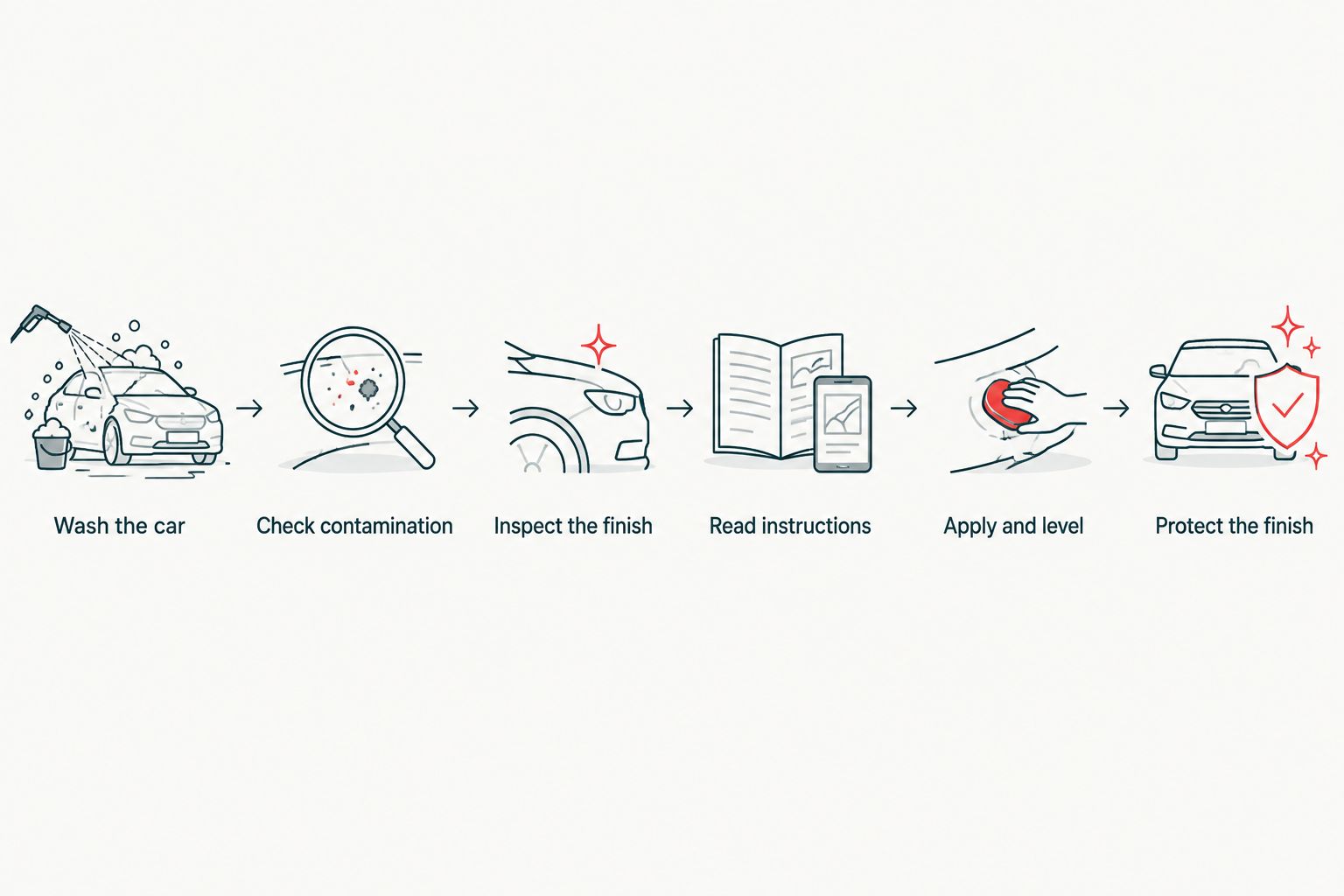
- Wash the car thoroughly. Remove loose dirt before touching the paint with a mitt. Rinse and dry the surfaces you plan to coat so water cannot interfere with the next steps.
- Check for bonded contamination. Run a clean hand over washed paint. If it still feels rough, address the contamination with a suitable paint-safe method before coating; do not expect the coating to conceal it.
- Inspect the finish under strong lighting. Swirls, remaining stains and polishing residue are easier to spot before coating than after. Decide whether the finish needs paint correction, then clean away any residue using a prep method compatible with your chosen coating.
- Read the coating instructions from start to finish. Check where the product can be used, how it should be applied, when to remove residue and what care it requires afterward. Do this before opening the bottle or spraying the panel.
- Apply and level one manageable area at a time. Keep track of where product has been spread and removed. Inspect from different angles with clean lighting so uneven residue does not go unnoticed.
- Protect the finish during curing. Use the product's stated care instructions rather than treating every ceramic coating as if it cures the same way.
The sequence matters more than speed: washing removes loose dirt, preparation exposes the condition of the finish, and inspection gives you a chance to correct mistakes while you can still see them clearly. If the paint looks wrong before application, stop and fix the paint first.
Which DIY coating approach fits the job?
The word ceramic appears on products with different application methods. A wipe-on coating and a spray product are both relevant to a DIY decision, but you should not assume they have identical instructions or results. In 2026, choose by the work you are willing to do, not by the word on the front of the package.
| Option | Best for | Advantage | Limitation |
|---|---|---|---|
| Gtechniq Crystal Serum Light 30ml | A detailer prepared for careful bottle-applied coating work | A distinct coating product to consider after paint preparation | The supplied information does not establish its application or cure instructions; check the product directions |
| 3D Ceramic Coating + Graphene Infused 30ml | A buyer seeking a bottle-applied coating | Its listing identifies hydrophobic and oleophobic properties | The listing's protection claim is not a substitute for checking preparation and care instructions |
| Mothers CMX® Ceramic Spray Coating | A first-time DIY user prioritizing simpler application | Its listing describes spray-on, wipe-off use | It should not be treated as the same application process as a bottle-applied coating |
Best for a first DIY attempt: Mothers CMX® Ceramic Spray Coating, if a simpler spray-on, wipe-off process is your priority. Best for someone ready to prepare and inspect paint closely: a bottle-applied coating such as 3D Ceramic Coating + Graphene Infused 30ml. Neither choice fixes defects already visible in the finish.
Bottle-applied coating: when is it the right choice?
Choose a bottle-applied coating when you can control the workspace, prepare the paint and follow one product's directions without rushing. That makes sense for an enthusiast working carefully on a personal car or a detailer with an established wash and paint-correction process. It is a poor fit when you cannot see residue clearly or need to use the vehicle before the product's stated care period allows.
The 3D Ceramic Coating + Graphene Infused 30ml listing describes 3 years of protection and identifies hydrophobic and oleophobic properties. That is a product-listing claim, not a result to assume for every vehicle or application. Judge the product by its instructions and whether you can complete the preparation and aftercare it calls for.
Do not treat more product as better coverage. Work in sections you can track, then check each section from more than one viewing angle. If you find residue, use the correction method specified for that product rather than applying another layer over it.
Spray ceramic protection: when is it the right choice?
Choose a spray product when you want a simpler application routine and will still take the time to wash the car and read the directions. Mothers CMX® Ceramic Spray Coating is described in its listing as spray-on, wipe-off protection. Detailing World Slick SiO2 Ceramic Detail Spray is identified as a ceramic detail spray for painted surfaces; its listing describes a blend of silica dioxide and super-polymers.
Those descriptions tell you what the products are for, not that every spray has the same preparation, removal or aftercare requirements. Check the individual label before use. A spray is the simpler application choice, not permission to spray onto dirty paint.
The trade-off is straightforward: bottle-applied coatings demand close attention to application and leveling, while sprays make the application step more approachable. Neither route removes the need to inspect the surface. In 2026, a clean, well-prepared finish is still the starting point for both.
Products to compare after you check the paint
These products cover the bottle-applied and spray approaches discussed above. Pick the application method first, then check the current product directions for the surface you intend to treat.


Why does a DIY ceramic coating result vary?
Two people can use the same product and see different finishes because the coating is only one part of the job. In 2026, check these factors before deciding whether to coat the car yourself:
- Paint condition: A coating goes over existing swirls, stains and other visible defects. Correct what you want removed before application.
- Surface cleanliness: Loose dirt, bonded contamination and residue from earlier products interfere with the clean surface you need for application.
- Product directions: Application and curing requirements belong to the specific coating. Instructions for a spray do not replace instructions for a bottle-applied product.
- Lighting: Good inspection light helps you find missed areas and uneven residue before you finish the job.
- Work pace: Applying more than you can inspect and level carefully makes mistakes harder to track.
- Aftercare: Follow the chosen product's guidance before washing or otherwise treating the coated surface.
Preparation is the main place to slow down. If you cannot tell whether the paint is clean or whether residue remains, do not start coating just because the car looks shiny from a distance. Look closely at the panels you plan to treat, especially areas where your working light reveals marks that ordinary overhead lighting hides.
Do you need to polish before applying ceramic coating?
No, polishing is not an automatic requirement for every car. You do need to inspect the washed paint: if visible defects bother you, correct them before coating rather than expecting the coating to hide them. If you are not comfortable correcting the finish, choose whether to leave those marks visible or have that work done separately.
Can you apply ceramic coating without a garage?
Yes, but your work area must let you keep the surface clean and follow the chosen product's application conditions. If wind deposits dust on the paint or you cannot inspect residue properly, wait for a better setup. A rushed outdoor application is harder to control than a careful application in a suitable workspace.
Is a ceramic spray the same as a bottle-applied coating?
No. Mothers CMX® Ceramic Spray Coating is described as spray-on, wipe-off, while 3D Ceramic Coating + Graphene Infused 30ml is a separate bottle-applied coating product. Read each product's directions instead of transferring a spray routine to a bottle-applied coating.
FAQ
Can you ceramic coat a car yourself in 2026?
Yes, you can ceramic coat a car yourself in 2026 if you prepare the paint and follow the chosen product's application and care instructions. Inspect the finish before coating and check for residue as you work.
Do I need to remove swirls before ceramic coating my car?
Remove swirls first if you do not want them visible in the finished paint. A ceramic coating does not correct existing paint defects.
Can I ceramic coat my car right after washing it?
Only after the washed paint is dry, clean and ready under the chosen product's instructions. Check for bonded contamination and remaining residue before application.
Is ceramic spray easier for a beginner than a bottle-applied coating?
A spray-on, wipe-off product such as Mothers CMX® Ceramic Spray Coating offers a simpler application method. You still need clean paint and must follow its directions.
Will ceramic coating hide scratches or water spots?
No, ceramic coating is not a repair for scratches or water spots. Address visible defects before coating if you want them removed from the finish.
Can I use the same instructions for every ceramic coating?
No, use the directions for the exact product you choose. Application, residue removal and aftercare requirements are product-specific.
What should I check before buying a DIY ceramic coating?
Check the paint condition, the surfaces you plan to treat and whether you can follow the product's application and care instructions. Decide whether a spray or bottle-applied process fits the work you can complete.
One last thing
Before opening a coating in 2026, inspect one freshly washed panel under the lighting you plan to use for the whole car. If you cannot clearly identify swirls, contamination or leftover residue there, improve the prep or lighting first. Detailing World ATL can supply coating products, but the finish you coat is the finish you keep looking at.