

Ceramic Coating for ATV and UTV in 2026: What Actually Works
ATV and UTV ceramic coating is a bonded SiO2 or SiO2-hybrid layer applied to plastic bodywork, aluminum trim, and painted panels with the goal of cutting post-ride wash time and blocking UV fade, mud staining, and brake dust buildup between trips. Off-road machines don't sit in a garage between drives — they take direct sun at the trailhead, get caked in wet clay, and run brake dust into every seam of a wheel, so the coating has to survive abrasion and flex that a daily-driven sedan never sees.
- Ceramic coating for ATV UTV needs two different hardness levels: rigid for painted metal, flexible for ABS body panels.
- Gtechniq Crystal Serum Light bonds to painted and hard plastic surfaces and resists trail-grade UV exposure through 2026 riding seasons.
- Gtechniq C5 Wheel Armour is the correct coating for wheels and hubs — body coatings aren't rated for brake dust and heat cycling.
- Skipping decontamination before coating traps mud and clay in plastic texture, and the coating locks it in.
- A cured coating still needs a spray topper after muddy rides — it reduces wash time, it doesn't eliminate washing.
Why this matters for ATV and UTV owners
A street car gets rained on and washed in a driveway. An ATV or UTV picks up bonded contamination on almost every ride — clay, silt, pine sap, brake dust off the calipers, and UV exposure that's often more direct than a parked commuter car ever gets. Uncoated plastic fenders on a UTV fade and chalk within a season or two of regular trail use; painted metal panels on the same machine oxidize at roughly the same rate as a daily driver, just faster because the wash interval is longer between rides.
Detailing World ATL stocks coatings across hardness levels because a single one-size-fits-all ceramic doesn't hold up on both the rigid painted fuel tank and the flexible plastic fender in the same garage. That's the core difference in this segment: one machine, two or three substrate types, each needing a different coating chemistry.
Update your wash routine before you coat anything
A coating bonds to whatever is on the surface when it's applied — mud residue, oxidized wax, or old sealant included. Skip this step and the coating locks in the contamination instead of the paint.
- Rinse loose mud and grit off with a pressure washer or hose before any contact wash
- Foam or hand-wash with a pH-neutral soap to lift oils without stripping factory clear coat
- Run a clay bar or clay mitt over painted and gloss plastic panels to pull embedded contamination out of the texture
- Use an iron remover on wheels and lower panels where brake dust has bonded
- Dry fully with a microfiber towel — trapped moisture under a coating causes hazing
Correct oxidized plastic and faded paint before sealing it in
Coating over swirl marks and UV-chalked plastic seals the damage in permanently — a ceramic layer doesn't fill scratches, it just glosses over what's already there.
- Machine polish painted panels with a dual-action polisher and a cutting pad to remove light oxidation
- Use a dedicated plastic restorer on faded ABS fenders and brush guards before coating, not after
- Spot-check under direct sunlight, not shop lighting — UV fade shows up differently outdoors
- Wipe down with an isopropyl alcohol panel prep after correction to strip polish oils
- Skip correction only on brand-new machines with factory-fresh plastic and paint
Match coating hardness to the panel material
This is the step most ATV and UTV owners get wrong. A high-hardness coating built for automotive clear coat will crack on a flexible plastic fender the first time it flexes over a rock.
- Use a rigid, high-hardness ceramic on painted metal tanks, frames, and hard plastic body panels — Gtechniq Crystal Serum Light is built for this kind of long-term bonded protection
- Reserve flexible-film chemistry for ABS fenders, brush guards, and skid plate covers that bend under impact
- Check the manufacturer's flex rating before applying any coating to a panel that isn't rigid
- Never assume a coating rated for car paint is automatically safe on off-road plastic
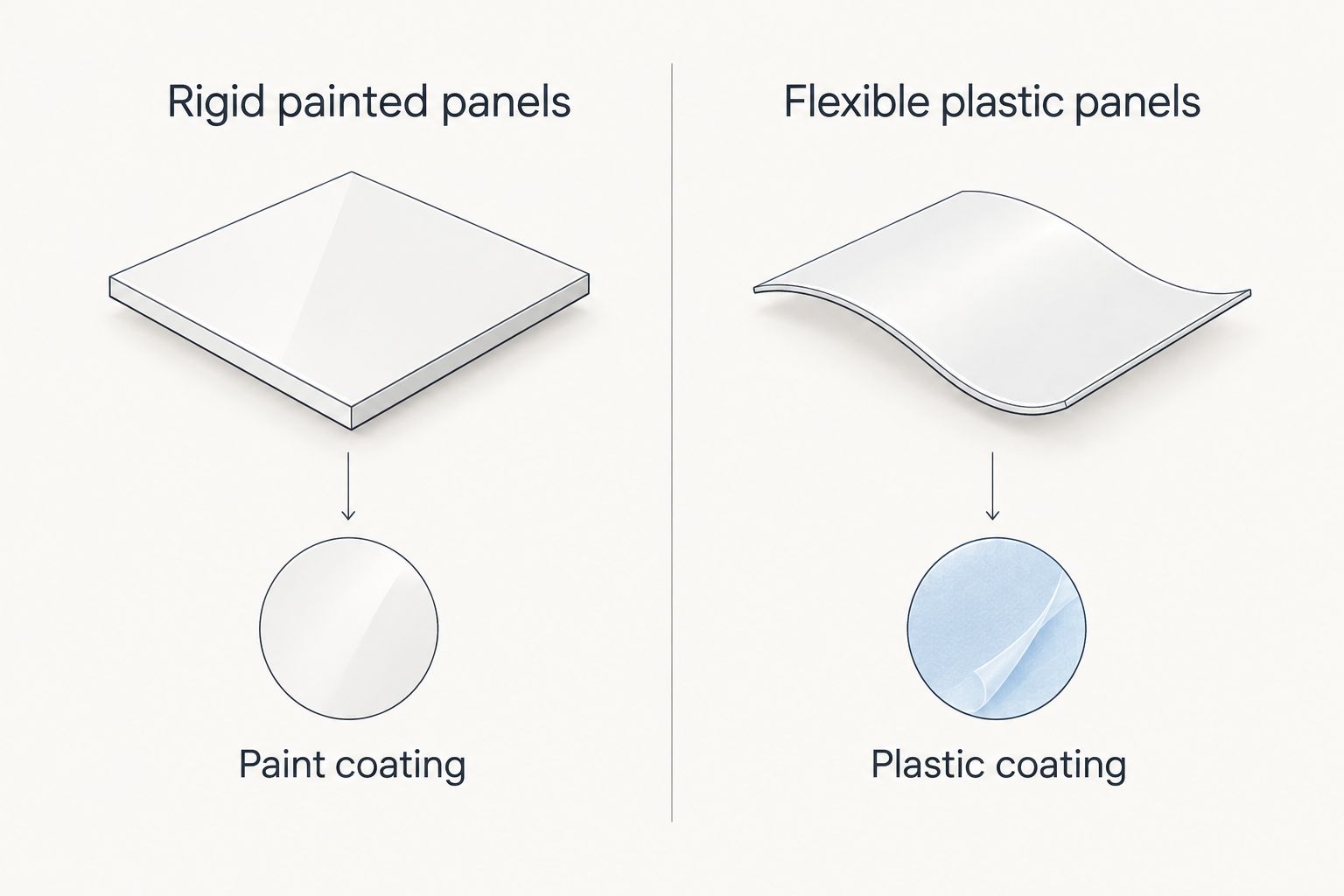
One of the most repeated notes across coating guides in this segment for 2026 riding season prep applies directly here: match the chemistry to the substrate before you match the brand.
“A ceramic coating rated for automotive clear coat will crack the first time a flexible fender flexes over a rock.”
Apply the coating in thin, even passes
Manufacturer instructions vary by product, but the general workflow is consistent across most professional-grade ceramic coatings on the market in 2026.
- Work in shaded conditions or a covered bay — direct sun flashes the coating before it can level
- Apply with a foam or suede applicator in a crosshatch pattern, one panel at a time
- Buff off high spots within the manufacturer's stated window to avoid hazing
- Let the coating flash and level fully before moving to the next panel
- Avoid touching coated panels for the full cure window before the first ride or wash
Coat the wheels, hubs, and calipers as a separate step
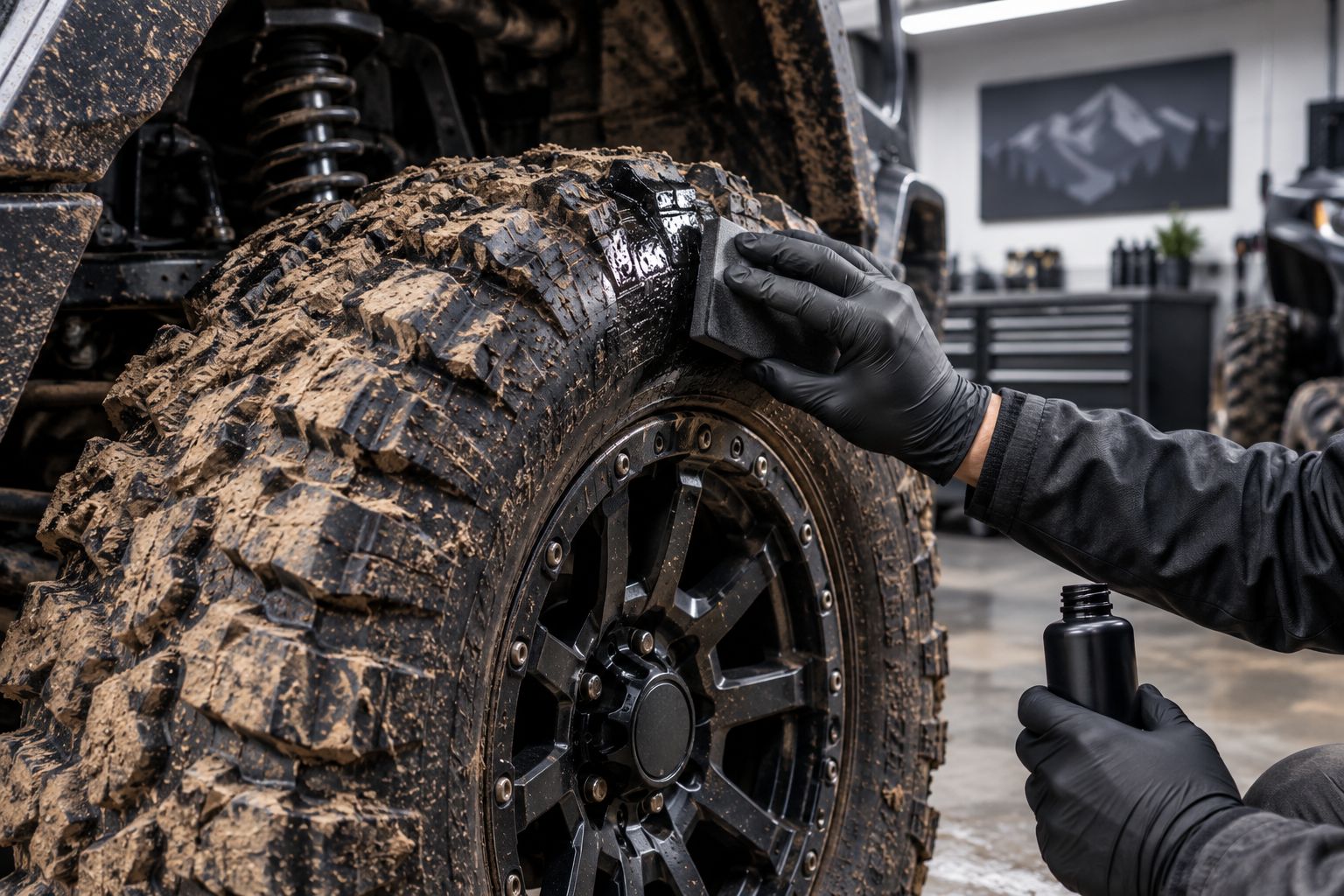
Brake dust and mud bake onto ATV and UTV wheels harder than on a street car, because trail brakes run hotter and get less frequent cleaning. A body coating is not rated for that heat cycling.
- Decontaminate wheels with an acid-free wheel cleaner before coating, never after
- Apply a wheel-specific ceramic coating like Gtechniq C5 Wheel Armour for long-term brake dust resistance
- Coat calipers separately if they're exposed and visible — different heat tolerance than the wheel face
- Let wheel coatings cure the full recommended window before the next muddy ride
Maintain the coating after every muddy ride
A bonded ceramic coating doesn't need reapplication every wash, but it does need a maintenance routine or it loses its water-shedding behavior faster than a coated street car would.
- Rinse mud off as soon as possible after a ride — dried clay is harder on the coating than wet mud
- Use a pH-neutral, ceramic-safe soap so you don't strip the bonded layer
- Apply a SiO2 spray topper after wash to refresh hydrophobic beading between full coating cycles
- Dry with a plush microfiber towel instead of letting panels air-dry with mineral deposits
- Inspect beading behavior every few rides — flat water sheeting instead of tight beads signals the coating is wearing thin


Watch for coating failure signs and know when to strip and recoat
An ATV or UTV coating wears differently than a car's because it takes more abrasion per riding hour. Riders who put on 40-plus trail days a season should expect to recoat sooner than a weekend cruiser.
- Watch for water sheeting instead of beading — the first visible sign of coating breakdown
- Check for dulling on high-contact areas like the front fenders and lower doors first
- Strip old coating with a dedicated panel prep or paint-safe polish before reapplying, never layer a new coat over a failing one
- Recoat wheels separately from body panels since they wear at different rates
The same hardness-matching logic that applies here shows up in the ceramic coating hardness guide for daily-driven cars, and riders coating a powersports machine with painted tanks and fairings will find the process nearly identical to what's covered in the guide on ceramic coating for motorcycle tanks and fairings.
Comparison: ceramic coating options for ATV and UTV panels
| Option | Best for | Key limitation |
|---|---|---|
| SiO2 spray topper | Quick refresh after every ride | Not a bonded coating — needs frequent reapplication |
| Rigid multi-layer ceramic (Gtechniq Crystal Serum Light) | Painted tanks, frames, hard plastic panels | Cracks if applied to flexible ABS fenders |
| Flexible-film ceramic coating | Bendable plastic fenders and brush guards | Not rated for painted metal panels |
| Dedicated wheel ceramic (Gtechniq C5 Wheel Armour) | Wheels, hubs, and brake dust resistance | Doesn't protect body panels — separate product required |
Common mistakes ATV and UTV owners make with ceramic coating
- Coating over trapped mud in textured plastic — the texture on most ATV fenders hides clay residue that a quick rinse won't remove, and the coating seals it in permanently.
- Using one coating hardness on the whole machine — a rigid automotive-grade coating on a flexible fender flexes and cracks within a season of trail impacts.
- Skipping wheel decontamination — brake dust bonds harder on off-road wheels than street wheels because brake temperatures run higher on the trail.
- Expecting the coating to stop mud staining entirely — a cured ceramic layer makes mud easier to rinse off; it doesn't prevent staining on contact.
- Applying a coating right before a ride — interrupting the cure window with rain or mud exposure causes the coating to bond unevenly and fail early.
FAQ
What's the best ceramic coating for ATV and UTV plastic body panels?
A flexible-film ceramic coating rated for ABS plastic works best on ATV and UTV fenders and brush guards because it moves with the panel instead of cracking. Rigid automotive-grade coatings are built for painted metal, not flexible plastic.
Is ceramic coating worth it for a UTV that only sees mud and trail dust?
Yes, because a bonded coating cuts wash time after muddy rides and slows UV fade on plastic panels that spend more time in direct sun than a garaged street vehicle. It doesn't prevent mud contact, it just makes cleanup faster.
Can I use the same ceramic coating on my ATV wheels as the body panels?
No — wheels need a dedicated wheel coating rated for brake heat and brake dust, like Gtechniq C5 Wheel Armour. Body coatings aren't formulated for the heat cycling wheels go through.
How often should I recoat an ATV or UTV that rides 40-plus days a season?
Heavy trail use wears a coating faster than daily street driving, so watch for water sheeting instead of tight beading as the signal to recoat rather than following a fixed calendar interval.
Does ceramic coating stop brake dust from sticking to ATV wheels?
A dedicated wheel ceramic coating makes brake dust easier to rinse off but doesn't stop it from contacting the wheel. Regular rinsing after rides still matters even with a coated wheel.
Do I need to correct paint before coating an ATV or UTV?
Yes — a ceramic coating locks in whatever condition the surface is in, so oxidation, swirls, and faded plastic should be corrected first. Coating over damage seals it in permanently.
What's the difference between a ceramic coating and a spray-on SiO2 topper for a UTV?
A bonded ceramic coating lasts through multiple riding seasons and requires surface prep and cure time. A spray-on SiO2 topper is a quick maintenance layer applied between washes and needs reapplication far more often.
One last thing
Most failed ATV and UTV coating jobs trace back to one decision, not the product: applying a single hardness level across the whole machine instead of splitting the job by panel material. Rigid coating on the tank, flexible-film chemistry on the fenders, and a dedicated wheel coating on the rims is more work up front but it's the difference between a coating that survives one trail season and one that survives three.