

Detailing Chemicals for Car Flipping: 2026 Buyer's Guide
Car flipping and resale detailing means chemicals selected for speed, curb appeal, and odor elimination so a used vehicle sells at the highest price with the shortest turnaround time. A flipper doesn't need a six-hour paint correction on every car — they need a repeatable, 60-to-90-minute chemical stack that kills smells, pulls stains, and makes the exterior photograph well for the listing.
- Detailing chemicals for car flipping prioritize odor removal, stain extraction, and fast exterior shine over deep paint correction.
- P&S Terminator Enzyme Spot & Stain and an acid-free wheel cleaner form the core two-product stack for most flips.
- Odor fogging is the one step flippers skip most often and it's the one that kills deals at the test drive.
- Detailing World ATL carries the enzyme cleaners, interior resets, and wheel chemicals built for this turnaround pace in 2026.
Why detailing chemicals matter for car flipping
A flipped car sells on first impression, not on six-stage correction work. The two things a buyer notices in the first 90 seconds — smell and interior cleanliness — are chemical problems, not paint problems, and they're solved with the right products instead of hours of labor.
Stain and odor complaints are also the fastest way to lose a sale mid-walkthrough. A enzyme spot and stain remover that breaks down organic residue at the source — instead of masking it — closes that gap in one pass, which matters when the margin on a flip depends on turning inventory quickly rather than holding a car on the lot.
A flipped car with a clean-smelling cabin and swirl-free wheels sells faster than one with a wax job and a lingering odor problem — buyers notice smell before they notice shine.
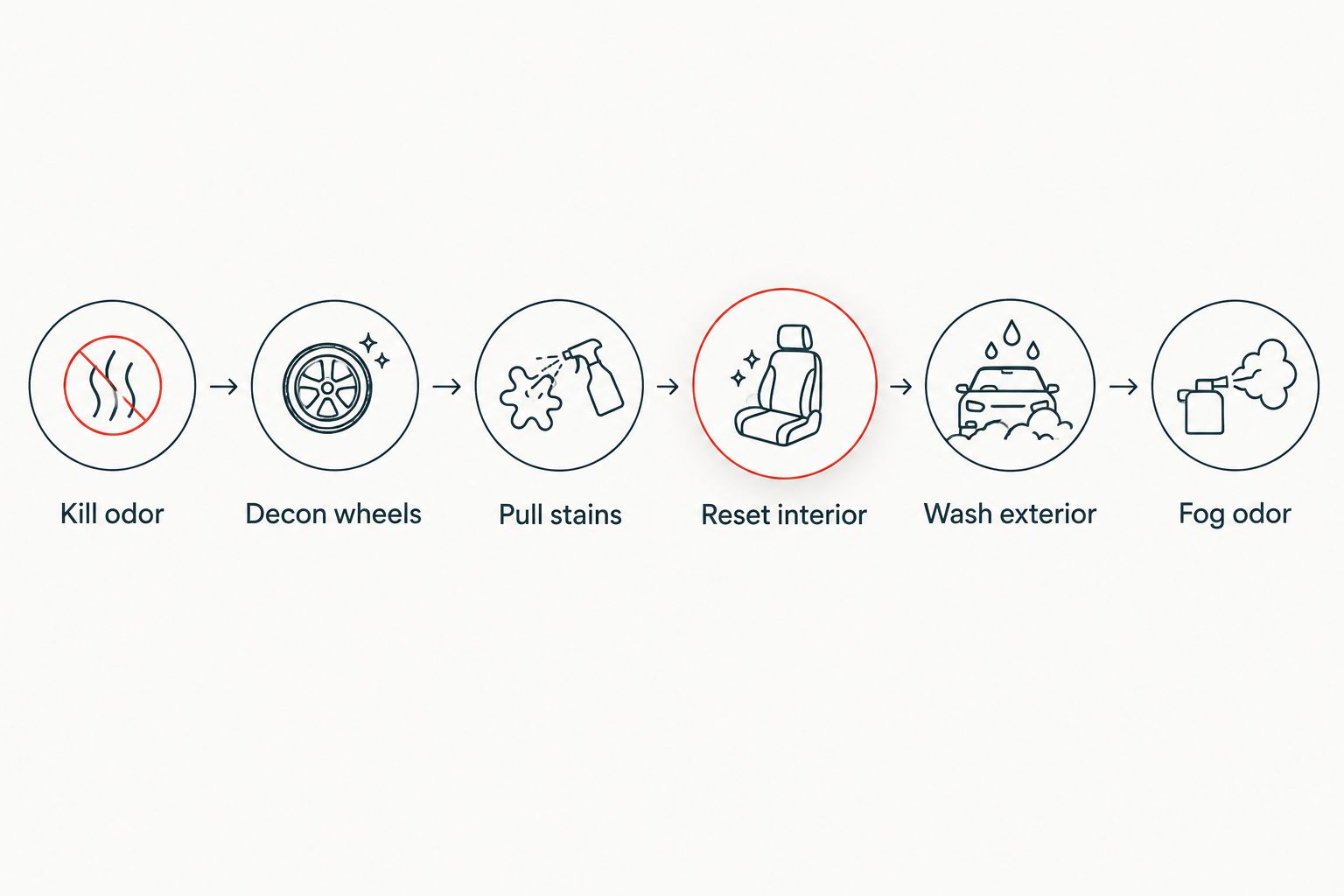
Strip the odor before the walkthrough
Odor is the single biggest deal-killer in a resale walkthrough, and it's almost always fixable without a coating or a sealant. Start here before touching paint or wheels.
- Pull all trash, fabric floor mats, and loose items — odor hides in fabric, not plastic
- Vacuum seat tracks and under-seat rails where food debris collects
- Open all doors and run a fan through the cabin for at least 20 minutes before spraying anything
- Check the HVAC intake vents at the base of the windshield for mold buildup
- Note whether the odor is smoke, pet, or mildew — each needs a different follow-up step later
Decontaminate the wheels and tires first
Wheels sell the listing photo. Brake dust staining and dull tires read as "neglected" even on a mechanically sound car, so this step happens before the wash bucket comes out.
- Spray wheels cold, never on a hot rim, to avoid staining
- Use a dedicated acid-free wheel cleaner on painted, chrome, and clear-coated wheels to avoid corrosion risk
- Agitate lug nuts and barrels with a stiff wheel brush, not the wash mitt
- Rinse thoroughly before it dries — dwell time over 5 minutes on heavy dust needs a second pass, not more product
- Dress tires last, after the wheel face is dry
Pull stains and spots out of the cabin
Seats and carpet carry the previous owner's history, and buyers read stains as a sign the car wasn't maintained even when the mechanicals are fine. This is the step that separates a $500 detail job from a $150 one.
- Identify the stain type first — protein-based stains (food, pet, blood) respond to enzyme cleaners; oil-based stains need a solvent-based spotter
- Blot, never rub, on fabric to avoid spreading the stain further into the fibers
- Test on a hidden seam before treating a visible panel
- Work small sections and re-extract with a wet-vac pass instead of letting cleaner air-dry into the fabric
- Repeat on set-in stains — enzyme cleaners often need two applications on stains over a few weeks old
Reset interior surfaces in one pass
Once stains are pulled, the rest of the cabin needs a single fast pass that covers dash, door panels, console, and trim without leaving a greasy or hazy finish under interior lighting for photos.
- Use a multi-surface interior cleaner safe on vinyl, rubber, and factory tint film
- Wipe with a clean microfiber towel in straight lines, not circles, to avoid streaking on gloss trim
- Hit cup holders and door pockets last — they collect the most residue and need a second wipe
- Skip heavy silicone dressings on the dash if the car will sit in direct sun before the sale; they can haze under UV


Wash and finish the exterior for listing photos
Listing photos sell the car before the buyer ever shows up, and a swirl-heavy, water-spotted wash job kills click-through on the listing itself.
- Wash with a dedicated concentrated car shampoo instead of dish soap, which strips existing sealant and leaves streaking
- Two-bucket method, always — one for soap, one for rinsing the mitt
- Dry with a microfiber towel or drying aid before water spots set, especially in Georgia's humidity
- Shoot photos in flat, even light — direct sun highlights swirls that a buyer won't notice in person
Fog and permanently kill trapped odors
Surface cleaning handles what's visible; fogging handles what's trapped in the HVAC system and headliner fabric, which is where smoke and pet odor actually live.
- Run an odor fogging treatment with all vents on recirculate and the engine running to pull the fog through the HVAC system
- Seal the cabin for the full dwell time listed on the product — cutting it short leaves the odor source untouched
- Re-check after 24 hours; smoke odor sometimes resurfaces once the cabin returns to normal humidity
- Full fogging methodology is covered in odor bombs and fogging treatments for used car resale prep
Comparison: chemical options for car flipping and resale prep
| Option | Best for | Key limitation |
|---|---|---|
| Enzyme spot & stain remover | Set-in organic stains on seats and carpet | Needs dwell time; not a spray-and-wipe solution |
| Multi-surface interior cleaner | Fast one-pass dash and trim reset | Won't touch odor trapped in HVAC or fabric |
| Acid-free wheel cleaner | Brake dust removal without corrosion risk | Slower on heavy, baked-on dust than acid formulas |
| Odor fogging treatment | Smoke, pet, and mildew odor at the source | Requires a sealed cabin dwell period, adds prep time |
| Concentrated exterior car wash | High-volume flips needing consistent finish | Dilution ratio must be measured, not eyeballed |
Verdict: for most flips, the enzyme stain remover and the acid-free wheel cleaner do more to move a sale than any wax or coating — buyers notice cleanliness before they notice gloss.
Common mistakes car flippers make with detailing chemicals
- Skipping the odor source and masking it instead. A fragrance spray over a smoke or pet odor comes back within days and the buyer notices at the second showing.
- Using acid wheel cleaner on every wheel finish. Painted and clear-coated wheels can pit or discolor under repeated acid exposure, which shows up as a resale problem on the next flip.
- Over-diluting concentrates to stretch the bottle. A wash or interior cleaner mixed too weak means a second pass, which costs more labor time than the product saved.
- Detailing the exterior before fixing the interior. Buyers spend more time inside the cabin during a walkthrough than looking at the paint, so interior odor and stains should come first, not last.
- Applying a sealant or coating on a car that will sell within days. A quick spray protectant does the job for a fast flip; a multi-year coating is labor spent on a car the flipper won't own long enough to benefit from.
FAQ
What detailing chemicals do car flippers actually need?
Car flippers need an enzyme stain remover, an interior multi-surface cleaner, an acid-free wheel cleaner, an odor fogging treatment, and a concentrated exterior wash. That five-product stack covers the fastest-selling improvements: smell, stains, and curb appeal.
Is ceramic coating worth it for a car being flipped?
Usually not. Ceramic coating is a multi-year investment and most flips sell within weeks, so a quick detail spray or sealant delivers the same showroom shine without the labor cost of a full coating install.
How do you remove smoke smell from a used car before reselling it?
Run an odor fogging treatment through the HVAC system with vents on recirculate, then seal the cabin for the full dwell time. Surface cleaning alone won't reach odor trapped in the headliner and vents.
Should you use acid or acid-free wheel cleaner on resale vehicles?
Acid-free wheel cleaner is safer across mixed wheel finishes on a resale lot since you often don't know the exact finish on every incoming trade. Acid formulas work faster on heavy brake dust but carry more corrosion risk on painted or clear-coated wheels.
How long should a full resale detail take?
Most flippers target 60 to 90 minutes per vehicle for a wash, wheel decon, interior reset, and stain treatment. Odor fogging adds a sealed dwell period on top of that active work time.
What's the biggest detailing mistake that kills a car sale?
Masking odor instead of eliminating it at the source. Fragrance sprays fade within a showing or two, and a buyer who notices the smell return during a test drive usually walks or asks for a lower price.
Do enzyme cleaners work on old, set-in stains?
Enzyme cleaners work on set-in organic stains but often need two applications and full dwell time on anything older than a few weeks. Fresh stains lift in one pass; older ones need patience, not more product.
Can you dilute concentrated wash chemicals for high-volume flipping?
Yes, and it's the point of buying concentrates — a properly measured dilution ratio keeps cost per car down without sacrificing wash quality. Eyeballing the ratio instead of measuring it is the most common way flippers waste product.
One last thing
The fogging step is the one flippers skip most and the one that costs the most sales. A car that looks clean but still carries a faint smoke or pet smell loses buyer confidence at the exact moment they're deciding whether the car was "well maintained" — and no amount of wax fixes that impression once it's formed.