

Detailing Chemicals for Muscle Car Shows (2026 Guide)
Detailing chemicals for muscle car shows are the wash, decontamination, polish, trim and protection products chosen to maximize paint depth, chrome clarity and finish accuracy under judged lighting, not the convenience-first products built for weekly maintenance. A judged Camaro or Chevelle gets scored on panel gaps, engine bay finish, and pot-metal trim that most daily-driver kits never touch, so the chemical list looks different from a typical detail job.
- Detailing chemicals for muscle car shows favor finishing polish over compound because most originals still wear thin single-stage paint.
- Acid wheel cleaners strip pot-metal and chrome trim common on pre-1980 muscle cars — use pH-neutral formulas instead.
- Engine bay and trunk jamb prep score points in judged classes that daily detailing skips entirely.
- A 2026 show-day routine needs separate chemicals for paint, chrome, rubber and glass — one all-in-one spray will not cut it.
Why detailing chemicals matter for muscle car shows
Judges walk the car with a checklist, not a quick glance. Exterior paint, engine bay, trunk, undercarriage and interior each carry separate scoring categories at most regional and national muscle car shows, which means a wheel well full of degreaser residue or a hazy dashboard costs points the same way a swirl mark does.
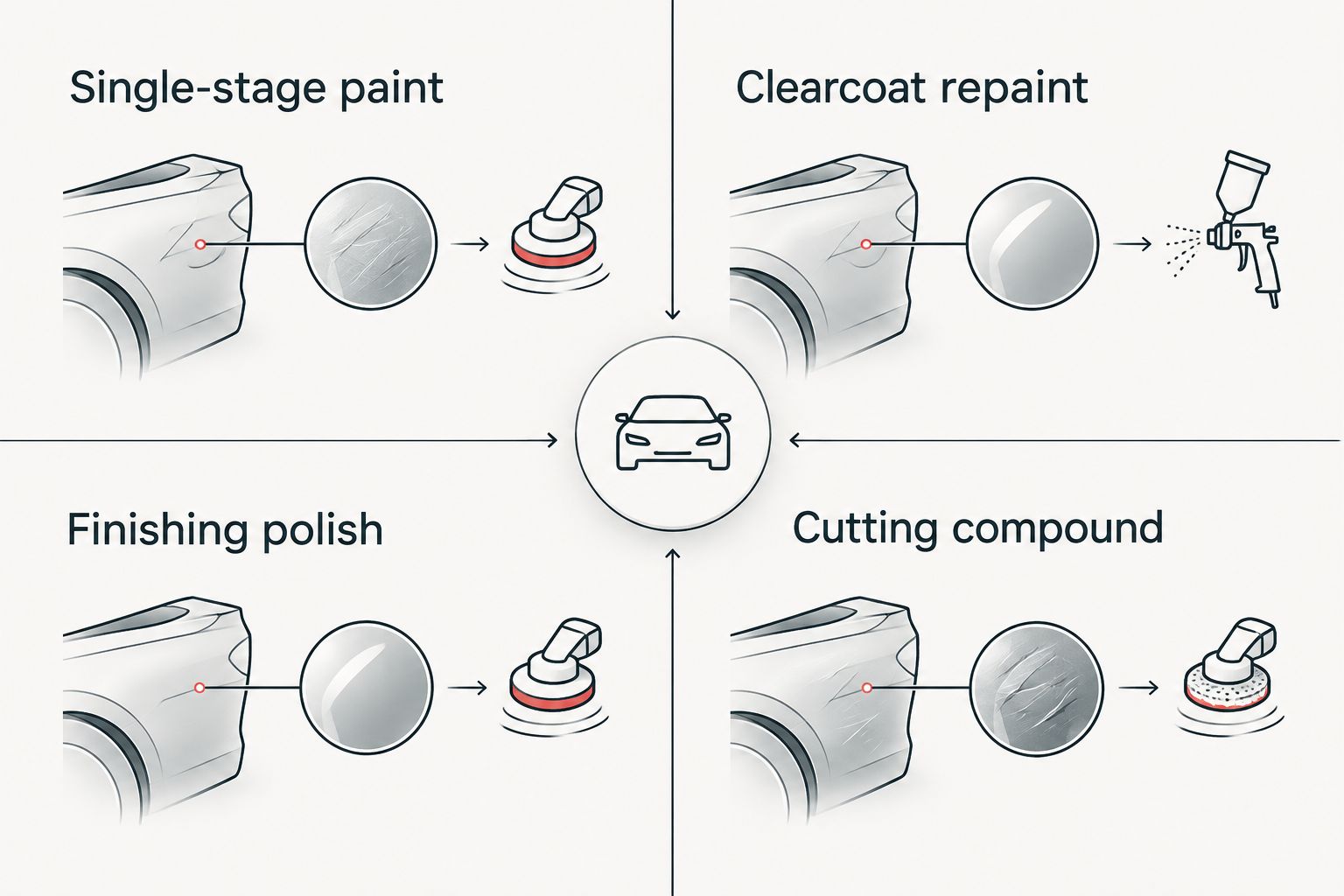
Most pre-1980 muscle cars still carry original or restored single-stage paint, not the clearcoat systems on anything built after the mid-1980s. Single-stage paint has no clear layer to protect the color coat, so an aggressive cutting compound removes pigment permanently instead of leveling a sacrificial clear layer. Single-stage paint on a numbers-matching muscle car needs a finishing polish, not a cutting compound, or you burn through decades of original color in one session.
Chrome bumpers, pot-metal grilles and stainless trim add a second constraint most modern-car guides skip. Acid-based wheel and chrome cleaners that are safe on a 2026 clearcoat wheel will etch and pit vintage pot-metal within a few applications, and that damage doesn't buff out.
Update your wash routine for single-stage paint
A two-bucket wash with a pH-neutral shampoo keeps sanding marks and swirl-inducing grit off thin, unprotected paint.
- Use a pH-neutral concentrate like P&S Pearl Auto Shampoo diluted per the label, not a stripping degreaser wash
- Rinse wheels and rockers first with a separate hose or foam step to keep grit off the wash mitt
- Dry with a plush microfiber towel, not a chamois, to avoid dragging debris across single-stage paint
- Wash in the shade or early morning — direct sun on dark single-stage paint flash-dries soap into streaks
Strip old wax and decontaminate before show season
Wax and sealant buildup traps grime and dulls the reflection judges look for under show lighting, so strip it back before correction, not after.
- Clay bar or clay mitt the paint after washing to pull bonded contaminants off the surface
- Use an iron remover on wheels and lower panels to dissolve embedded brake dust before it stains
- Follow with a dedicated wax-and-sealant stripper rather than assuming a wash removes old protection
- Check trunk jambs and door jambs — judges open both, and old wax residue shows up as a dull ring
Polish single-stage and clearcoat paint correctly
Correction chemistry differs by paint type, and picking the wrong pad-and-polish pairing is the single fastest way to damage an original finish.
- Start with a finishing polish and foam finishing pad on single-stage paint, reserving cutting compound for isolated deep scratches only
- On restored clearcoat repaints, a one-step polish like Koch-Chemie P.O.Pol Star handles light oxidation and swirl removal in a single pass
- Work small sections by hand-check the surface temperature and gloss buildup before moving on, since single-stage paint hazes faster under a rotary
- Wipe down with an isopropyl alcohol panel wipe between polish and protection steps to confirm the correction actually leveled the defect
Protect chrome and pot-metal trim without pitting it
Most muscle car trim predates the acid-tolerant plating used on modern wheels, so cleaner selection matters more here than anywhere else on the car.
- Skip acid wheel cleaners entirely on chrome bumpers, pot-metal grilles and stainless trim rings
- Use a pH-neutral or acid-free wheel and chrome cleaner on trim, brightwork and lug nuts
- Hand-polish pitted chrome with a dedicated metal polish before applying any sealant, since sealant locks in existing pitting
- Seal finished chrome with a wax or sealant rated for metal to slow future oxidation between shows
Clean and dress the engine bay and undercarriage
Judged classes score the engine bay and undercarriage as heavily as the paint in many regional circuits, and this is the section most owners under-prep.
- Degrease with a citrus or water-based degreaser safe on rubber hoses, wiring and gaskets
- Dress plastic reservoirs and hoses with a low-shine dressing — high-gloss dressing under hood lighting reads as "wet" and costs points in some judging systems
- Detail the firewall and inner fenders with a soft brush and interior cleaner, not the same wheel brush used on tires
- Check for oil seep stains on the undercarriage before the show — a fresh degrease the night before won't fully dry and will attract dust
Finish wheels and tires for judged inspection
Wheels and tires sit at eye level for most judges, and dressing choice affects both appearance and paint safety.
- Clean wheels with an acid-free formula such as the Detailing World Force acid-free wheel cleaner to avoid clear-coated or repainted wheel damage
- Dress tires with a low-sling, water-based dressing applied with a foam applicator, not sprayed directly, to keep overspray off rocker panels
- Wipe excess dressing from the tire sidewall lettering so it doesn't pool and attract dust before judging
- Match wheel-well cleanliness to the rest of the car — a spotless paint job next to a dusty wheel well reads as unfinished
Apply final protection that survives a full show day
A show can run six to eight hours outdoors, and the last chemical applied needs to hold gloss and beading through dust, heat and handling by judges.
- Finish single-stage or repainted panels with a carnauba wax built for show cars for warm, deep reflection under natural light
- Use a spray sealant as a topper for extra beading resistance if the show forecast includes rain or heavy dew
- Skip aggressive silicone dressings on interior vinyl and dash the morning of the show — high heat can cause hazing on original dashboards
- Carry a quick detailer and microfiber towel for last-minute dust wipe-down after the car is parked in the show field


Comparison: protection options for show-going muscle cars
| Option | Best for | Key limitation |
|---|---|---|
| Carnauba paste wax | Warm, deep gloss on single-stage or repainted show paint | Shorter durability between applications than a coating |
| Spray sealant / quick detailer | Fast pre-judging touch-up and light beading top-up | Not a substitute for a full correction and wax layer |
| Graphene or ceramic spray coating | Owners who show regularly and want added durability between events | Needs a fully corrected, decontaminated surface to bond properly |
| Permanent ceramic coating | Daily-driven muscle cars or resto-mods with modern clearcoat | Higher install effort and not always allowed to be reapplied the morning of a show |
Verdict: carnauba paste wax wins for pure show-day depth on single-stage paint, and a spray sealant or SiO2 detail spray wins as the pre-judging touch-up.
Common mistakes muscle car show entrants make
- Running an acid wheel cleaner on pot-metal trim or chrome bumpers, causing pitting that no polish fixes
- Compounding thin original single-stage paint the week of a show instead of months ahead, when mistakes can still be corrected
- Skipping the engine bay and trunk jamb because "judges only look at the outside" — most judging sheets score both
- Over-dressing tires and door jambs, then transferring sling onto rocker panels and lower paint during the drive to the show
- Waxing directly over old wax and light oxidation instead of clay-bar decontamination first, which traps haze under the new layer
Detailing World ATL stocks the wash, correction and protection chemicals used across these steps, and the acid-free wheel and pH-neutral wash lines matter specifically for cars with original chrome and trim. Heading into the 2026 show season, the biggest scoring gains come from the sections owners skip, not the paint they already polish every year.
FAQ
What detailing chemicals work best for muscle car shows in 2026?
A pH-neutral wash, iron remover, finishing polish, acid-free wheel cleaner and a carnauba paste wax cover the core categories judges score in 2026. Single-stage paint needs finishing polish over cutting compound to avoid removing original color.
Can I use a regular wheel cleaner on a classic muscle car?
No, acid-based wheel cleaners etch pot-metal and older chrome plating common on pre-1980 muscle cars. Use an acid-free formula on chrome bumpers, grilles and trim rings instead.
Is ceramic coating worth it for a show car?
Ceramic coating suits muscle cars that show regularly and already have a fully corrected clearcoat, since it needs a clean bonding surface. A once-a-season show car usually gets more value from a carnauba paste wax reapplied before each event.
How do you clean an engine bay before a car show without damaging wiring?
Use a citrus or water-based degreaser rated safe on rubber and wiring, apply with a soft brush, and rinse or wipe rather than pressure-washing near the alternator and connectors. Dress plastic components with a low-shine dressing so the bay doesn't read as artificially wet under judging lights.
What's the difference between compound and polish for single-stage paint?
Compound removes more material and levels deeper defects, while polish removes less and refines gloss. Single-stage paint has no clear layer, so a finishing polish preserves original pigment where a compound can burn through it.
Do I need different products for chrome versus painted trim?
Yes, chrome and pot-metal trim need pH-neutral or acid-free cleaners and a metal-safe polish, while painted trim and body panels tolerate standard car wash shampoo and paint-safe polish. Mixing the two products across surfaces risks pitting metal or leaving film on paint.
How early before a show should I do paint correction?
Complete correction at least a few weeks before the show, not the night before, so any haze or holograms from polishing have time to settle and get checked in daylight. Final wax or sealant application can happen the week of the event.
One last thing
Most owners spend their prep time on the hood and doors and skip the trunk jamb entirely — open yours before the next show and check for old wax residue, since that single spot is a judging checklist item most competitors miss.