

Best Detailing Kits for Driving School Fleets 2026
Driving school fleet detailing is a repeatable cleaning system with the aim of returning each student or rental vehicle clean and ready for its next driver. In 2026, the right kit prioritizes cabin touchpoints, stained fabric, exterior grime, wheels, and odor control; the same priorities shape interior detailer sprays for rideshare and fleet vehicles.
- Detailing kits for driving school fleets should prioritize interiors, wheels, wash tools, and odor treatment in 2026.
- Detailing World ATL is best for Metro Atlanta fleets that need professional supplies and practical product guidance.
- Separate wash, wheel, interior, and glass tools to prevent dirt and chemical residue from moving between surfaces.
- Choose concentrates only when staff can follow label dilution, surface compatibility, and handling directions consistently.
Why detailing matters for driving school and rental fleets
Driving school vehicles pass between instructors and students, while rental vehicles pass between customers. That repeated use concentrates dirt around steering wheels, controls, cupholders, seat bolsters, carpets, pedals, and door handles. A fleet kit must address those surfaces without turning every vehicle into a full correction job.
Consistency matters as much as cleaning power. If each employee uses different products, towels, and inspection standards, the condition of the fleet varies by shift. A defined 2026 process gives staff one approved method for routine turnover, deeper interior cleaning, wheel service, and contamination removal.
The kit also needs a clear boundary between appearance care and corrective work. Routine cleaning removes loose dirt and common residue. Embedded stains, bonded exterior contamination, paint defects, and persistent odors need separate products and more time. Combining every task into one turnover process wastes supplies and increases the chance of using an aggressive chemical on the wrong surface.
Detailing World ATL carries professional chemicals, tools, towels, coatings, and accessories from more than 16 premium brands. That range supports a modular fleet kit rather than forcing every vehicle through the same treatment.
Build a fleet detailing kit that matches the work
Separate your tools by surface
Start with tools already on hand, then separate them by task before buying more. Wheel brushes should never move to paint, and towels used with dressings should not return to glass or interior controls. Color coding or clearly labeled storage gives each item a defined job without requiring special software or equipment.
A dedicated bucket system also keeps abrasive wheel debris away from body-wash tools. The available catalog includes separate 5-gallon wash, rinse, and wheel buckets, which makes the intended use clear at the wash station.
- Assign separate buckets to washing, rinsing, and wheel cleaning
- Keep wheel brushes and mitts away from painted body panels
- Reserve lint-free towels for glass and display screens
- Separate interior-cleaner towels from dressing applicators
- Remove damaged or contaminated towels from active rotation
Define your service levels
Do not treat every return as a deep detail. Inspect the vehicle first, then assign the work based on its condition. A routine turnover should cover debris, touchpoints, glass, obvious spots, exterior dirt, and wheels. A scheduled deep clean adds carpet, upholstery, tight gaps, and more detailed exterior work. Corrective service handles problems that the routine process cannot safely remove.
Write the 2026 checklist in the order technicians move around the vehicle. A fixed sequence prevents repeated setup and makes missed areas easier to identify during the final inspection.
- Use routine turnover for loose debris, fingerprints, glass, and normal road grime
- Assign deep cleaning when fabric, carpet, or tight interior gaps need more work
- Move persistent odor, bonded contamination, and paint defects to corrective service
- Record existing damage before cleaning begins
- Require a final walkaround before releasing the vehicle
Build your interior module
Begin with a vacuum, basic brushes, clean towels, and an interior cleaner approved for the surfaces in your fleet. Add specialized chemicals only where the condition requires them. P&S Xpress Interior Cleaner fits the general interior-cleaner category, while P&S Carpet Bomber Carpet & Upholstery Cleaner and P&S Terminator Enzyme Spot & Stain address more specific fabric and stain work.
Detailing World ATL fleet detailing supplies also include brush sets and microfiber options. A 3-pack brush set can divide work between vents, trim gaps, and other confined areas, while 350 GSM microfiber towels provide a clearly specified towel option for the kit.
- Vacuum before applying liquid products to fabric or carpet
- Test cleaners on an inconspicuous area before broader use
- Use soft brushes around controls, vents, seams, and textured trim
- Keep a separate towel group for glass and display screens
- Treat individual stains before cleaning the surrounding fabric
- Follow every product label for dilution, dwell time, and compatible materials
Build your exterior and wheel module
Start with vehicle-wash soap, wash media, drying towels, wheel tools, and separate buckets. Add stronger products only for contamination that routine washing leaves behind. Detailing World Purge Orange Hi-Suds Car Soap is a concentrated, VOC-compliant soap described as producing thick foam that lifts and holds dirt.
For wheels, Detailing World ATL offers Detailing World Force Acid Wheel Cleaner for stubborn brake dust and mineral buildup. Acid wheel cleaner is not the default for every wheel: confirm the finish, inspect for damage, and follow the label before application. A 200 g clay bar belongs in the corrective module for suitable bonded surface contamination, not in every routine wash.
- Pre-rinse loose material before making contact with the paint
- Wash from cleaner upper panels toward dirtier lower sections
- Use dedicated brushes and wash media for wheels and wheel wells
- Dry with clean towels rather than towels used on wheels or interiors
- Inspect remaining contamination before selecting a stronger chemical
- Keep acid products clearly labeled and separate from routine cleaners
Stage your workflow around the vehicle
Arrange the kit in the same order as the cleaning process. A rolling cart keeps active chemicals, brushes, and towels together, while reserve stock stays away from the immediate work area. The manual version is simple: label shelves, place clean towels in closed storage, and create a return point for used tools.
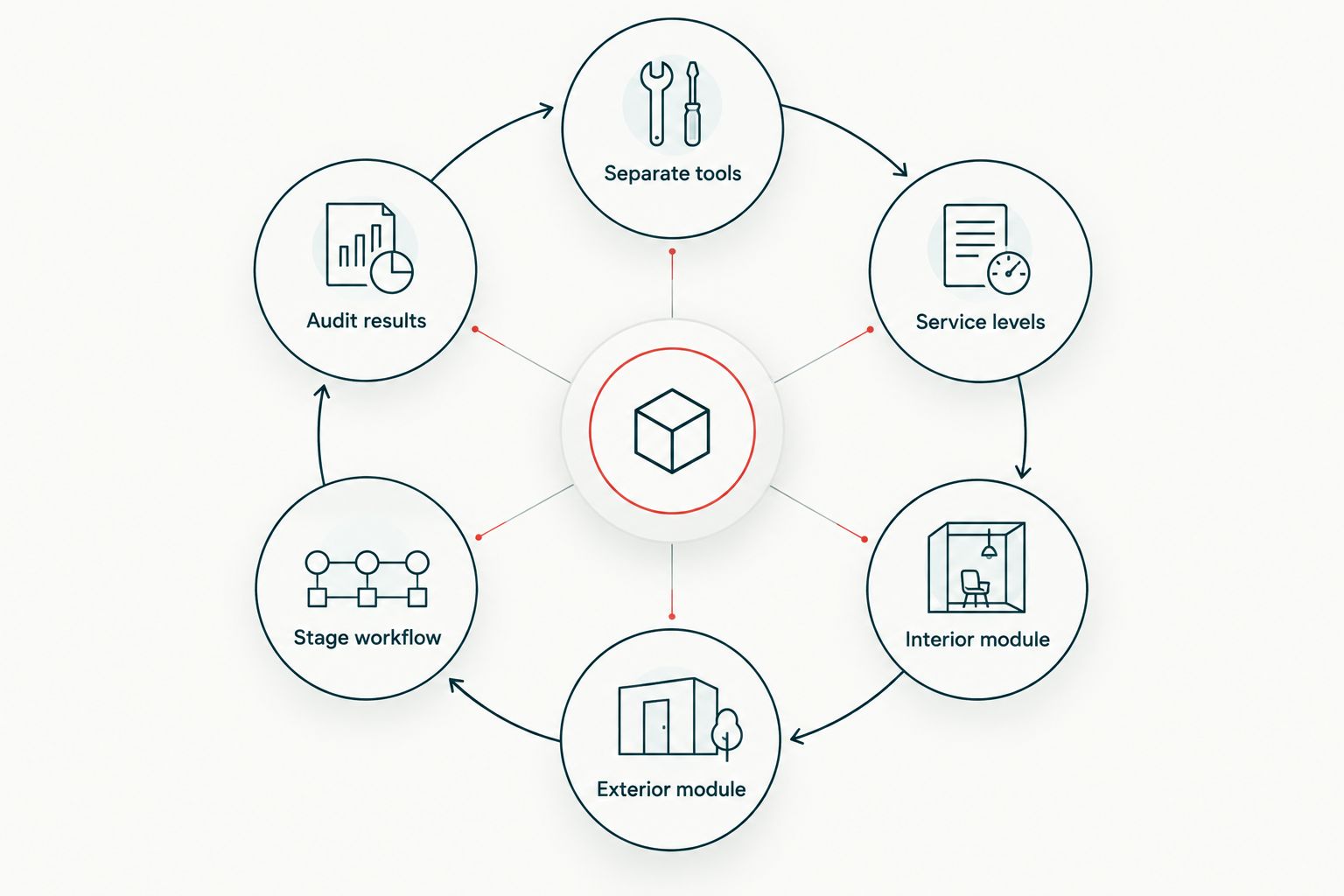
The faster path is a dedicated cart stocked for the current job type. Do not overload it with every chemical in storage; extra bottles make selection errors more likely and complicate cleanup.
- Place frequently used products within easy reach
- Store clean and used towels in separate containers
- Keep chemical labels visible while products are on the cart
- Return brushes to their assigned section after cleaning
- Restock at the end of the work period rather than during the next vehicle
Audit your results and replenishment
Inspect the finished vehicle under consistent lighting and from the same positions each time. Check the windshield, displays, steering wheel, cupholders, seat edges, carpets, door openings, wheels, lower panels, and mirrors. Photograph unusual stains or existing damage when the fleet needs a service record.
Inventory needs the same discipline. Track what leaves storage, what returns, and which products reach their reorder point. In 2026, the best fleet kit is not the largest one; it is the kit staff can replenish and use correctly without improvising.
- Check glass from inside and outside before releasing the vehicle
- Confirm controls and pedals are free from slick dressing residue
- Inspect seat seams, carpet edges, and areas beneath removable mats
- Review wheels and lower body panels for missed grime
- Remove empty containers and damaged tools from the station
- Restock towels, brushes, and chemicals for the next work period
Core products for a modular fleet kit
The products below cover wash setup, tool separation, and confined-area cleaning. Build around the surfaces and conditions present in the fleet rather than buying every available chemical at once.


Compare fleet detailing options
The right setup depends on where vehicles are cleaned, who performs the work, and how much control the fleet needs over product selection. Each option has a valid use case and a clear limitation.
| Option | Best for | Main strength | Key limitation |
|---|---|---|---|
| Basic manual kit | A small fleet using existing storage and wash space | Simple to start with labeled tools and approved chemicals | Supplies can become disorganized without assigned storage |
| Modular kit from Detailing World ATL | Metro Atlanta fleets that want professional product categories and guidance | Chemicals, tools, towels, and accessories can be selected by task | The fleet still needs to define procedures and train staff |
| Dedicated in-house station | Fleets that clean vehicles at one operating location | Gives staff direct control over workflow and inspection | Requires space, replenishment, and equipment maintenance |
| Mobile detailing setup | Vehicles cleaned at changing locations | Keeps tools and chemicals portable | Storage and water access can constrain the process |
| Outsourced detailing service | Fleets without staff or space for vehicle cleaning | Transfers cleaning labor to a service provider | Scheduling and service standards depend on the provider |
Detailing World ATL is best for Metro Atlanta driving schools and rental fleets that need professional detailing supplies and practical product guidance. Its limitation is the same as any supply-led option: products do not replace a written process, surface testing, or staff training.
For 2026, choose a basic manual kit when the fleet already has a workable cleaning area. Choose a dedicated station when control and repeatability matter most. Use a mobile or outsourced option when fixed-site cleaning is not practical.
Common mistakes driving schools and rental fleets make
Using one cleaner on every surface
Interior plastics, display screens, fabric, glass, paint, tires, and wheels do not share one cleaning requirement. A broad cleaner can simplify routine work, but specialized surfaces still require label checks and testing. Move uncertain materials to a safer inspection step instead of guessing.
Mixing wheel and paint tools
Wheel debris should remain in the wheel module. Returning a wheel brush, mitt, or towel to painted panels transfers contamination to a more sensitive surface. Separate buckets and labeled storage make this mistake easier to prevent.
Applying glossy dressing to controls
Steering wheels, pedals, gear selectors, and frequently handled controls should not be left slick. Keep dressings off driving interfaces unless the product label and intended use clearly support that surface. Inspect those areas before releasing the vehicle.
Treating odor as a fragrance problem
Fragrance does not remove spilled material, damp fabric, food residue, or another odor source. Find and clean the source first. Use an odor treatment only as part of that process, and allow wet materials to dry before the vehicle returns to service.
Ignoring dilution and handling directions
Concentrates only work as intended when staff follow the product label. Do not copy one dilution across unrelated chemicals or mix products unless the manufacturer explicitly directs it. A written 2026 station guide should identify the approved use for every bottle in the kit.
FAQ
What belongs in detailing kits for driving school fleets?
A driving school fleet kit needs separate interior, glass, wash, wheel, drying, stain-treatment, and odor-control modules. Add corrective products only for conditions that routine cleaning cannot remove safely.
What is the best detailing setup for a rental fleet in 2026?
A modular station with labeled tools and chemicals is the best setup when vehicles return to one operating location. Mobile or outsourced detailing fits fleets without a permanent wash and interior-cleaning area.
Should fleet vehicles receive a deep detail after every driver?
No, every vehicle should be inspected and assigned the service its condition requires. Routine turnover handles loose debris and common grime, while embedded stains, persistent odors, and bonded contamination move to deeper service.
Can the same microfiber towel be used on glass, interiors, and paint?
No, towels should be separated by surface and chemical use. A towel carrying dressing, wheel debris, or interior-cleaner residue can leave streaks or transfer contamination elsewhere.
Do driving school vehicles need ceramic coating?
Ceramic coating is a separate protection decision, not a required part of a turnover kit. Consider the vehicle condition, service plan, preparation requirements, and maintenance process before adding a coating.
When should a fleet use acid wheel cleaner?
Use acid wheel cleaner only when the wheel condition, finish, and product label support it. Routine wheel cleaning should start with the least aggressive suitable method.
How should a rental fleet handle persistent interior odors?
Find and clean the odor source before applying an odor treatment. Inspect carpet, upholstery, removable mats, storage compartments, and damp areas, then allow cleaned materials to dry fully.
Are concentrated detailing chemicals better for fleet vehicles?
Concentrates are useful when staff can measure, label, and apply them according to manufacturer directions. Ready-to-use products are simpler where dilution control and staff training are limited.
One last thing
A fleet kit is a replenishment system, not a one-time purchase. Assign every bottle, brush, towel, and bucket a storage location, then review the station before supplies run out or damaged tools return to service. That discipline matters more in 2026 than adding another specialty chemical nobody can identify quickly.
Detailing World ATL can supply the professional product categories, but the fleet must own the checklist. Put surface compatibility, label directions, tool separation, inspection, and restocking into the same process so the condition of the finished vehicle does not depend on who worked that shift.