

How Long Does Ceramic Coating Last? Condition Wins (2026)
A ceramic coating lasts until the protective layer on the paint has worn enough that cleaning and decontamination no longer restore its water behavior. There is no honest universal lifespan for 2026: the coating, surface preparation, exposure and wash routine determine the result. A temporary loss of beading is not, by itself, proof that the coating has failed.
- How long does ceramic coating last? There is no universal 2026 timeline; condition and care determine usable life.
- Gyeon Q2 Pure EVO is a paint-coating option; a ceramic detail spray is maintenance, not a replacement coating.
- Wash and inspect the paint before judging a coating by water beading.
- If careful cleaning does not restore water behavior, ask a detailer to assess the coating before reapplying it.
Why this matters
A lifespan claim is useful only if you know what has to last. A coating can still be on the paint while road film makes water cling to the surface. A fresh detail spray can also produce strong beading after the underlying coating has weakened. Water behavior tells you when to investigate; it does not tell you which layer is working.
For a daily driver, the practical question is whether routine cleaning still leaves the paint behaving as expected. For a detailing shop, it is whether the result matches what was promised at installation without treating every change in beading as a failed job. Both start with the same step: clean the surface before evaluating it.
How long does a ceramic coating actually last?
A ceramic coating has no fixed lifespan that applies to every vehicle. In 2026, judge its condition against the installer's product and aftercare instructions, then inspect clean paint. Do not turn the lifespan printed for one coating into a guarantee for a different coating or a differently maintained car.
| Option | What it is | Best for | Advantage | Limitation |
|---|---|---|---|---|
| Gyeon Q2 Pure EVO 30ml | A paint-coating product | Someone planning a coating application | Provides a product-specific starting point for an application plan | The product name alone cannot establish how long your installation will last |
| Car Candy Ceramic Shield Sio2 Detail Spray | A SiO2 detail spray | Maintaining exterior surfaces between deeper detailing work | Adds gloss and protection, according to its product description | Spray behavior cannot prove the underlying coating is intact |
| Gtechniq W3 Ceramic GWash 500ml | A ceramic wash product | Routine washing | Fits the cleaning stage of a coating-care routine | A wash product does not replace surface preparation or a coating application |
Those are different jobs, not interchangeable lifespan tiers. If you are comparing coatings, read the application and maintenance instructions for the exact products under consideration. If you are evaluating an existing coating, identify what was installed and what has been applied over it since; a topper changes what you see when you rinse the car.
The first sign of trouble is often inconsistent behavior across panels. A roof, hood and lower door do not face the same grime or washing contact. That difference is a reason to inspect each panel, not a reason to declare the entire vehicle unprotected. Wash first, then compare clean areas under similar conditions.
What should you check before calling the coating finished?
- Wash: Remove loose dirt using a wash method appropriate for the vehicle. Do not judge beading through visible grime.
- Rinse: Look for changes across the same clean panel. Note whether water clings everywhere or only in particular patches.
- Inspect: Check for bonded contamination, water spotting, wash damage and areas that have received a detail spray or other topper.
- Decontaminate: Use a product and method suitable for the installed coating, following its directions. Recheck the panel after the surface is clean.
- Assess: If the expected behavior does not return, have the coating condition assessed before scheduling correction or reapplication.
This order matters. A polish can remove or alter a coating, so polishing merely because the water beads look weak is not a diagnostic step. Conversely, repeated top-ups can make a neglected surface look responsive without settling whether the original coating still performs. Clean, inspect and identify the layers before choosing the next product.
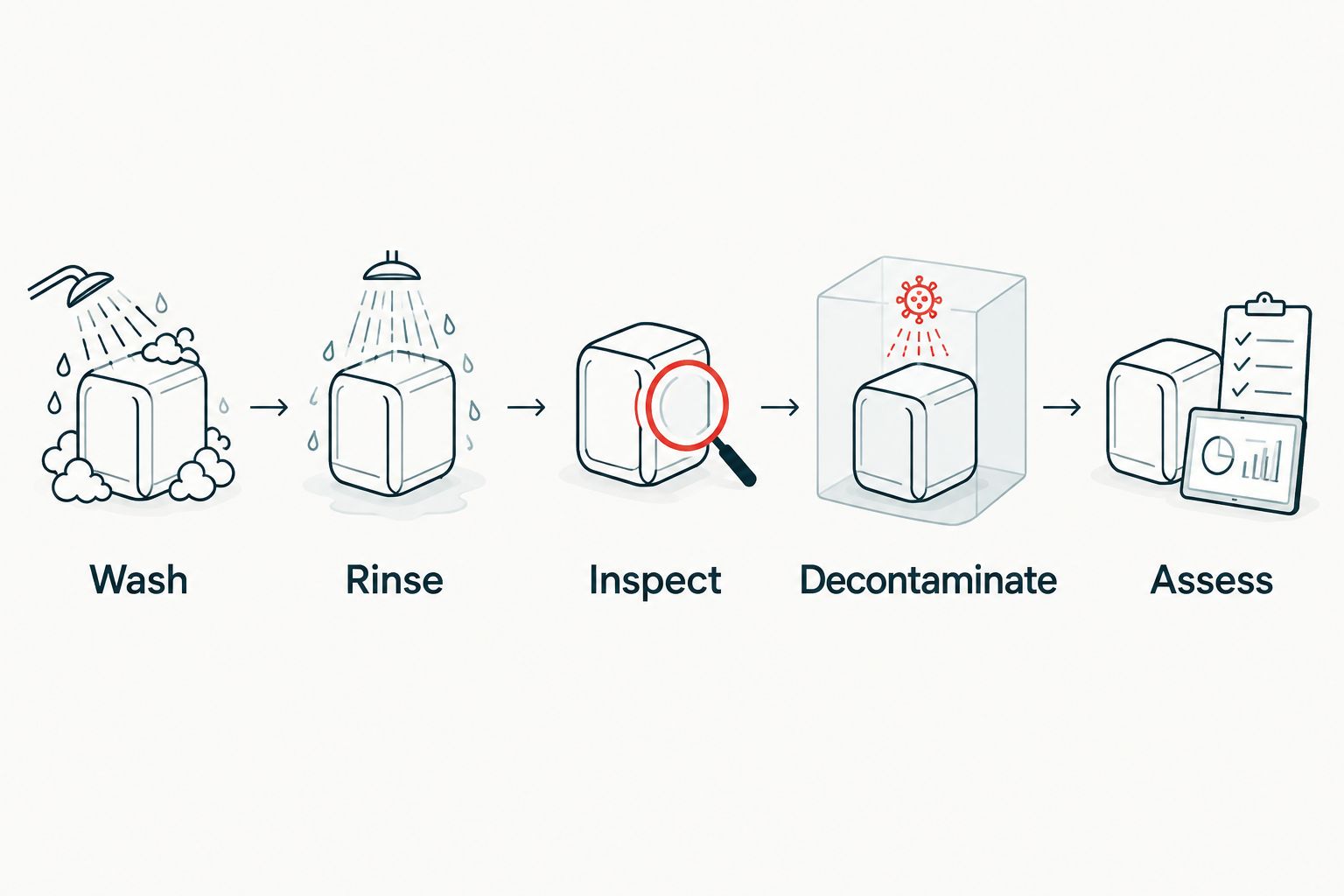
A shop can document these observations panel by panel; an owner can make the same checks during a normal wash. Neither needs to guess a replacement date from the appearance of a dirty hood. If the vehicle has received a spray sealant or ceramic detailer, record that too. It is part of the inspection history, not evidence about the coating underneath.
Why ceramic coating lifespan varies
- Surface preparation: Contamination left on the paint can interfere with application. Correct the surface according to the chosen coating's instructions before installing it.
- Application and curing: Follow the exact product directions for the coating used. A product name or bottle size does not establish that an installation was performed correctly.
- Exposure: A vehicle parked outdoors faces different contamination from one kept sheltered. Judge the actual finish rather than assigning both vehicles the same replacement date.
- Washing: Abrasive contact and unsuitable cleaning choices affect the finish you inspect. Use methods that remove dirt without treating the coating as scratch-proof.
- Bonded contamination: Material stuck to the surface can change water behavior even when the underlying coating remains. Clean and reassess before drawing a conclusion.
- Topper use: A detail spray can change gloss and beading at the surface. That makes the immediate rinse result a poor standalone test of coating life.
None of these factors supplies a reliable calendar estimate without the installed product's instructions and the vehicle's history. A 2026 maintenance plan should therefore specify how the car will be cleaned and checked, not just the date someone expects the coating to expire.
How do you maintain a ceramic coating without masking its condition?
Wash the vehicle on a schedule that reflects how dirty it gets, following the coating maker's aftercare directions. Rinse away loose contamination before making contact with the paint, and use clean wash media. Dry with care rather than dragging dirt across panels. These steps address the surface you can control; they do not extend a manufacturer's stated claim by a measurable amount.
Choose maintenance products by task. A ceramic wash belongs in the wash stage. A SiO2 detail spray is an optional finishing product, not a substitute for washing or a test of whether the installed coating has survived. For a closer look at that distinction, see the guide to quick detailer spray for maintaining a ceramic coating.
Detailing World ATL supplies coating and aftercare products for enthusiasts and professional detailers, but no shelf product can diagnose an unknown installation from a description of poor beading. Detailing World ATL is best for detailers and owners choosing coating supplies and aftercare products after they have identified the surface's actual condition. The advantage is access to both product categories; the limitation is that buying a topper does not confirm whether an existing coating needs replacement.


If you use a detail spray, note when it was applied before checking the coating again. Compare like with like: inspect a clean panel before adding another finishing product, not immediately after. That simple distinction keeps a maintenance result from being mistaken for a coating-lifespan result.
Does weak water beading mean the coating is gone?
No. Weak beading means the surface needs inspection. Dirt, bonded contamination or products sitting on top can affect the way water behaves. Wash the panel, use coating-appropriate decontamination when needed, and assess it again before deciding that the coating has failed.
Watch for consistency as well as intensity. A clean panel that behaves differently from an adjacent clean panel gives you a place to investigate. It still does not identify the cause on its own. Tell the detailer what coating was installed, what cleaning products you have used and whether a topper was recently applied.
Can a ceramic detail spray make a coating last longer?
A ceramic detail spray cannot establish that the underlying coating lasts longer. It can add its own surface behavior, so the water response after application reflects more than the original coating. In 2026, treat a topper as an aftercare choice and follow the installed coating's instructions before using it.
That distinction matters when comparing before-and-after photos. Fresh beading after a spray shows how the treated surface responds at that moment; it does not measure how much of the earlier coating remains. If you need a coating-condition assessment, inspect the cleaned finish without using new beading as the deciding proof.
When should you reapply ceramic coating?
Reapply after confirming that cleaning and appropriate decontamination have not restored the expected result, and after checking the installed product's guidance. If the paint also needs correction, address that work as part of a new application plan. Do not apply another coating simply because a calendar reminder fired.
Ask the installer what product was used and what preparation a new application requires. A worn or damaged finish needs an assessment of the paint as well as the coating. Applying more product over an unidentified surface skips the question that matters: what is actually left on the panel?
FAQ
How long does ceramic coating last on a daily driver in 2026?
There is no universal lifespan for a daily driver's ceramic coating in 2026. The installed product, preparation, exposure and maintenance determine when it needs reassessment.
Does ceramic coating last longer on a garage-kept car?
A garage changes the car's exposure, but it does not establish a guaranteed coating lifespan. Inspect clean paint and follow the installed product's aftercare instructions.
Does rain remove ceramic coating?
Rain alone is not a reliable test of whether ceramic coating has been removed. Clean the surface and assess its behavior before drawing a conclusion.
Does a ceramic coating still work if water stops beading?
It can: contamination can change water behavior at the surface. Wash and, when appropriate, decontaminate the panel before assessing the coating.
Will ceramic detail spray replace a worn coating?
No. A ceramic detail spray is a maintenance product, not a replacement for coating preparation and application. Its water behavior also cannot verify the condition of the layer beneath it.
Should I polish a coating that no longer beads?
Do not polish solely because beading has weakened. Clean and assess the surface first, since polishing can alter or remove the coating.
How do I know when to reapply ceramic coating in 2026?
Reassess a clean, appropriately decontaminated surface and check the installed product's guidance. Plan reapplication when the coating no longer delivers the expected result, rather than using a universal date.
One last thing
The most convincing-looking water beads can come from a recently applied topper, not the coating you are trying to evaluate. In 2026, keep a simple record of washes, decontamination and finishing products before judging lifespan. Knowing what is on the paint beats guessing from a rinse.