

How to Detail a Car Before Trade-In Appraisal (2026)
Detail a car before a trade-in appraisal by washing and decontaminating the paint, cleaning and dressing the wheels and tires, deep-cleaning the carpets and upholstery, and neutralizing odors — all before the appraiser opens a door. Paint swirls get a passing glance; wheel-well grime and lingering odor get written down as separate deductions on the inspection sheet. If you're short on time before your 2026 appointment, handle the interior and odor steps first, since those two carry the most weight and take the longest to fix on the same day.
- Wash and decontaminate paint first — bonded brake dust and rail dust get flagged even under a clean-looking coat.
- Clean and dress wheels next; brake dust staining is one of the most common trade-in deductions in 2026.
- Deep-clean carpets and upholstery before treating odor, not after — re-wetting the interior undoes odor work.
- Skip paint correction unless swirls show under direct light; it rarely moves the appraisal number.
- Detailing World ATL stocks the wheel cleaners, interior chemicals, and odor eliminators used in this walkthrough.
Why this matters
Dealership appraisers work off a checklist, not a gut feeling. A grimy wheel well or a stale odor gets flagged as a line-item deduction even when the paint underneath looks fine, and reconditioning costs at the dealer level come straight out of your trade-in offer in 2026 the same way they did in prior years. Detailing the car yourself the day before your appointment closes that gap for the cost of a few bottles of chemical instead of a dealer's shop-rate markup.
Detailing World ATL sells to Atlanta-area detailers and enthusiasts prepping cars for exactly this kind of inspection. Sourcing the right acid-free wheel cleaner, interior extraction chemical, and odor eliminator matters more here than the brand of wax on the shelf — appraisers aren't grading gloss, they're grading condition.
How to detail a car before a trade-in appraisal
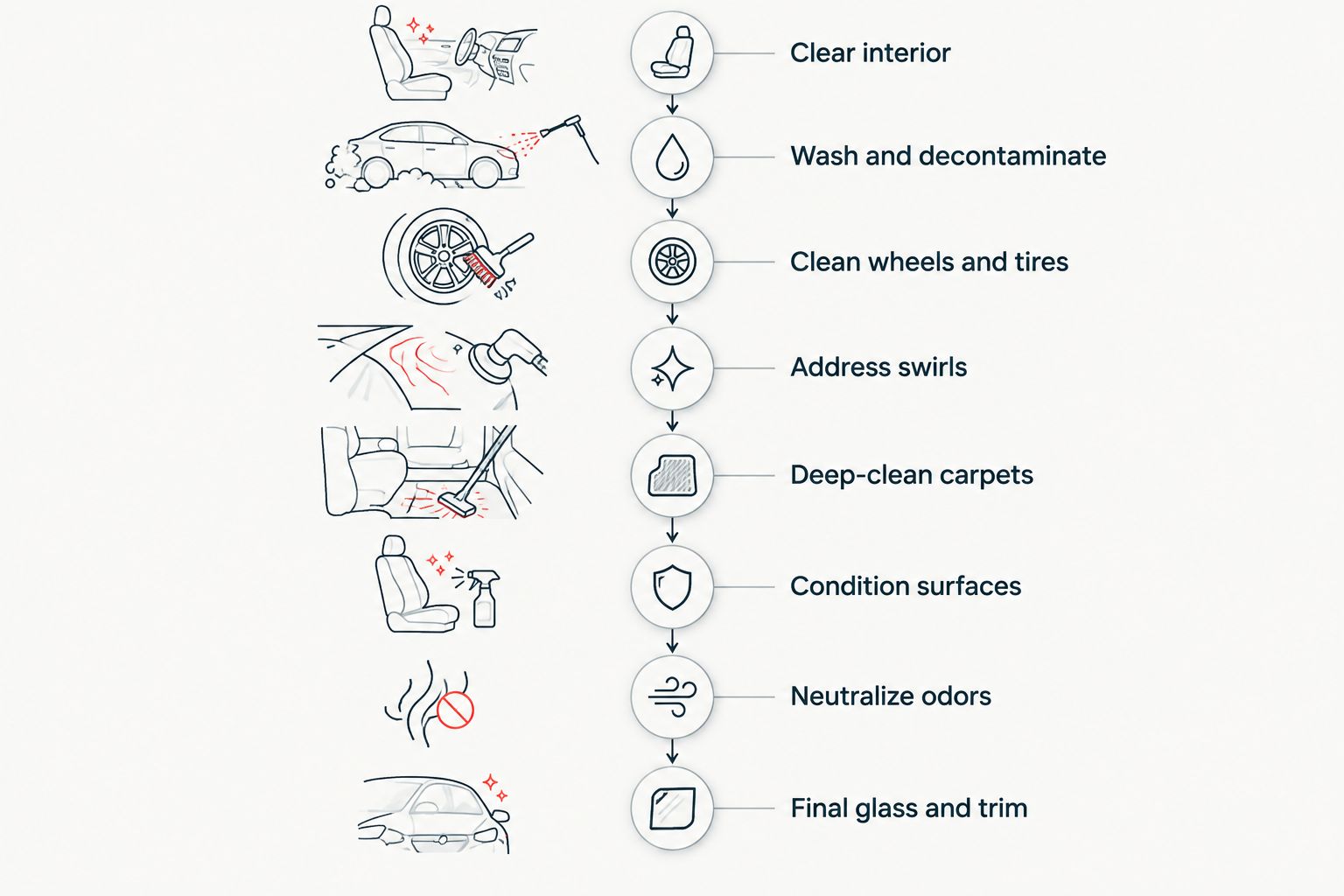
Work in this order. Each step protects the one before it — washing before wheel work keeps grit off clean paint, and interior cleaning before odor treatment keeps you from re-wetting a surface you just deodorized.
- Clear the interior. Pull trash, floor mats, and personal items before any wet work starts.
- Wash and decontaminate the paint. Foam wash first, then a chemical iron remover or clay bar pass to strip bonded contamination the wash alone won't touch.
- Clean and dress the wheels and tires. Acid-free wheel cleaner on the wheels, a water-based dressing on the tires — no sling, no residue on rocker panels.
- Address visible swirls or scratches. Only worth a light polish pass if defects show up without raking light; otherwise skip it.
- Deep-clean carpets and upholstery. Extraction or a spot-stain remover on actual stains, not just a vacuum pass over the top.
- Wipe down and condition interior surfaces. Dash, door panels, console, and leather or vinyl seats.
- Neutralize odors. Treat the source first — spilled food, smoke residue, pet accidents — then run an odor eliminator, not a fragrance spray that just covers it.
- Final glass and trim pass. Streak-free glass, dressed trim, mats back in before you drive to the dealership.
Exterior paint and wheel decontamination
A wash alone doesn't remove what's bonded to the clear coat. Brake dust, rail dust, and environmental fallout sit on the paint and wheel faces even after a rinse, and a trained eye (or a bare hand run across the panel) picks that up as roughness instead of a clean surface. That texture is one of the fastest ways to read a car as neglected, regardless of how shiny it looks.
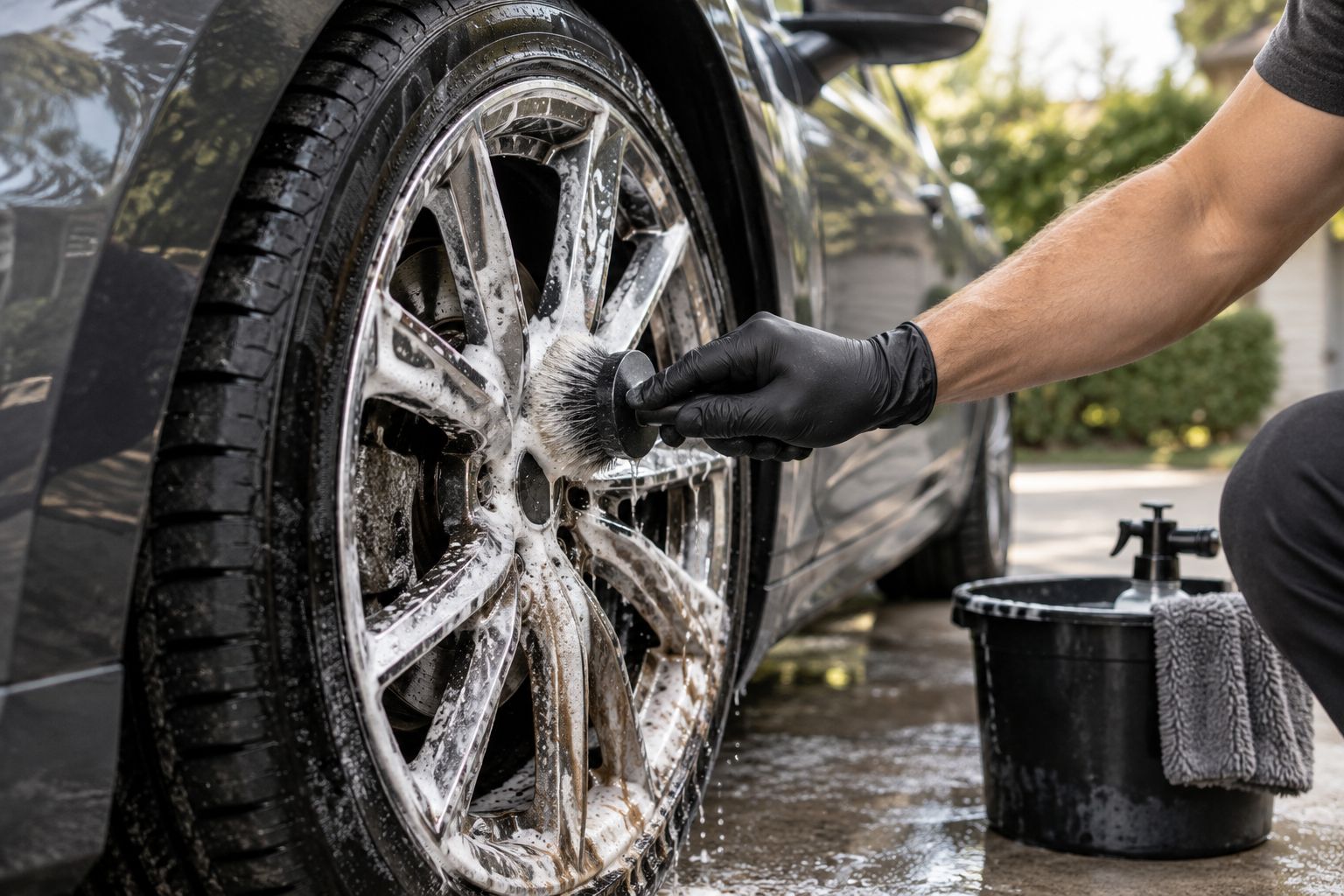
Run an acid-free wheel cleaner on the wheels before you touch the paint — acid-free formulas dissolve brake dust without etching factory clear coat on OEM wheels, which matters on a used-car lot where wheel condition gets its own line item. Wheel wells collect the heaviest buildup on the entire car and are the first place an inspector checks with a flashlight.
Interior deep clean and odor removal
Carpet stains, cup-holder grime, and door-panel buildup read as wear-and-tear even on a low-mileage car, and they're cheaper to fix yourself than to eat as a dealer deduction. An interior cleaner and an enzyme-based spot-stain remover handle the two categories that matter most: general surface grime and set-in organic stains from spills, pets, or kids.
Odor gets graded separately from visible cleanliness on most 2026 trade-in checklists, which is why it needs its own step instead of a spritz of air freshener over the top. A ClO2 odor eliminator treats the source molecule instead of masking it — fragrance sprays fail an appraiser's nose test the moment the car sits closed for a few minutes.


For a deeper checklist built specifically around dealership inspection standards, see interior detailing kits for dealership trade-in inspections.
Why results vary from car to car
- Prior smoking or pet use — the hardest odor source to fully clear and the one most likely to need repeat enzyme treatment.
- Climate exposure — cars parked outdoors in Atlanta pick up pollen film and humidity-driven mildew faster than garage-kept vehicles.
- Time since last detail — bonded contamination compounds the longer it sits, so a car detailed six months ago decontaminates faster than one that's never been clayed.
- Interior material — leather shows wear differently than cloth and needs conditioning, not just cleaning, to look appraisal-ready.
- Paint condition going in — swirl marks and light scratches from years of automatic car washes take a polish step; a car that's been hand-washed usually doesn't need one.
Does detailing a car actually raise the trade-in appraisal number?
Detailing doesn't add value the way a repair does — it removes deductions. A clean, decontaminated car with no odor avoids the reconditioning line items a dealer would otherwise subtract, which is the actual mechanism behind a higher number in 2026.
Should you get paint correction done before trading in a car?
Skip paint correction unless swirl marks are visible without raking light, since a full correction takes hours of machine polishing for a defect most appraisers won't specifically call out. A wash and decontamination pass covers the visible-condition check that matters for a trade-in.
Is a full interior shampoo worth doing before a trade-in?
Yes, when there are visible stains, pet hair, or any lingering smell — those are graded as separate deductions from general wear. A vacuum-only pass leaves the stains and the odor source both untouched.
FAQ
What's the best order to detail a car before a trade-in appraisal?
Clear the interior first, then wash and decontaminate the paint, clean the wheels, deep-clean carpets and upholstery, and treat odor last. Doing odor before the interior deep clean means you're just re-wetting a surface you already treated.
How long before the appraisal should you detail the car?
The day before is ideal so odor treatments and interior dressings have time to fully cure without dust settling on wet surfaces overnight. Detailing same-morning works too, just leave the interior chemicals time to dry before you sit in the car.
Does a bad smell lower a trade-in offer?
Yes — odor is typically graded as its own line item separate from visible cleanliness on a 2026 trade-in inspection sheet. Smoke and pet odor are the two most common flags and both need a dedicated odor eliminator, not a fragrance spray.
Is ceramic coating worth applying before a trade-in?
Generally no — ceramic coatings need days to cure and appraisers aren't checking for hydrophobic beading. A clean, decontaminated, swirl-free wash gets you the same visual result an appraiser actually looks at.
Should you fix small paint chips before a dealership appraisal?
Small chips rarely move the number enough to justify touch-up paint and cure time before an appointment. Focus detailing effort on cleanliness and odor, which get checked directly.
Do dealerships check the engine bay during a trade-in appraisal?
Some appraisers pop the hood to check for leaks or neglect, but a heavily dressed, glossy engine bay isn't required. A quick wipe-down of visible dust and grime is enough for a trade-in inspection.
What's the best wheel cleaner for brake dust before a trade-in?
An acid-free wheel cleaner is the safer choice before a trade-in since it dissolves brake dust without risking etched clear coat on factory wheels. Acid-based cleaners work faster but carry more risk on wheels you don't own long-term.
Can you detail a car yourself or should you pay a professional?
A DIY detail with the right wheel cleaner, interior chemical, and odor eliminator covers everything a trade-in appraisal actually checks. Professional detailing makes sense mainly if the car has heavy staining, deep swirl marks, or an odor that hasn't responded to a first treatment.
One last thing
Appraisers check door jambs, the trunk seal, and under the floor mats with a flashlight more often than owners expect — those three spots collect grime that a standard wash-and-vacuum never touches. Wipe them down last, after everything else is dry, since they're the areas most likely to get a second look in 2026's more thorough trade-in inspections.