

Protect a Convertible Top Before Winter Storage (2026)
Protecting a convertible top before winter storage comes down to three moves: clean it completely, treat it with a material-matched protectant, and park the car with the top up in a dry space until spring 2026. Skip the cleaning step and any protectant you apply just seals dirt, tree sap, and pollen into the fibers, where it stains and stiffens the material over the off-season.
- Clean a convertible top fully before storage — dirt sealed under a protectant stains and stiffens by spring 2026.
- Vinyl tops need a UV-rated dressing; canvas and cloth tops need a breathable waterproofer, not the same product.
- Store with the top up, not folded down, to avoid permanent creases over a multi-month winter.
- A top folded away damp grows mildew in days regardless of material.
- Rear plastic windows fail before the fabric does — inspect and protect that seam separately.
Why this matters
Metro Atlanta winters don't bring heavy snow load, but they bring humidity, pollen carryover from fall, and enough freeze-thaw swing to crack a dried-out top. A convertible left dirty and uncovered from November through February comes out in spring with water spots baked into the vinyl or mildew set into the canvas weave — damage that costs far more to fix than the best convertible soft top cleaners and protectants would have cost to apply in October.
The top is the single most expensive exterior component on a convertible outside the paint itself. Treating it right before storage is cheap insurance against a full top replacement in 2026.
How to protect a convertible top before winter storage
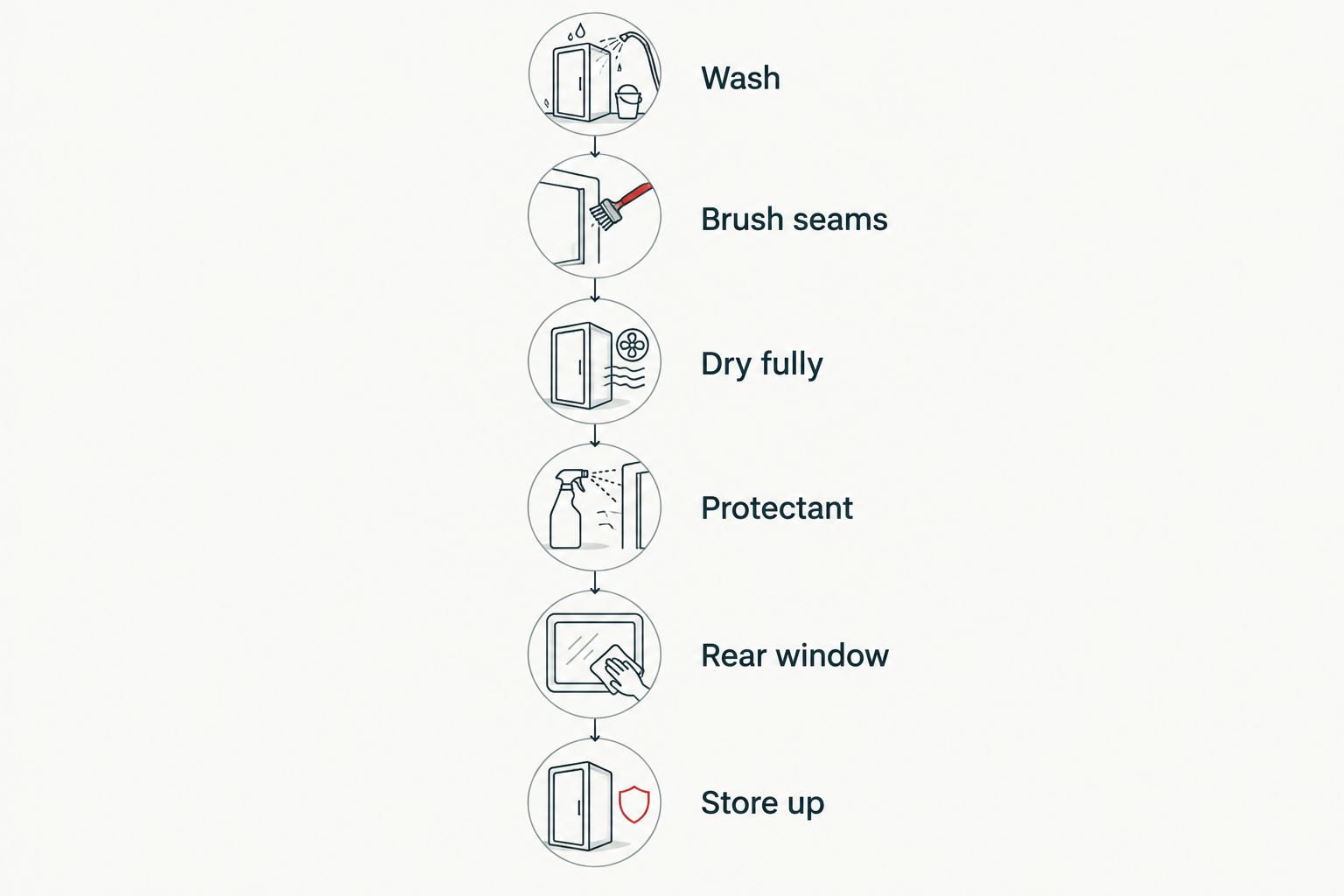
Work through these steps in order — skipping the drying step is the most common mistake that leads to mildew.
- Wash the top with a pH-balanced shampoo, not a degreasing wheel cleaner or dish soap. Harsh cleaners strip factory coatings on vinyl and break down the waterproof finish on canvas.
- Brush the seams and stitching with a soft detail brush to lift grit before it embeds during months of storage.
- Rinse thoroughly and let the top air-dry completely. A top that feels dry to the touch on the surface can still hold moisture in the weave underneath.
- Apply a material-matched protectant — a vinyl/rubber dressing for vinyl tops, a dedicated fabric waterproofer for canvas.
- Treat the rear window separately. Vinyl dressing left on a plastic rear window causes fogging and yellowing over a winter of sitting still.
- Store with the top up, ideally indoors, under a breathable cover rather than a tight tarp that traps condensation.
While you're working the top, wipe down the headliner and interior trim underneath it with a general interior cleaner so nothing damp or grimy sits against the fabric for the next several months.
Vinyl convertible tops: clean and condition before storage
Vinyl is the most forgiving material and the most common on tops built before the mid-2000s. It resists water well on its own, but UV exposure and cold both dry out the plasticizers that keep it flexible, and a stiff top cracks at the fold lines the first time it's lowered in spring.
A vinyl/rubber-safe dressing applied after cleaning replaces those plasticizers and adds a layer of UV resistance for the months the car sits idle. Detailing World ATL carries Detailing World Blue Dressing for exactly this — vinyl, rubber trim, and weatherstripping that need to stay flexible through winter without going glossy or greasy.
Verdict: clean, dry, dress, store up. Vinyl tops that go into storage dirty or undressed are the ones that show cracking along the fold seams by March.
Canvas and cloth convertible tops: dry fully before covering
Canvas and cloth tops (Haartz, Stayfast, and similar weaves) are more common on newer convertibles and behave differently than vinyl. They're porous, so a silicone-based dressing meant for vinyl will darken and stain the weave instead of protecting it.
Cloth tops need a fabric-specific waterproofing treatment that soaks into the weave rather than sitting on top of it. The drying step matters more here than on vinyl — a canvas top that goes into storage even slightly damp will mildew from the inside out, and mildew stains on cloth are close to impossible to fully remove once set.
Verdict: full dry-out is non-negotiable. Give a washed canvas top a full day of dry, still air before applying any protectant or folding it up.
Cloth composite tops: same core routine, softer tools
Newer composite cloth tops (the multi-layer acoustic tops on late-model convertibles) follow the same wash-dry-protect routine as canvas but need a softer brush and a gentler fabric protectant to avoid disturbing the bonded layers underneath. Skip stiff-bristle brushes and anything abrasive on these — the outer layer is thinner than older single-ply canvas.
Verdict: treat it like canvas, just gentler. The steps don't change; the tools do.
Why protection needs vary by top
- Material — vinyl, canvas, and composite cloth each need a different protectant chemistry.
- Storage location — an outdoor-parked convertible needs a cover and more frequent checks than one in an enclosed garage.
- Humidity exposure — Atlanta's fall pollen and winter humidity accelerate mildew risk on cloth tops specifically.
- Rear window type — plastic windows need separate care from glass windows and are the first point of failure.
- Coating age — a top with no protectant applied in over a year needs a heavier first treatment than one maintained through the season.
- Whether the car moves at all — a convertible exercised occasionally through winter needs less aggressive storage prep than one parked and untouched.
“A convertible top stored dirty is a top that cracks by spring.”
Should you store a convertible top up or down for winter?
Store it up. A top left down for months holds a fold pattern that becomes a permanent crease line, and a folded top traps moisture against itself in a way an upright top doesn't.
Can you use regular car wax on a convertible top?
No — body wax made for painted panels isn't formulated for vinyl or cloth and can leave a hazy film or, on cloth, a visible residue that attracts dirt through the winter. Use a top-specific protectant instead.
How often should you condition a convertible top?
Most detailers recommend conditioning a vinyl or cloth top at each seasonal change, with one extra treatment specifically before winter storage in 2026. A top that sits unconditioned for a full year going into cold weather is far more likely to crack or fade by spring.
FAQ
What's the best way to protect a convertible top before winter storage?
Clean the top fully, let it dry completely, apply a protectant matched to the material, and store the car with the top up in a dry space. Skipping the dry-out step is what causes mildew on cloth tops.
Should you store a convertible top up or down?
Store it up. A top folded down for months develops a permanent crease and traps moisture that a top left up avoids.
Can you use car wax on a convertible top?
No, standard body wax isn't made for vinyl or cloth and can leave a hazy film or stain. Use a top-specific dressing or fabric waterproofer instead.
How do you clean a canvas convertible top without damaging it?
Wash it with a pH-balanced shampoo and a soft brush, never a degreaser or dish soap, then let it air-dry fully before applying any protectant.
Is it safe to store a convertible top wet?
No. A damp top folded or covered for winter storage grows mildew within days, and mildew stains on cloth rarely come out completely.
Do vinyl and cloth tops need different protectants?
Yes. Vinyl needs a UV-rated dressing that restores flexibility, while canvas and composite cloth need a fabric waterproofer that soaks into the weave instead of sitting on top of it.
How often should you condition a convertible top?
Condition it at each seasonal change, with an extra treatment right before winter storage. A top left unconditioned for a full year is far more likely to crack or fade.
What ruins a convertible top over winter?
Storing it dirty, damp, or folded down for months. Trapped dirt stains the material, trapped moisture causes mildew, and prolonged folding creates permanent creases.
One last thing
Most convertible top failures don't start in the fabric itself — they start at the rear window seam, where plastic meets vinyl or cloth and flexes every time the top moves. Check that seam for cracking or separation before storage in 2026, because a small tear there in October is a full window replacement by the time you drop the top again in spring.