

Remove Bird Dropping Etching From Clear Coat: 2026 Fix
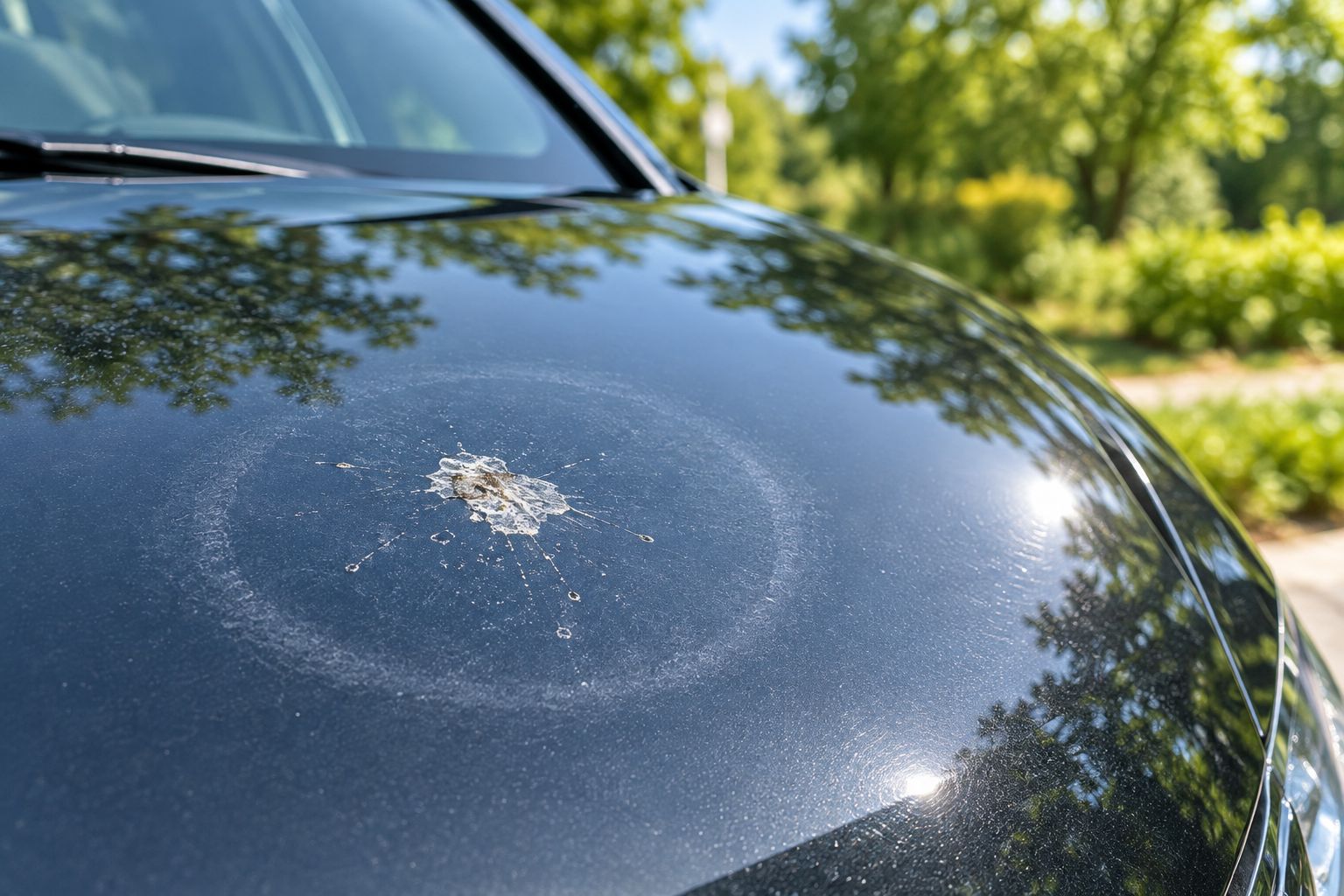
Bird dropping etching on clear coat is a chemical burn, not a surface stain, and the fix depends on how long the deposit sat and how deep it burned into the clear layer.
- Light bird dropping etching buffs out with a fine polish and a dual action polisher in one correction pass.
- Etching left 24-48 hours or longer often needs wet sanding at 2000-3000 grit before polishing.
- A ring you can feel with a fingernail means the etching went through the clear coat and needs a deeper fix.
- Ceramic coatings like Gtechniq Crystal Serum Light make future droppings easier to wipe off before they etch.
- Detailing World ATL carries the polishes, wet sand paper, and coatings used at every stage of this repair.
Why this matters
Bird droppings carry uric acid and digestive enzymes that react with clear coat almost immediately in Georgia summer heat, and a hood or roof parked in direct sun bakes the deposit in faster than a shaded trunk lid. Left alone, the mark does not fade with time or a regular wash -- it is a chemical change in the clear coat surface, and a wash mitt just moves dirt around the etch instead of removing it.
Check a wet sanding grit chart for clear coat leveling before you reach for sandpaper on any panel. Going too aggressive on a mark that only needed a polish turns a one-step job into a full wet sand and cut, and 2026 clear coats on daily drivers do not have unlimited thickness to sand away.
Detailing World ATL stocks the polishes, sandpaper, and coatings referenced through this guide, and this is the order that actually corrects bird dropping etching without wasting clear coat.
How do you remove bird dropping etching from clear coat?
Wash the affected panel, feel the mark to judge depth, then match the correction method to what you feel -- polish for smooth marks, wet sand for anything with a ring or dip.
- Wash the panel with a pH-neutral shampoo and dry it fully. Blot with a plush drying towel instead of dragging a rag across the etched area.
- Run a fingernail lightly across the mark. Smooth but still visibly dull means light etching. A ring or shallow dip you can feel means the acid ate into the clear coat.
- For light etching, machine polish the spot with a fine finishing polish on a foam pad.
- For moderate to severe etching, wet sand starting at 2000 grit, move up to 3000 grit, and finish at 5000 grit before compounding and polishing.
- Inspect under an LED inspection light or direct sun before calling it finished. Etching still visible at an angle needs another correction pass.
- Apply a ceramic coating or sealant once the paint is corrected so the next dropping wipes off instead of baking in.
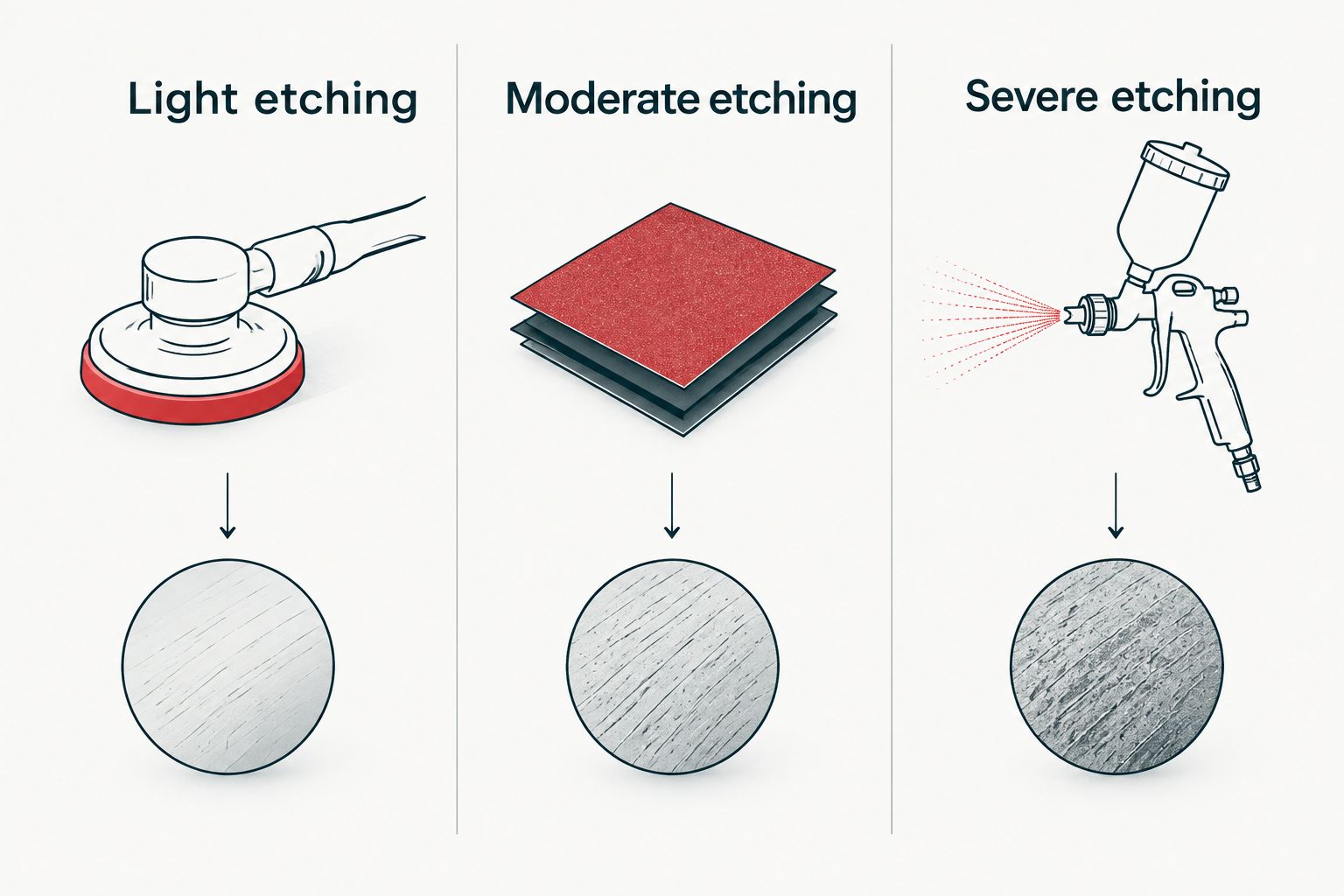
Light etching: buffs out with one machine polish pass
Light etching sits on top of the clear coat rather than into it -- it looks like a dull ring or faint discoloration but feels smooth to the touch. A single pass with a fine finishing polish like Koch Chemie PO Pol Star on a foam finishing pad, run at moderate polisher speed, clears it in one round on most single-stage clear coats. Verdict: light etching is a same-day fix with a polish and pad, no sanding needed.
Moderate etching: needs wet sanding at 2000-3000 grit
Moderate etching means the acid broke through the clear coat gloss layer -- you will feel a slight ring or see a faint outline that a polish alone will not remove. Wet sanding at 2000 grit knocks down the high edges of the mark, and working up through 3000 grit and 5000 grit before compounding levels the spot without sanding through to base coat. Verdict: moderate etching needs a full correction stage, not a quick detail.
Severe etching: clear coat is compromised and needs refinishing
Severe etching happens when droppings sit for days in direct Georgia sun on a hood or roof -- the acid eats through the clear coat entirely and leaves a permanent dish-shaped depression, sometimes down to base coat color. No amount of polishing or wet sanding brings back clear coat that is gone; the panel needs a fresh clear coat application from a body shop. Verdict: severe etching is a refinish job, not a DIY fix.
Why bird dropping etching severity varies
- Dwell time -- droppings removed within 24-48 hours rarely etch past the clear coat surface.
- Panel temperature -- a hood or roof baking in direct sun sets the acid faster than a shaded door panel.
- Bird diet -- berries and insects change the acidity and staining of the deposit.
- Existing paint protection -- a ceramic coating or fresh wax gives the acid less surface to grip before it is wiped off.
- Clear coat condition -- older, oxidized clear coat etches faster than a recently corrected and coated panel.
- Panel color -- etching shows up faster and more visibly on dark colors than on light ones.
Does bird poop damage paint if you remove it quickly?
Bird droppings rarely damage paint when wiped off within 24-48 hours of landing, because the acid has not had time to react with the clear coat. Wait longer than that, especially on a hot hood or roof, and etching becomes a real risk even with prompt washing after the fact.
Will a ceramic coating stop bird dropping etching?
A ceramic coating like Gtechniq Crystal Serum Light does not make clear coat immune to bird droppings, but it adds a sacrificial layer the acid reacts with first and makes the deposit easier to wipe off before it etches. Coated panels still need droppings removed within 24-48 hours -- the coating buys time, it does not buy immunity.
Can wax remove bird dropping etching?
Wax cannot remove bird dropping etching once it has set into the clear coat, because wax sits on top of the paint and has no cutting ability. Wax only helps prevent future etching by giving droppings a slicker surface to sit on until they are washed off.
Stock up before the next bird strike
Polishes, wet sand paper, and ceramic coatings for auto detailing supplies runs.
FAQ
What does bird dropping etching look like on clear coat?
Bird dropping etching looks like a faint ring, water-spot-shaped mark, or dulled patch in the clear coat, often with a slight color shift where the acid reacted. It is usually visible from an angle under direct light even after the deposit itself is washed away.
Is bird dropping etching permanent?
Bird dropping etching is permanent once it has eaten into the clear coat -- it does not fade or wash out over time. The mark stays until it is polished out, wet sanded, or the panel is refinished.
How fast does bird poop etch clear coat in the sun?
Bird droppings can etch clear coat within 24-48 hours in direct sun, faster on a hot hood or roof than on a shaded panel. Cooler weather and shade slow the reaction and give you more time to wash it off safely.
Can I use vinegar to remove bird dropping stains from a car?
Vinegar is not recommended for bird dropping stains on clear coat because it is acidic and can worsen etching rather than remove it. A pH-neutral car shampoo and prompt rinsing is the safer approach.
What is the best polish for bird dropping etching?
The best polish for light bird dropping etching is a fine finishing polish run on a dual action polisher, such as Koch Chemie PO Pol Star for single-step correction. Deeper etching needs wet sanding at 2000-3000 grit before any polish touches the spot.
Does rain wash away bird dropping etching?
Rain does not remove bird dropping etching once it has set into the clear coat -- rain only rinses away loose residue sitting on top. The etched mark stays until it is mechanically corrected.
Should I wet sand or polish bird dropping etching first?
Wet sand first when the etching leaves a ring or dip you can feel with a fingernail, then polish afterward to restore gloss. Skip straight to polishing only when the etching is smooth to the touch and just visually dull.
One last thing
Bird dropping etching is not caused by the acid alone -- it is a heat reaction. A dropping left on a cool, shaded panel overnight often wipes off clean in 2026 conditions, while the same deposit on a hood parked in full Georgia sun for two hours can etch permanently. Park in shade when you can, and keep a quick detailer from Detailing World ATL's auto detailing supplies lineup in the car for the drive home.