

Remove Dog Slobber From Car Windows: 2026 Fix
Dog slobber and nose prints leave a bonded protein film on interior glass that most ammonia glass cleaners smear instead of lift, and picking the wrong product streaks tinted windows for good.
- Remove dog slobber from car windows with an ammonia-free glass cleaner and a microfiber towel, not paper towels.
- Dried nose grease needs an enzyme cleaner like P&S Terminator to break down the protein film before it wipes clean.
- Ammonia-based glass cleaner streaks tinted glass and never fully lifts baked-on nose oil, even after repeated wiping in 2026.
- Detailing World ATL stocks P&S Xpress Interior Cleaner and Korean Plush towels built for daily interior glass work.
Why this matters
Dog saliva carries proteins and enzymes that dry into a hazy, streak-resistant film within a day of a nose press against the glass. Standard ammonia glass cleaner cuts road grime fine, but it doesn't break down that protein bond — it pushes it around and fogs tinted windows in the process.
Fixing this correctly in 2026 means matching the cleaner to the mark's age. Fresh slobber wipes off with a basic glass-safe formula. Nose grease that's been baking through the glass for a couple of weeks needs a different chemistry entirely.
How do you remove dog slobber from car windows?
Wipe fresh slobber off with an ammonia-free interior glass cleaner and a clean microfiber towel — two passes usually clears it. Dried nose grease and older film need an enzyme-based cleaner to break the protein bond first, then a glass cleaner to finish the job. Skip anything with ammonia if the windows carry tint film.
| Cleaner type | Best for | Tint-safe | Verdict |
|---|---|---|---|
| Ammonia-free interior glass cleaner | Fresh slobber, daily nose prints | Yes | Buy |
| Enzyme spot & stain remover | Dried nose grease, old film | Yes | Buy |
| Ammonia glass cleaner (Windex-style) | Nothing tinted | No | Skip |
| Plain water + microfiber | Light haze touch-ups only | Yes | Hold |
Fresh slobber: wipe it off in under 2 minutes
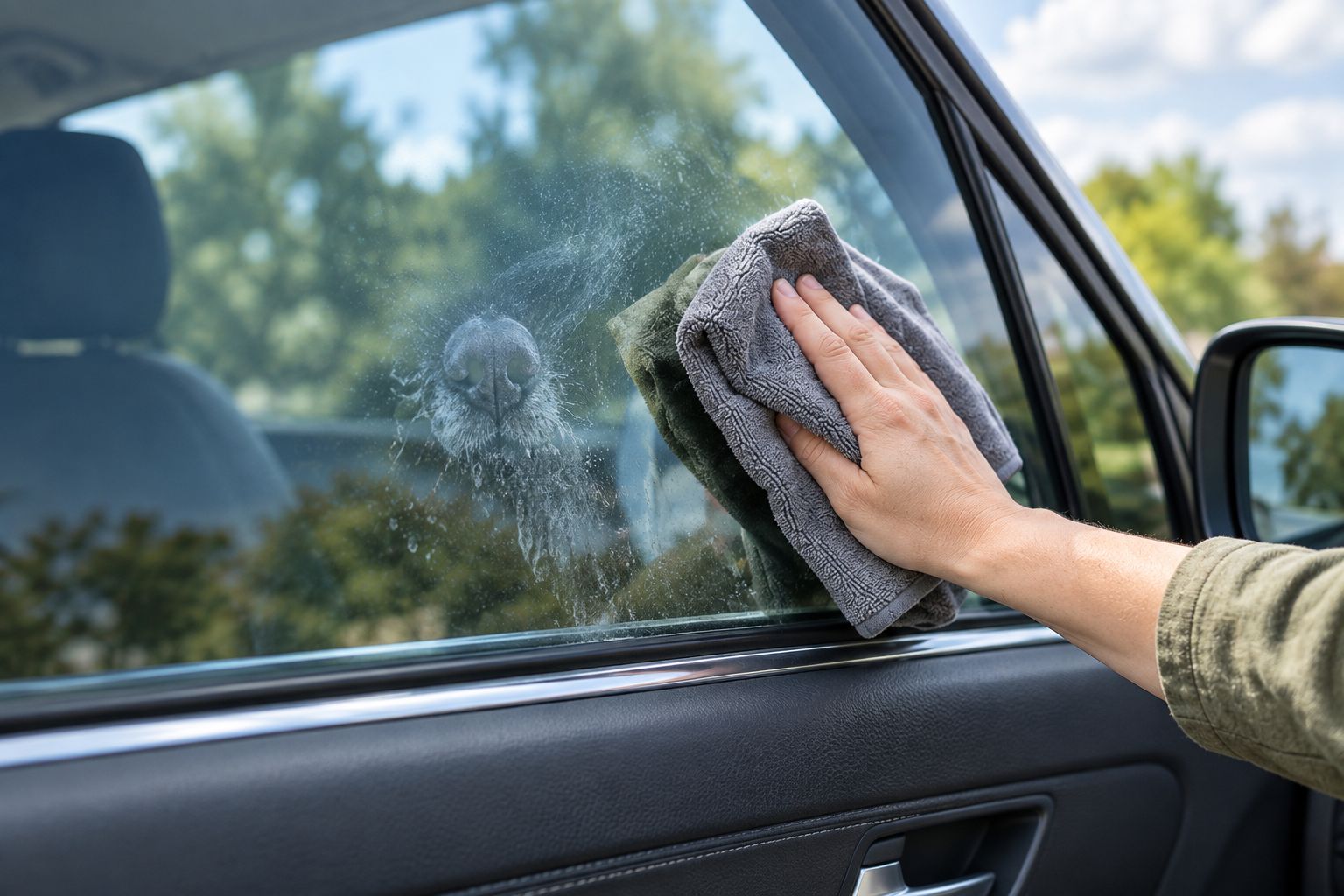
- Spray an ammonia-free interior cleaner like P&S Xpress Interior Cleaner directly onto a microfiber towel, not the glass — overspray drips into door panels and dash seams.
- Wipe the mark in straight, overlapping passes, working top to bottom.
- Flip to a dry section of the towel and buff the panel dry before it air-dries into a new streak.
- Check the glass at an angle in daylight; a second light pass catches whatever the first missed.
Dried nose grease and film: the enzyme method
Nose oil that's baked into the glass for a week or more won't fully lift with glass cleaner alone — the protein has cross-linked into the surface. An enzyme spot and stain remover such as P&S Terminator Enzyme Spot & Stain breaks that bond chemically instead of relying on scrubbing pressure.
- Apply the enzyme cleaner and let it dwell for a couple of minutes so the enzymes work into the film.
- Agitate gently with a microfiber applicator or a soft-bristle brush.
- Wipe clean with a 350 GSM Korean Plush microfiber towel, then follow with the ammonia-free glass cleaner for a streak-free finish.
- Repeat once on heavy buildup — enzyme cleaners work in layers, not in a single pass.
Fresh slobber needs a glass cleaner and a towel. Baked-on nose grease needs the enzyme step first, or you're just wiping the same film around.
Why dog nose marks and slobber keep coming back
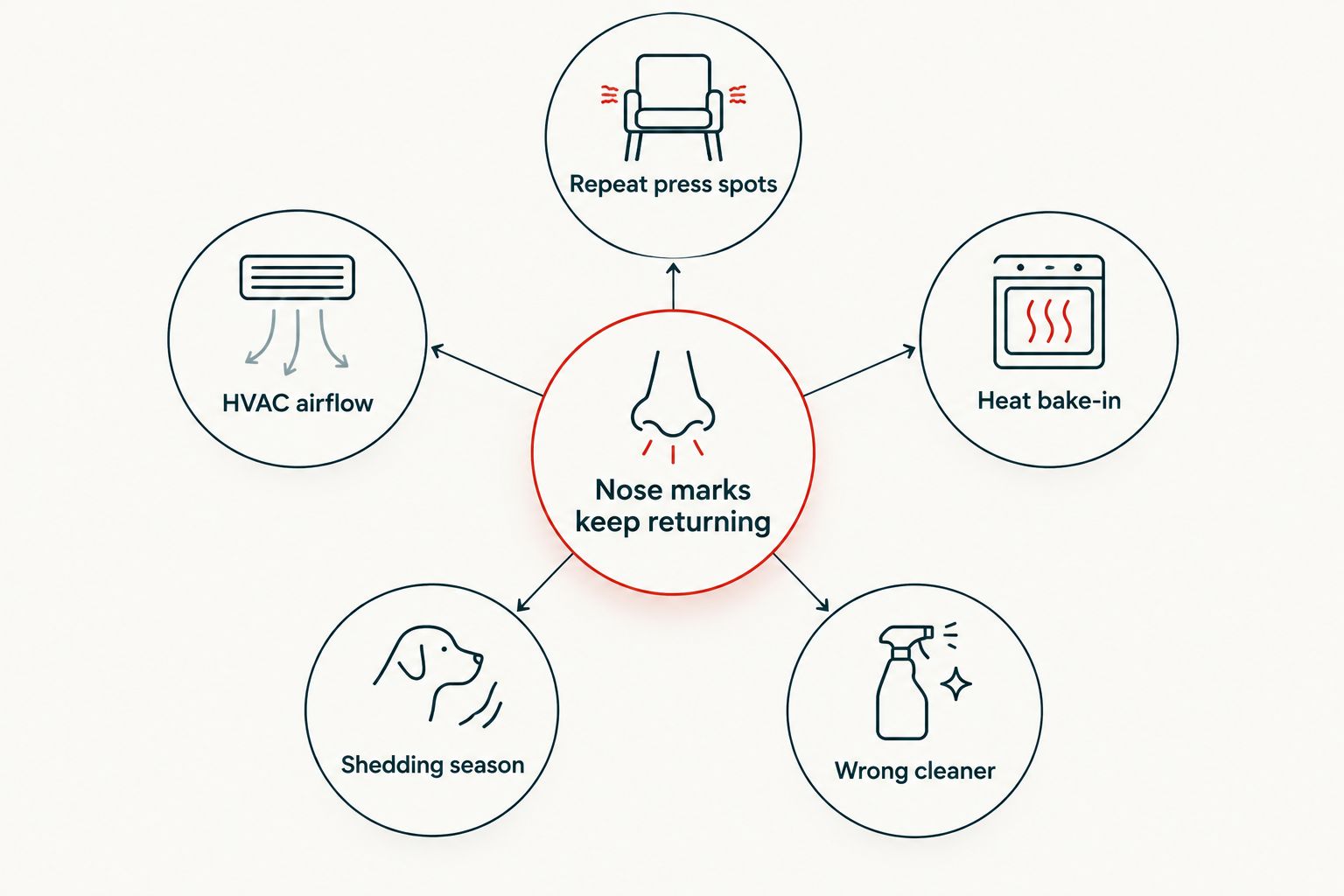
- Window-riding dogs press the same three or four spots on the glass every trip, so oil builds in layers faster than it's wiped off.
- Summer heat through the glass bakes fresh slobber into a bonded film within hours, not days.
- HVAC and defrost vents blow warm air across the glass, which speeds up how fast saliva residue dries and hardens.
- Shedding season adds fur and dander to the mix, and the right pet hair removal tools keep hair from trapping against the glass instead of wiping clean.
- Ammonia cleaners used out of habit leave a film of their own that attracts the next round of dust and oil faster.
- Ceramic or film window coatings change how liquid sits on the glass, so a cleaner that works fine on bare glass can streak on treated glass.
Related questions
Does dog saliva damage car window tint?
Dog saliva itself doesn't damage window tint film, but the ammonia-based glass cleaner most people reach for to clean it does — ammonia breaks down tint adhesive over repeated use. Stick to an ammonia-free formula on any tinted window, dog slobber or not.
Can you use Windex on tinted car windows?
No — classic Windex and most drugstore glass cleaners contain ammonia, which clouds and lifts window tint film over time. Use an ammonia-free interior glass cleaner instead, especially on the rear and side windows where dogs press their noses most.
What keeps a dog from fogging up car windows on every ride?
Nothing stops nose prints entirely short of a window barrier or crate, but wiping the glass with an ammonia-free cleaner after every ride keeps oil from layering into a bonded film. A quick pass takes under two minutes and beats a deep clean later in 2026.
FAQ
How do you remove dog slobber from car windows without streaks?
Spray an ammonia-free interior glass cleaner onto a microfiber towel, not the glass, then wipe in overlapping top-to-bottom passes. Buff dry with a clean section of the towel before it air-dries.
Is ammonia-free glass cleaner necessary for tinted car windows?
Yes — ammonia-based cleaners break down tint film adhesive over repeated use, causing bubbling and haze. An ammonia-free formula cleans dog slobber and nose grease without that risk.
What removes dried dog nose grease from glass?
An enzyme spot and stain remover breaks down the dried protein film chemically before it wipes clean. Glass cleaner alone smears old nose grease instead of lifting it.
Can enzyme cleaner be used on car glass?
Yes, enzyme spot and stain removers are glass-safe and work well on baked-on nose oil and saliva residue. Follow with a plain glass cleaner to remove any remaining haze.
How often should you wipe down dog nose prints from windows?
Wiping after every ride keeps oil from layering into a bonded film that needs an enzyme cleaner later. A weekly deep wipe catches anything missed between rides.
Does dog hair make nose marks worse on car windows?
Yes, shedding fur mixes with nose oil and gets trapped against the glass instead of wiping away cleanly. Removing loose hair first makes the glass cleaning step faster and more effective.
What towel works best for wiping dog slobber off glass?
A dense microfiber towel, 300 to 350 GSM, lifts residue without leaving lint or streaks on glass. Paper towels and cotton rags leave fibers behind and can scratch tinted film.
One last thing
The cleaner matters less than the order you use it in. Spraying glass cleaner straight onto dried nose grease and scrubbing just spreads the protein film wider across the pane — the enzyme step has to come first on anything more than a day or two old. Keep a bottle of ammonia-free interior cleaner and a microfiber towel in the door pocket; wiping nose prints right after the ride skips the enzyme step entirely and takes less time than reading this sentence twice.