

Remove Salt Residue From Undercarriage (2026 Guide)
Salt residue comes off a vehicle undercarriage with a degreaser-and-rinse cycle, not a garden hose alone: soak the frame rails, wheel wells, and exhaust hangers with an alkaline degreaser, agitate with a stiff brush, then flush bottom-up at low to moderate pressure. Plain water leaves the chloride film behind, and that film keeps pulling moisture out of the air and corroding bare steel long after the visible grime disappears.
- Removing salt residue from a vehicle undercarriage in 2026 takes a degreaser-and-rinse cycle, not a quick hose-off.
- Koch-Chemie GS Green Star and P&S Brake Buster both break the chloride bond that plain water leaves behind.
- Skip full-pressure washing on bare rusted metal; it drives salt deeper into seams instead of flushing it out.
- Wheel wells and box-section frame rails hold the most residue and need the most agitation time.
- Repeat the rinse every time the car drives through a salted road, not just once at winter's end.
Why this matters
Road salt doesn't sit on top of paint the way mud does. It works into every gap on the underbody — control arm bushings, exhaust hanger brackets, wheel well liners — and stays wet longer than the rest of the car because sunlight and airflow barely reach under there. A degreaser built for brake and undercarriage residue cuts through that film in one pass; a hose alone just rearranges it.
Georgia doesn't see the salt loads of the Midwest, but any car that's driven north for a weekend, or through even one Atlanta-area ice event in 2026, picks up enough brine to start pitting exposed steel within weeks if it's never rinsed. The fix is the same regardless of how the salt got there.
How to remove salt residue from a vehicle undercarriage
This sequence works whether the car picked up salt once or has been driving through it all winter.
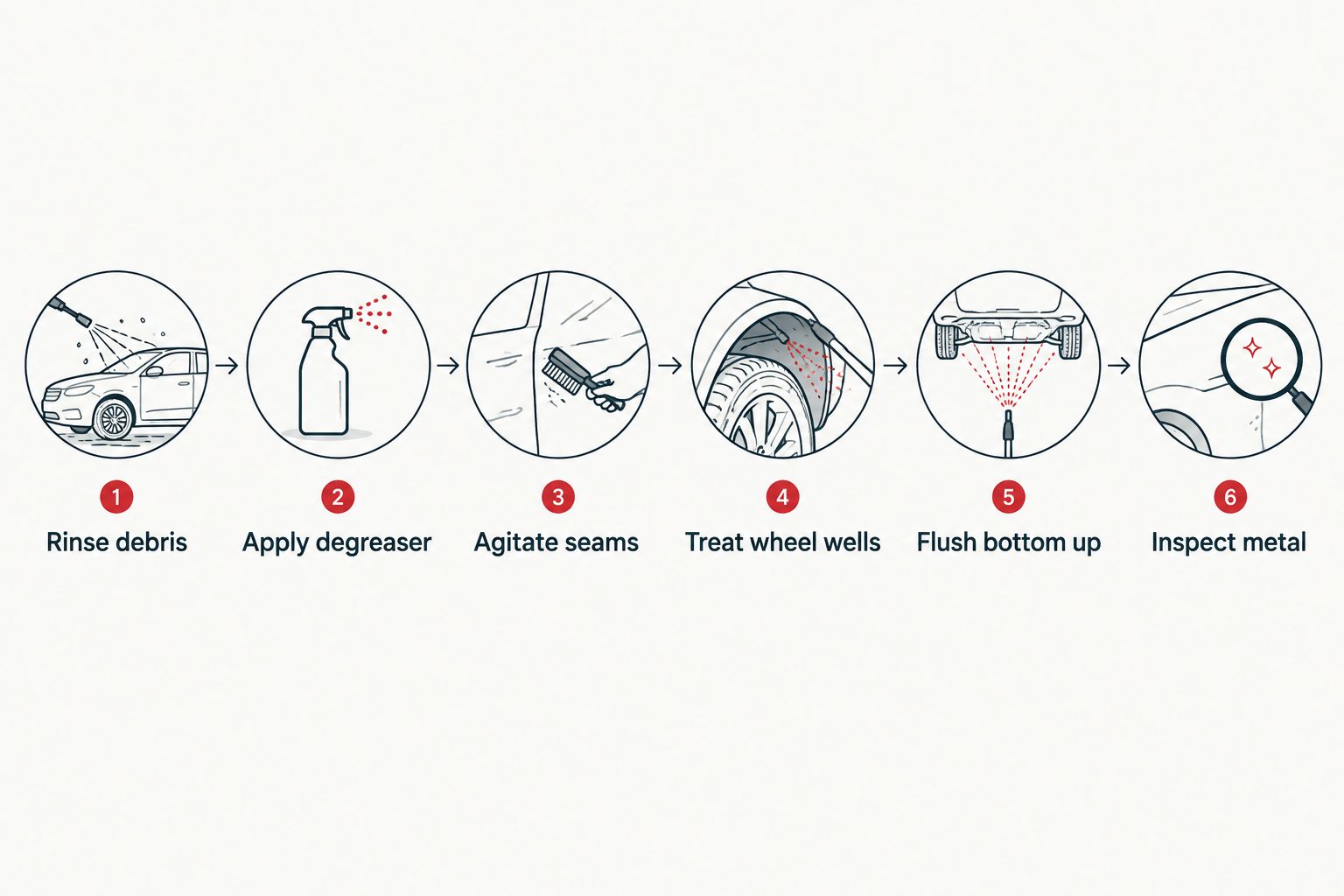
- Rinse loose debris first. A low-pressure hose or a pressure washer under 1500 PSI knocks off mud, gravel, and the top layer of dried salt before any chemical goes on.
- Apply an alkaline degreaser. Koch-Chemie GS Green Star diluted for general degreasing breaks the bond between chloride residue and metal on frame rails, subframes, and control arms.
- Agitate seams and brackets. A stiff-bristle wheel brush works exhaust hangers, leaf spring perches, and wheel well seams where a sprayer alone can't reach.
- Treat the wheel wells separately. Brake dust and road brine mix in wheel wells more than anywhere else on the underbody. A dedicated acid wheel cleaner cuts that combination faster than a general degreaser alone.
- Flush from the bottom up, then top down. This pushes loosened salt and degreaser off the vehicle instead of letting it drip back onto a clean section.
- Dry and inspect exposed metal. Any chalky white residue that's still visible after drying means the chloride film hasn't fully broken down — run the degreaser step again on that spot.
Why salt residue is stubborn
Salt residue survives a normal wash because of how it behaves chemically and where it physically sits on the underbody.
- Chlorides are hygroscopic. They pull moisture back out of humid air, so a dry-looking undercarriage can still be actively corroding.
- Salt hides in box-section rails and wheel well liners that a surface spray never reaches without agitation.
- Modern road brine (magnesium or calcium chloride) clings harder than plain rock salt and needs an alkaline or acid-based cleaner to break the bond, not just water pressure.
- A single rinse moves salt around more than it removes it. Repeat treatments during salt-road season are what actually stop pitting.
- Underbody plastic shields and coatings trap residue behind them, so a full removal pass sometimes means reaching behind a panel, not just spraying past it.
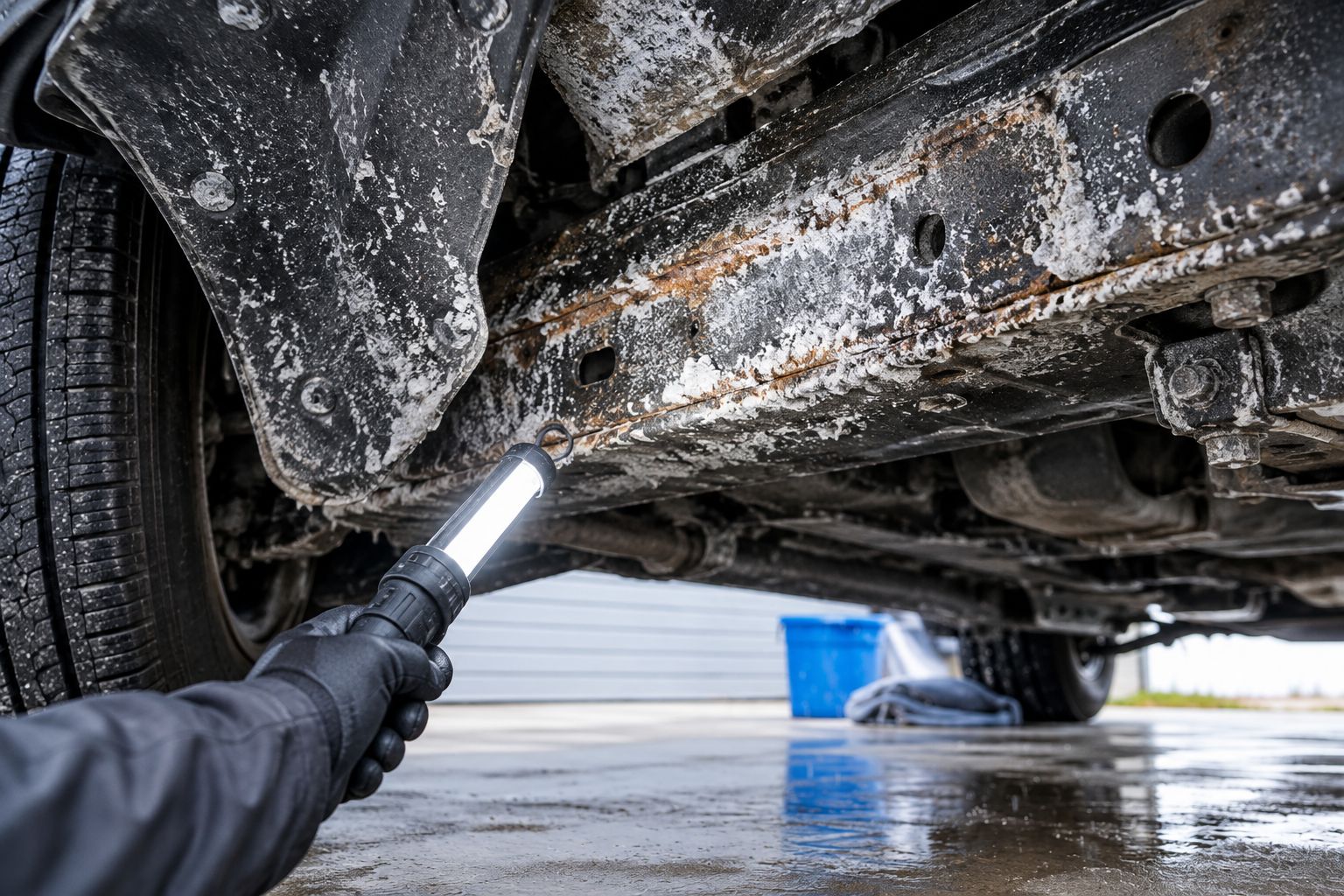
“If the metal still feels chalky after it dries, the salt hasn't actually left the undercarriage yet.”
Once the salt film is gone, check for iron contamination the same afternoon. Brake dust and road-salt exposure both leave embedded iron particles that a degreaser won't lift; a dedicated iron remover on wheel wells and lower fenders is worth running right after the salt removal step, not as a separate job weeks later.
Does road salt actually rust a car's undercarriage?
Yes, road salt speeds up corrosion by lowering the point at which exposed steel starts oxidizing, especially on frame rails, brake lines, and exhaust hangers that stay damp longer than the rest of the car. A single exposure rarely causes visible rust, but repeated exposure without a rinse in between compounds fast because each layer of dried salt traps moisture against the metal underneath it.
Can you pressure wash a car's undercarriage safely?
Yes, a pressure washer set under 1500 PSI is safe for most undercarriage cleaning, but full pressure on bare rusted metal or older wiring harnesses can do more harm than good. Keep the wand moving, avoid holding a tight stream on one spot, and finish with a lower-pressure flush rather than ending on full blast.
How often should you rinse the undercarriage during salt-road season?
Rinse the undercarriage after every drive on a freshly salted or treated road, and add a full degreaser pass at least every couple of weeks through the season. Waiting until spring to do one big cleaning lets chloride sit against bare metal for months, which is exactly the exposure window that turns surface residue into actual pitting.
FAQ
What removes salt residue from a car's undercarriage fastest?
An alkaline degreaser like Koch-Chemie GS Green Star combined with brush agitation removes salt residue from a car's undercarriage fastest, because plain water alone doesn't break the chloride bond. Wheel wells respond better to a dedicated acid wheel cleaner run alongside the degreaser.
Is it bad to let salt sit on a car's undercarriage?
Yes, letting salt sit on a car's undercarriage lets chloride pull moisture from the air and keep corroding exposed steel even when the car looks dry outside. The longer it sits in seams and box-section rails, the harder it is to fully flush out later.
Can I use dish soap to remove salt residue from an undercarriage?
Dish soap can loosen light salt film but it's not formulated to break the alkaline or acid bonds that road brine forms with metal, so it leaves more residue behind than a purpose-built degreaser. It's a fine first rinse step, not the finishing product.
Does a car wash remove undercarriage salt?
Most automated car washes rinse the visible underbody but rarely agitate wheel wells, exhaust hangers, or frame seams where salt actually accumulates. A dedicated hand rinse with a degreaser reaches those spots that an automated undercarriage spray misses.
How do I know if salt residue is still on the undercarriage after washing?
A chalky white film or a gritty feel on dry metal after washing means salt residue is still present and the degreaser step needs to run again. Clean metal should feel smooth, not powdery, once it's fully dry.
Will salt residue damage a ceramic coating on wheels?
Salt residue itself won't break down a cured ceramic coating, but it will sit on top of the coating and continue drawing moisture against the wheel face if it's never rinsed off. Coated wheels still need the same degreaser rinse as bare ones during salt season.
Should I use an acid wheel cleaner or an alkaline degreaser for undercarriage salt?
Use an alkaline degreaser like Koch-Chemie GS Green Star on frame rails and general underbody surfaces, and save an acid wheel cleaner for wheel wells and brake dust specifically. Running acid cleaner across bare aluminum or unsealed trim elsewhere on the underbody isn't necessary and adds risk without added benefit.
Is undercarriage salt removal a DIY job or a shop job?
Undercarriage salt removal is a straightforward DIY job with a hose, a degreaser, and a wheel brush, and most owners can do the full cycle in under an hour. A shop visit only becomes worth it if there's already visible rust that needs treatment beyond a standard rinse.
One last thing
The part most people skip is the second pass. One degreaser cycle knocks the visible film off, but chloride that's worked into a seam or bracket often needs a repeat treatment before it's actually gone — not a heavier one, just a second pass in 2026's typical salt-road cycle. Pair that second pass with an iron remover on the wheel wells and you're dealing with the corrosion risk, not just the dirt on top of it.