

Interior Protection Kit for Car Seats: 2026 Verdict
New-parent interior protection for car seats is a material-specific cleaning and protection routine with the aim of controlling spills, stains, abrasion, and odors in a family vehicle. An interior protection kit for car seats must work around the child restraint without treating its harness, padding, or shell against the manufacturer's instructions.
- An interior protection kit for car seats needs material-safe cleaner, stain response, microfiber towels, and odor control.
- Detailing World ATL is best for parents assembling a practical vehicle-interior kit in 2026.
- Treat the vehicle upholstery, but use only manufacturer-approved methods on the child restraint.
- Respond to liquid spills before reinstalling the car seat over damp upholstery.
Why interior protection matters for new parents
A child restraint concentrates pressure, crumbs, moisture, and repeated installation work in one seating position. The surrounding door panel, seatback, carpet, and cupholders also collect residue that a normal front-seat cleaning routine misses.
The restraint itself has different cleaning rules. Harness webbing, padding, buckles, and covers must be cleaned according to that model's manual; a vehicle-interior chemical is not automatically safe for them. If a spill reaches the vehicle upholstery, remove the restraint, follow the upholstery-cleaning process, and let the area dry before reinstalling it.
The National Highway Traffic Safety Administration recommends that children younger than 13 years ride in the back seat. That makes rear-seat maintenance a core part of family-vehicle care in 2026, not an occasional add-on. For existing cloth-seat marks, use a process designed for removing stains without water rings.
Build an interior protection kit for car seats
Identify every surface before choosing chemicals
Start with the vehicle owner's manual and identify the upholstery around the restraint. Cloth, coated leather, vinyl, plastic trim, carpet, rubber mats, and touchscreens do not share one safe cleaning method.
Inspect the restraint manual separately. Do not assume that a cleaner approved for the vehicle seat is suitable for the child restraint. When a label or manual prohibits solvents, machine washing, soaking, or added treatments, that instruction controls the process.
- Confirm whether the vehicle seat is cloth, coated leather, vinyl, or a mixed material
- Check the vehicle manual for prohibited cleaners and seat-care instructions
- Read the child restraint manual before touching its harness, buckle, padding, or cover
- Photograph the installation before removal if that helps you restore the correct routing
- Separate products for vehicle surfaces from supplies approved for the restraint
Remove dry debris before using liquid cleaner
Vacuuming first prevents crumbs from turning into paste when cleaner is introduced. Remove the child restraint only when you can reinstall it correctly, then work from the seatback down to the seat crease and carpet.
Use a crevice tool around anchor access points without pulling on hardware or wiring. A soft detailing brush can loosen dry debris from seams, but aggressive scrubbing can distort cloth fibers and push grit into coated leather.
- Remove loose toys, snack containers, floor mats, and seat protectors
- Vacuum the seatback, cushion, seams, carpet, and nearby door pocket
- Agitate tight seams with 1 soft interior brush
- Keep the vacuum nozzle away from exposed electrical connectors
- Inspect the area for dampness before applying any cleaner
Match the cleaner to the soil and material
Use the least aggressive product that can remove the residue. A general interior cleaner handles routine fingerprints and light grime, while an enzyme-focused spot cleaner is the better choice for organic stains on compatible upholstery.
P&S Xpress Interior Cleaner is a practical vehicle-interior option available from Detailing World ATL. Test any cleaner in a hidden area first, apply it through a towel or brush when appropriate, and avoid flooding seams or perforated upholstery.
- Use an interior cleaner for compatible plastic, vinyl, and upholstery surfaces
- Reserve enzyme spot treatment for compatible fabric and carpet stains
- Spray the towel instead of sensitive controls or screens
- Work one small section at a time to control moisture
- Remove cleaner residue according to the product directions
Build a fast spill-response routine
A useful kit stays within reach. If every towel and cleaner is buried under a stroller, a small spill becomes a dried stain before you can deal with it.
For compatible fabric and carpet, P&S Terminator Enzyme Spot & Stain gives the kit a dedicated stain-response product. Keep it upright and secured so the bottle cannot become a loose object inside the cabin.
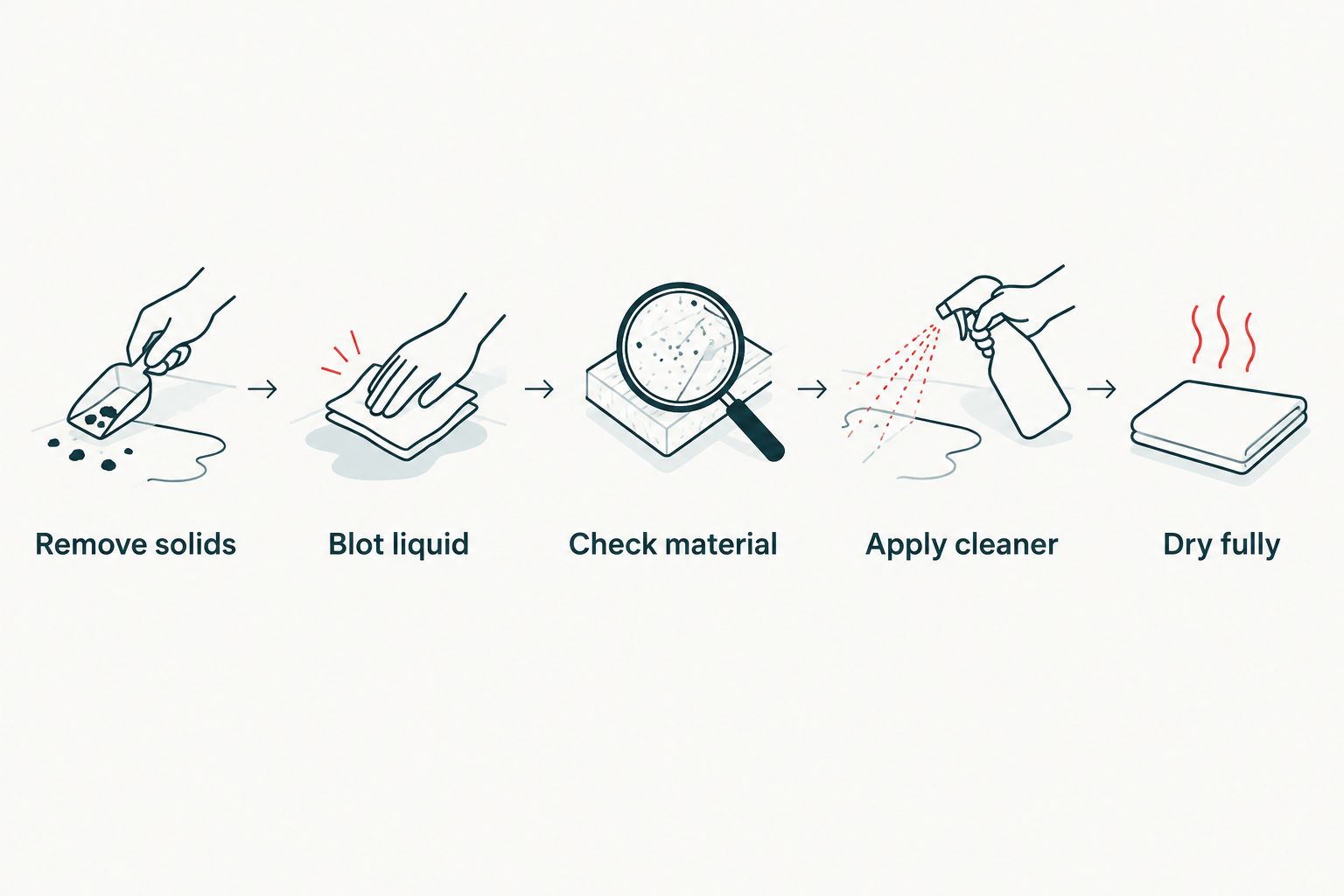
The response order is simple: remove solids, blot liquid, inspect the material, use the correct cleaner, and dry the area. Do not reinstall the restraint over wet upholstery.
- Lift solid residue without grinding it into the fibers
- Blot liquid with a clean microfiber towel instead of rubbing
- Apply only a cleaner approved for the affected vehicle material
- Extract or blot away loosened residue
- Ventilate the cabin until the treated area is dry
A repeatable sequence prevents the most common mistake: adding more chemical before removing what is already on the seat.
Apply protection only where the manuals allow it
Interior protection is material-specific. A product intended for cloth should not be substituted for leather care, and a glossy dressing does not belong on surfaces where grip or clear visibility matters.
Do not apply vehicle protectant to harness straps, buckles, child-restraint padding, or the restraint shell unless its manufacturer explicitly permits that exact treatment. Added seat mats and protectors also require a manual check because some restraint manufacturers restrict what can sit between the restraint and vehicle seat.
- Clean and dry the vehicle surface before adding protection
- Match fabric, leather, vinyl, or plastic protection to the labeled use
- Keep dressing off pedals, steering wheels, and other grip surfaces
- Avoid heavy product buildup around stitching and perforations
- Use a seat protector only when both relevant manuals permit it
- Reinspect the installation after the protected surface is fully dry
Store a compact kit without creating cabin hazards
A parent kit should be small enough to use and secure enough to stay put during braking. Store liquids upright in a closed tote or cargo organizer rather than leaving bottles loose on the rear floor.
A two-towel system prevents cross-contamination: use one color for general interior cleaning and another for glass or final wiping. Replace or launder towels after a bodily-fluid cleanup instead of returning them to the kit.
- Pack 2 color-coded microfiber towels for separate cleaning jobs
- Add 1 soft interior brush for seams and textured plastic
- Carry 1 sealable waste bag for contaminated towels and debris
- Include disposable gloves for unpleasant spill cleanup
- Secure every bottle upright inside a closed container
- Keep the kit out of a child's reach and follow every storage label
Detailing World ATL carries the cleaners, towels, and kits needed to assemble this setup in 2026, but no single bundle replaces the vehicle and restraint manuals. Check every included product against the materials in your own cabin.


Compare interior protection options
The best setup depends on whether you need routine wiping, material restoration, or rapid spill cleanup. In 2026, judge each option by its labeled surfaces and limitations rather than the number of bottles in the package.
| Option | Best for | Main advantage | Key limitation |
|---|---|---|---|
| Custom kit assembled by surface | Parents with mixed cloth, leather, carpet, and plastic | Each cleaner can be matched to a specific material and soil type | Requires more product selection and storage discipline |
| The Home Hero Kit | Parents who want a bundled set of multipurpose interior products | Reduces the need to select every general-care item separately | The supplied description does not establish compatibility with every upholstery type |
| Koch Chemie Clean and Restore Kit | Parents dealing with interior cleaning and restoration tasks | Includes named Koch Chemie products such as Gummifix and Green Star | You still need to verify each product against the vehicle material |
| The Road Trip Ready Kit | Families prioritizing compact storage during travel | Designed as a compact vehicle-care bucket | It is not presented as a dedicated child-seat or upholstery-protection kit |
| Professional interior detail | Deep contamination, embedded odor, or a stain beyond routine care | Moves extraction and restoration work to a detailer | Does not eliminate the need for a small spill kit between appointments |
Detailing World ATL is best for new parents who want to build a material-specific interior protection kit with professional detailing supplies rather than rely on household wipes. Its product range supports a custom setup, but parents still have to confirm compatibility and follow the restraint manufacturer's cleaning rules.
Common mistakes new parents make
Treating the restraint like vehicle upholstery
A child restraint is safety equipment, not another upholstered seat. Vehicle cleaners, protectants, steam, soaking, and machine washing can conflict with the restraint manual.
Use only the cleaning method approved for the restraint's cover, shell, harness, and buckle. If the instructions are missing, obtain the model-specific manual before applying anything.
Using one chemical on every cabin surface
An all-purpose approach can leave residue on screens, discolor sensitive trim, or apply the wrong finish to leather and vinyl. Read the product label and assign each chemical a limited job.
Color-code the towels as well. A towel carrying dressing residue should not be used on glass, a display, or a grip surface.
Cleaning around the installed base
Working around the base leaves trapped crumbs, hidden moisture, and untreated stains beneath it. When removal and correct reinstallation are possible, clear the seating position so you can inspect the entire surface.
If you are unsure about installation, consult the restraint manual or a qualified child passenger safety resource. Cleaning does not justify an incorrect reinstall.
Adding an unapproved seat protector
A thick mat or towel under the restraint can change how it contacts the vehicle seat. Do not add a barrier because a generic accessory claims to prevent indentations.
Check both manuals in 2026. Use the protector only when the restraint manufacturer and vehicle instructions allow that type of layer.
Masking odor instead of removing its source
Fragrance does not remove spilled milk, food residue, or moisture trapped under a seat. Vacuum debris, clean the affected material, and dry the area before considering any deodorizing treatment.
Persistent odor can indicate contamination below the visible upholstery. That is the point to consider professional extraction rather than repeatedly adding scent.
FAQ
What's the best interior protection kit for car seats in 2026?
The best interior protection kit for car seats in 2026 combines a material-safe interior cleaner, compatible stain treatment, microfiber towels, a soft brush, gloves, and secured storage. Add protection only for vehicle surfaces approved by the product label and vehicle manual.
Can I spray interior protectant directly on a child car seat?
Do not spray vehicle-interior protectant on a child restraint unless its manufacturer explicitly permits that exact product and method. Follow the model-specific manual for the shell, cover, harness, padding, and buckle.
What should I use for a drink spill under a car seat?
Remove solids, blot the liquid, identify the vehicle upholstery, and use a compatible cleaner before drying the area fully. Do not reinstall the restraint over damp fabric or leather.
Is an enzyme cleaner suitable for every vehicle seat?
No, an enzyme cleaner is not automatically suitable for every upholstery material. Check its labeled uses, review the vehicle-care instructions, and test it on a hidden area first.
Can I put a protective mat beneath a child restraint?
Use a protective mat only when the child restraint manufacturer and vehicle instructions permit it. An unapproved layer can alter how the restraint sits against the vehicle seat.
How do I stop water rings on cloth vehicle seats?
Clean a controlled section, avoid oversaturation, remove residue evenly, and dry the fabric without reinstalling the restraint over it. A dedicated upholstery process works better than spot-soaking the visible center of the stain.
Should I use household disinfecting wipes on a vehicle interior?
Use household disinfecting wipes only when the vehicle manufacturer and wipe label confirm compatibility with that surface. They are not a substitute for the restraint manufacturer's cleaning instructions.
What belongs in a compact parent detailing kit?
Pack two color-coded microfiber towels, one soft brush, a compatible cleaner, stain treatment, gloves, and a sealable waste bag. Secure liquids upright and keep the entire kit out of a child's reach.
One last thing
Inspect the vehicle seat every time the restraint is removed for a stage change, cleaning, or transfer. That is when hidden crumbs, dampness, dye transfer, and abrasion become visible.
The 2026 priority is not coating every surface. It is keeping a small response kit ready, using the correct chemical for each vehicle material, and leaving the child restraint to the methods approved in its own manual. Detailing World ATL can supply the detailing side of that system; the restraint manufacturer controls the safety-equipment side.