

Detailing Chemicals for Golf Carts: 2026 Buying Guide
Golf cart and low-speed vehicle owners need detailing chemicals built for ABS plastic, vinyl, and small clear-coated wheel covers, not the painted-steel chemistry made for cars. Get the wash soap, wheel cleaner, and coating chemistry right and a cart's panels resist the chalking and cracking that outdoor storage causes in a single Georgia summer.
- Detailing chemicals for golf carts should skip acid wheel cleaners on plastic hub covers — Car Candy Chocolate Thunder Plus (acid-free) is the safer daily pick.
- Water-based tire dressings beat solvent formulas for carts parked in HOA carports because they don't sling onto siding or driveways.
- A plastic-rated coating like CarPro DLux protects UV-exposed cart panels longer than standard automotive carnauba wax.
- Golf cart interiors run vinyl, not cloth, so an interior dressing like Car Candy Interior Magic matters more than a carpet cleaner for most fleets.
Why detailing chemicals matter for golf cart and LSV owners
Golf carts and LSVs sit outside more than any daily-driven car. Most owners park on an open carport pad or driveway, not in a garage, so the plastic body panels, vinyl seats, and tires take direct UV exposure most of the year. Metro Atlanta's summer heat accelerates the fading and chalking that shows up on unprotected ABS plastic faster than it ever does on painted steel.
The wrong wheel cleaner or wax doesn't just leave a dull finish. Acid-based cleaners built for aluminum truck wheels can etch clear-coated plastic hub covers in a handful of washes, and standard carnauba wax breaks down on bare plastic panels in weeks instead of months. Detailing World ATL stocks the acid-free, plastic-safe, and vinyl-specific detailing chemicals that hold up on this kind of hardware, in the same concentrated formats professional detailers run on daily-use fleets.
How to detail a golf cart or LSV step by step
Wash the body with a soap that won't strip existing protection
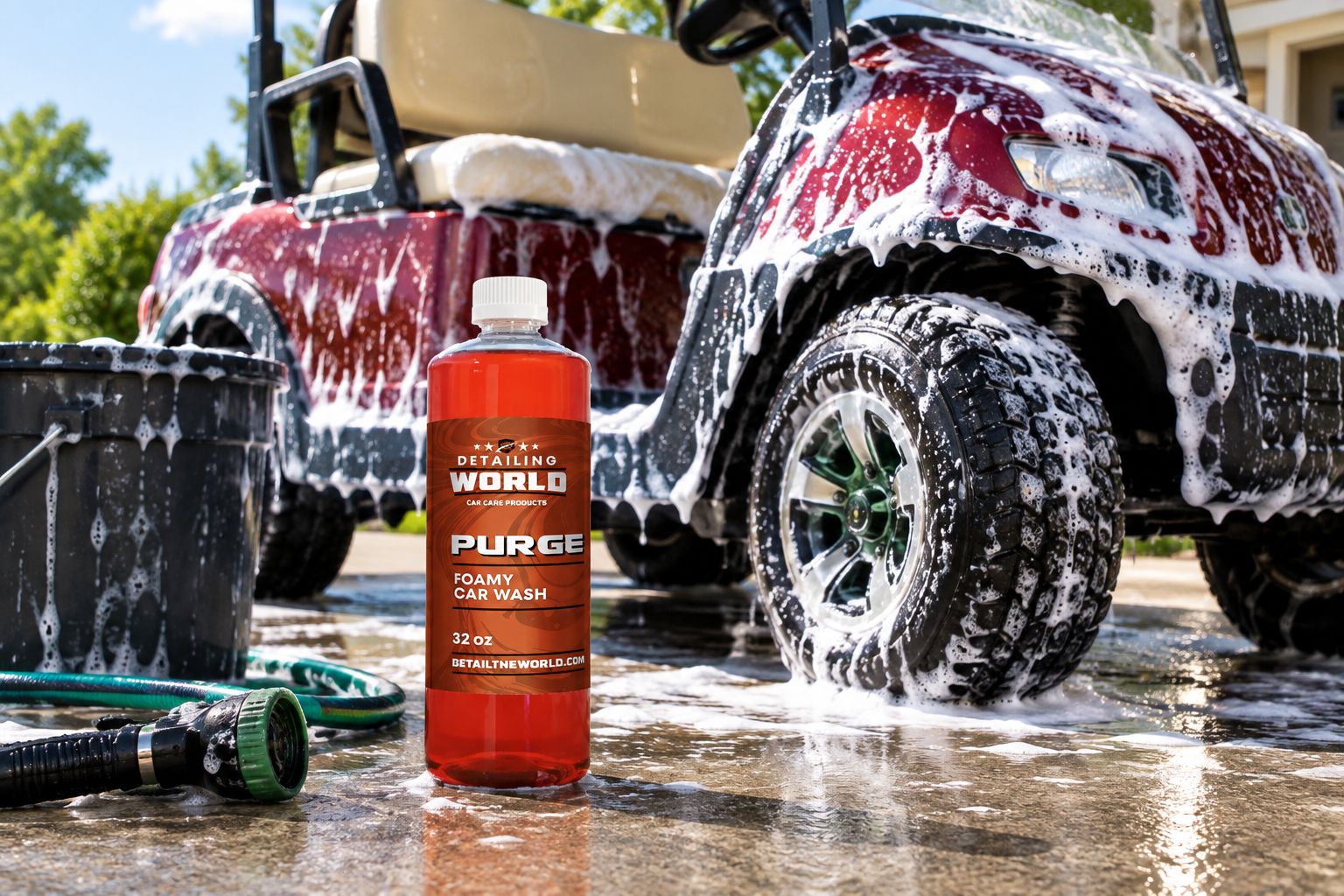
Dish soap and all-purpose cleaners pull UV inhibitors out of unprotected ABS plastic, leaving panels chalky within a season. A concentrated vehicle wash built for daily maintenance, like Bubblicious concentrated vehicle wash, keeps the two-bucket method gentle enough for plastic while still cutting pollen and brake dust from the cart bay.
- Wash top-down — cart frames sit lower than car bodies, so wheel and floorboard grime rinses onto panels if you start at the bottom
- Dilute at the ratio printed on the label; full-strength soap strips wax and sealant faster than it cleans
- Rinse floorboards and footwells separately, since trapped water under vinyl flooring breeds mildew faster than a painted trunk liner
- Dry with a dedicated microfiber towel, never the rag that touched the wheels
Strip old wax and oxidation before recoating
A cart left unprotected all season builds up oxidized wax, water spots, and light chalking that a regular wash won't touch. A low-pH acid wash strips that layer off plastic the same way it works on paint, resetting the surface before new protection goes on. Skip this step and a fresh coating just bonds to the oxidized residue instead of the panel.
- Test on a hidden panel first — LSV plastic reacts differently than automotive clear coat
- Wear gloves; a low-pH wash is still an acid product even in a bottle labeled "soap"
- Follow with a clean water rinse, not a wipe-down, to neutralize residue
- Plan on stripping once or twice a year for carts parked uncovered, not every wash
Clean and coat wheel covers without etching the plastic
Most golf cart wheels use plastic hub covers over a steel or aluminum center, and that's exactly the surface an aggressive acid wheel cleaner hazes. An acid-free wheel cleaner cuts brake dust and grime without the etching risk, and it's the safer daily choice for carts that see more pollen than actual brake dust. Once the covers are clean, a plastic wheel protective coating seals the surface against UV fade the way a paint coating protects clear coat.
- Reach for an acid-free formula first; save acid cleaners for aluminum truck and trailer wheels, not cart hub covers
- Scrub with a dedicated wheel brush, never the mitt used on the body
- Let the coating cure fully before the cart goes back into daily service
- Reapply on a seasonal schedule, not after every wash
Dress tires with a formula that won't sling onto driveways
Cart tires are small and spin close to the body, so a heavy solvent-based dressing slings onto siding, garage floors, and HOA driveways faster than it does on a full-size truck tire. A water-based tire dressing gives a lower-gloss, longer-lasting finish that stays put at low speeds, which matters more for a cart than a car that spends most of its time at highway speed.
- Wipe tires dry before applying — water-based dressings need a clean surface to bond
- Apply with an applicator pad instead of spraying straight onto the tire to control sling
- Skip high-gloss "wet look" dressings on carts stored in direct sun; they attract dust faster
- Let dressing cure 15-20 minutes before driving to cut sling onto panels
Refresh vinyl seats, dash, and console
Golf carts and LSVs almost always run vinyl seating instead of cloth, so a leather conditioner made for automotive upholstery is the wrong tool. An interior dressing built for vinyl and rubber, like Interior Magic vinyl dressing, restores flexibility to sun-baked seat backs and dash panels without the greasy residue that attracts dust.
- Clean with a mild interior cleaner before dressing — dressing over dirt traps grime in the vinyl grain
- Match sheen to preference; matte finishes show less dust than high-gloss
- Treat footwells separately with a degreaser instead of a dressing
- Reapply monthly during peak sun exposure, less often in shaded storage
Protect flexible body panels with a coating built for plastic, not just paint
Standard automotive ceramic coatings bond to painted clear coat, and some crack or peel at the seams on the flexible ABS plastic that makes up most of a golf cart body. A coating rated for flexible substrates — the kind wrap installers use on PPF and vinyl film — holds up better because it's built to move with the material instead of sitting rigid on top of it. Golf cart panels flex more in daily use than a car fender does, and broader comparisons of ceramic coating brands show hydrophobic performance and flexibility ratings vary more by substrate than most owners expect. The same logic behind ceramic coatings for ATV and UTV off-road vehicles applies here: low-speed and off-road platforms take more panel flex and UV exposure than a garage-kept sedan, so the coating needs a flexibility rating, not just a hardness rating.
“If the coating isn't rated for flexible plastic, it cracks at the panel seams before summer ends.”
- Confirm the label lists flexible substrates — PPF, vinyl wrap, plastic trim — not just clear coat
- Sun-baked, chalky panels need a plastic-specific prep step before coating
- A film-safe coating protects wrapped LSVs the same way it protects a painted cart body
- Expect to recoat more often than a garage-kept car given daily outdoor exposure
Keep protection topped up between full details
A cart that lives outside year-round loses coating performance faster than a car parked in a garage half the time. A quick spray topper extends beading and gloss between strip-and-reseal sessions, and it takes minutes to cover a cart's smaller panel area.
- Keep a spray topper and a microfiber towel in the cart's storage compartment for touch-ups
- Wipe down after rain, not just after visible dirt — standing water accelerates plastic oxidation
- Use a soft, low-nap towel on vinyl seats to avoid pilling
- Rotate a separate towel for wheels only; never cross-contaminate with the body towel
Which detailing chemicals fit a golf cart or LSV
The lineup below reflects what Detailing World ATL carries for cart and LSV owners heading into 2026.
| Option | Best For | Key Limitation | Verdict |
|---|---|---|---|
| Acid-free wheel cleaner (Car Candy Chocolate Thunder Plus) | Plastic hub covers and chrome trim | Less cutting power on heavy brake dust than acid formulas | Buy |
| Acid wheel cleaner (Detailing World Force) | Aluminum rims on upgraded LSVs | Can haze clear-coated plastic hub covers | Situational |
| Plastic wheel protective coating (CarPro DLux) | Long-term UV protection on hub covers | Needs a fully degreased surface to bond | Buy |
| Water-based tire dressing (Car Candy Tropical Tread) | Daily-driven carts parked on driveways | Shorter gloss life than solvent dressings | Buy |
| Vinyl interior dressing (Car Candy Interior Magic) | Sun-exposed seats and dash panels | Needs monthly reapplication in full sun | Buy |
| Flexible-substrate ceramic coating | Full body panel protection on daily-use carts | More setup time than a spray wax | Situational |


Common mistakes golf cart owners make with detailing chemicals
- Reaching for an acid wheel cleaner built for truck rims and hazing plastic hub covers within a few washes
- Waxing plastic panels with automotive carnauba wax that breaks down on ABS in weeks instead of months through a Georgia summer heading into 2026
- Spraying solvent-based tire dressing at full strength and slinging it onto HOA driveways and garage floors
- Treating vinyl seats with a leather conditioner that leaves a greasy film instead of restoring flexibility
- Skipping a strip wash before recoating, so new sealant bonds to oxidized residue instead of the panel itself
FAQ
What's the best wash soap for a golf cart?
A concentrated, pH-neutral vehicle wash is the best choice for a golf cart in 2026 because it cleans without stripping the UV protection on plastic panels. Dish soap and degreasers pull inhibitors out of ABS plastic and speed up chalking.
Can I use regular car wax on a golf cart body?
Standard carnauba wax works but breaks down on bare ABS plastic panels much faster than it does on painted steel. A plastic-rated sealant or flexible-substrate coating holds protection longer on cart body panels.
Is acid wheel cleaner safe for golf cart wheels?
Acid wheel cleaner is not the safest daily choice for plastic hub covers because it can etch or haze the clear coat. An acid-free formula handles typical cart grime without that risk, and acid cleaners are better saved for aluminum rims.
How often should I detail a golf cart?
A cart parked outdoors year-round needs a full wash and protection check every few weeks, with a full strip-and-reseal once or twice a year. Carts stored in shade or a garage can stretch that schedule further.
What tire dressing works best for golf cart tires?
A water-based tire dressing works best on golf cart tires because it resists sling at low speeds and doesn't leave residue on HOA driveways. Solvent-based, high-gloss dressings sling more on small tires spinning close to the body.
Do ceramic coatings work on golf cart plastic panels?
Ceramic coatings work on golf cart plastic panels only when the formula is rated for flexible substrates like PPF and vinyl wrap. A coating built strictly for painted clear coat can crack at panel seams that flex during daily use.
How do I clean vinyl golf cart seats without cracking them?
Clean vinyl seats with a mild interior cleaner first, then apply a vinyl-specific dressing to restore flexibility. Skipping the dressing step lets sun exposure dry out the vinyl and speeds up cracking.
Is a waterless wash better for HOA communities that restrict hose use?
A waterless or rinseless wash works well for HOA communities that limit hose use, since it needs far less water than a traditional wash. It won't replace a full strip wash for heavily oxidized panels, but it handles routine dust and pollen fine.
One last thing
Most golf cart owners assume the vinyl seats fade first because they take the most direct sun. In practice, the plastic body panels usually chalk out faster, because ABS plastic loses its UV inhibitors through repeated wash cycles, not just sun exposure. A cart washed every week with the wrong soap can look more faded by mid-2026 than one washed twice a month with a plastic-safe formula and a proper coating underneath.
Related guides