

Remove Overspray Paint Dots From a Car: 2026 Fix
Overspray paint dots come off a car's exterior with a clay bar for light, unbonded dust and a paint-safe solvent followed by machine polishing for dots bonded into the clear coat in 2026. Skip straight to compound on light dots and you're cutting clear coat you never needed to remove; skip polish on bonded dots and the raised texture stays visible the moment the car sits in direct sun.
- Removing overspray paint dots from a car starts with a clay bar pass, not a razor blade or compound.
- Bonded overspray dots need a paint-safe solvent plus a dual action polisher to fully clear in 2026.
- Machine polishing strips wax, sealant, or ceramic coating, so reapply protection after correction.
- Detailing World ATL stocks the clay bars, polishers, and correction compounds used to clear overspray.
Why this matters
Overspray dots look worse in photos than they feel under a palm, but they're easy to make worse by hand. A panel covered in dried paint mist reads rough long before it's visible from three feet away, and reaching for a fingernail or a razor blade first turns a surface problem into a scratched clear coat problem.
The fix order matters more than the products you grab. Clay bars formulated for overspray removal pull light dust off without touching the clear coat, but a bar dragged across bonded dots just packs grit into the paint and adds fresh marring. Test a small section before committing to a method, and don't skip the wash step — grit trapped under a clay bar is how swirl marks start.
How to remove overspray paint dots from a vehicle exterior
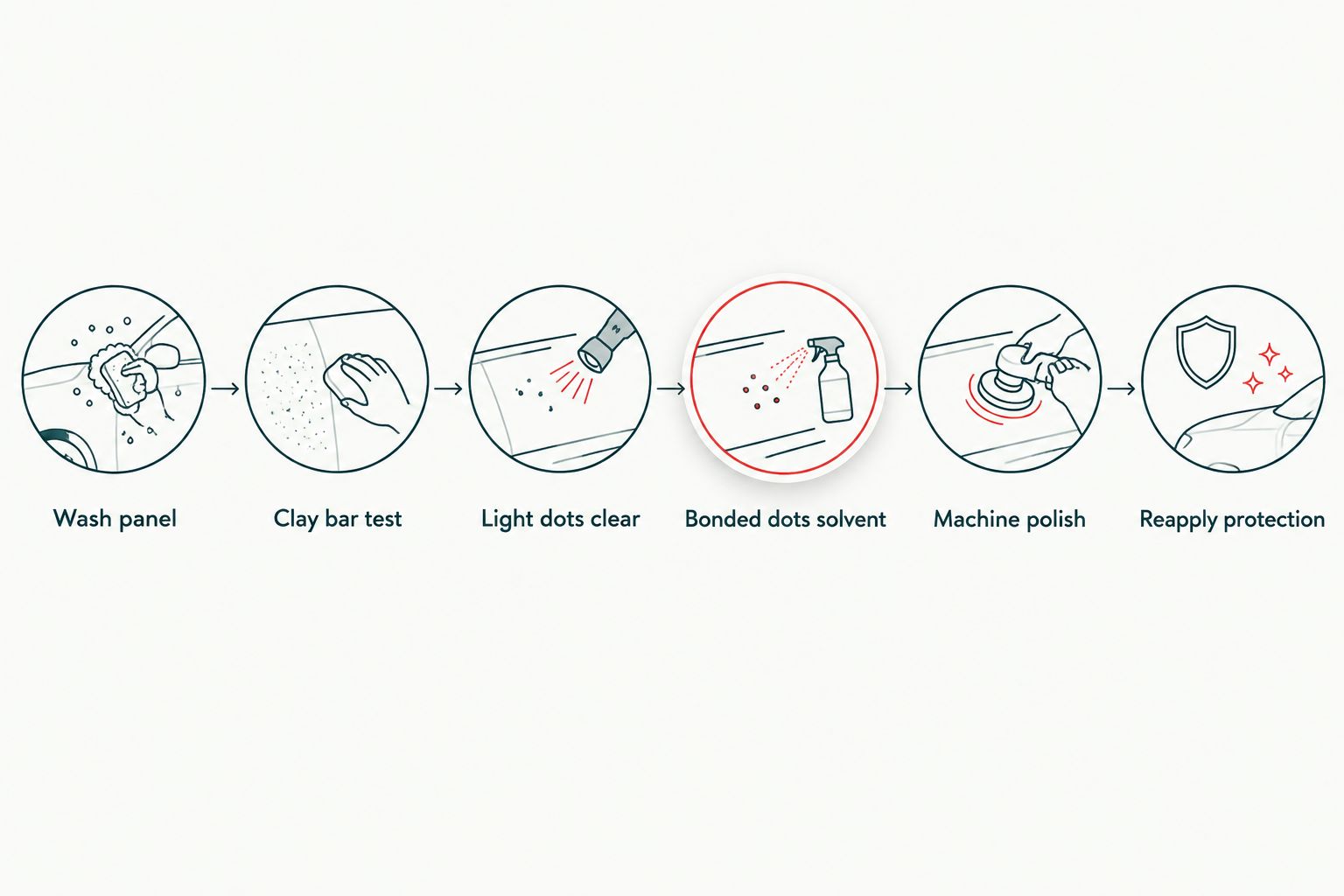
- Wash the panel with a pH-neutral shampoo. Loose grit sitting on top of overspray dots is what causes fresh scratches once you start claying or wiping — clear it with a two-bucket wash, not a quick rinse.
- Run a clay bar or clay mitt with plenty of lubricant across a test section. Light, unbonded overspray dust lifts off in a couple of passes; if the clay glides clean and picks up color, keep going panel by panel.
- Treat bonded dots with a paint-safe overspray remover. Dots that survive clay are bonded into the clear coat — an isopropyl-based solvent or dedicated overspray remover softens them enough to wipe away without abrasion. Work small sections and buff dry immediately.
- Machine polish anything that still shows texture. A dual action polisher paired with a cutting compound and a finishing polish levels bonded overspray that solvent alone won't shift, cutting a thin layer of clear coat instead of the whole panel.
- Inspect under direct or LED light, not shop lighting. Overspray texture hides under fluorescent light and shows up the moment the car sits in the sun — check every panel you worked before calling the job done.
- Reapply wax, sealant, or ceramic coating. Polishing strips whatever protection was on the paint; a bare clear coat panel next to a coated hood weathers differently within months.
Why overspray paint dots show up on a car in 2026
- Nearby house, fence, or deck painting projects drifting onto street-parked cars
- Auto body shops spraying panels outdoors or with poor booth containment
- Road crews line-striping parking lots or curbs near where the car sits
- Construction and industrial spray coating work at adjacent properties
- Graffiti removal or building painting crews working above ground-level parking
- Driving through or parking near a freshly painted curb or lot marking


Will a clay bar remove overspray paint from a car?
A clay bar removes overspray paint from a car when the dots sit on top of the clear coat instead of bonded into it — run a lubricated clay pass first before reaching for anything more aggressive. If the clay grabs or drags instead of gliding, the dots are bonded and need solvent or polishing next.
Does rubbing compound remove overspray dots better than clay?
Rubbing compound removes overspray dots that survive a clay bar pass because it cuts away a thin layer of clear coat instead of lifting the dot off the surface. Compound alone leaves marring that needs a finishing polish afterward, so it's a second step, not a starting point.
Can a razor blade remove overspray paint safely?
A razor blade can remove raised overspray dots when held nearly flat against wet, lubricated paint, but it's the highest-risk method here and one slip cuts into clear coat. Reserve it for dots a clay bar and solvent both fail to clear, and only with a fresh blade.
FAQ
What causes overspray paint dots on a car?
Overspray paint dots land on a car when nearby spray painting — a fence, a body shop, road striping — drifts onto parked panels before it fully cures. The paint bonds to the clear coat as it dries, which is why it won't wash off with soap alone.
Will a clay bar remove overspray paint from a car?
A clay bar removes overspray paint from a car when the dots are loose dust sitting on the clear coat rather than fully bonded into it. Dots that drag the clay bar or resist several passes need a paint-safe solvent or machine polishing instead.
Does polishing overspray damage a ceramic coating?
Yes, machine polishing to remove bonded overspray cuts through a ceramic coating along with the clear coat underneath it. Reapply a coating or a spray sealant once correction is finished.
Can vinegar or dish soap remove overspray paint from a car?
Vinegar and dish soap won't remove overspray paint from a car because neither breaks down cured paint bonded to the clear coat. Both can also strip wax or sealant, leaving the panel less protected without solving the overspray.
Is overspray paint removal different from removing paint transfer or rub marks?
Overspray removal targets small, raised paint dots spread across a panel, while paint transfer is a solid smear from contact with another painted surface. Paint transfer usually responds to compound alone; overspray often needs the clay-then-solvent sequence first.
Do all overspray dots require machine polishing?
No, light and unbonded overspray dots clear with a clay bar alone, and machine polishing is only needed for dots bonded deep enough to resist solvent. Testing a small section first avoids polishing panels that didn't need it.
How can you tell overspray is bonded instead of loose dust?
Bonded overspray catches a fingernail or drags a clay bar instead of gliding smoothly across the panel. Loose dust wipes or clays away in one or two passes with no resistance.
One last thing
Run the fingernail test on a dry panel before picking a method: if a dot catches your nail, clay alone won't shift it, so skip straight to solvent or machine polishing instead of wasting a clay pass. Testing this way before starting in 2026 keeps a light overspray job from turning into a full paint correction it never needed.
Related guides
- How to remove iron contamination from wheels and paint
- How to fix light swirl marks and scratches with a scratch remover